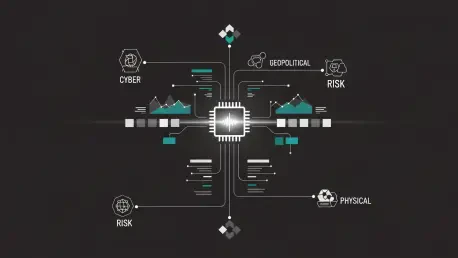

The global risk landscape has reached a point of saturation where traditional security methodologies can no longer keep pace with the velocity of emerging digital and physical threats. In response to this escalating pressure, Silobreaker has officially introduced a suite of agentic AI capabilities designed to fundamentally reshape how intelligence professionals conduct their daily operations across multiple domains. This advancement centers on a specialized AI agent known as Silobreaker Mimir, which serves as a functional extension of the analytical team by automating complex workflows within cyber, geopolitical, and physical risk sectors. By moving beyond simple text generation and basic search functions, this technology provides a robust framework for high-stakes decision-making where precision is a requirement rather than a luxury. This strategic release positions the platform as a foundational engine that enables organizations to distill vast amounts of unstructured data into verified intelligence.
Redefining Research through Agentic Autonomy
The transition from reactive software to proactive agentic systems represents a pivotal moment for the intelligence industry as it grapples with an unprecedented influx of raw information. Unlike conventional AI models that rely on direct, one-to-one human prompts to deliver singular answers, agentic systems are architected to navigate multi-stage research processes with a significant degree of independence. These agents do not merely provide summaries; they actively investigate sources, identify relevant patterns, and construct detailed evidence chains that would typically require hours of manual labor. This autonomy allows the system to handle the initial heavy lifting of data collection and categorization, which ensures that human analysts can dedicate their cognitive resources to higher-level strategic interpretation. By integrating these autonomous agents directly into the investigative workflow, the platform effectively eliminates the bottlenecks associated with traditional intelligence gathering and triage.
Silobreaker Mimir functions as a specialized digital researcher that operates with a deep understanding of the specific context required by security and risk management professionals. Within this framework, the AI agent is capable of conducting deep-dive explorations into diverse data sets, ranging from dark web forums to geopolitical news feeds and internal physical security reports. This capability allows intelligence teams to scale their operations significantly without necessitating a corresponding increase in the number of full-time employees, which is a critical advantage in a tight labor market for cybersecurity talent. The system bridges the existing gap between the sheer volume of available data and the necessity for specific, actionable insights that can be shared with corporate leadership. By refining the analytical process in this manner, the technology ensures that the intelligence produced is not only timely but also relevant to the unique operational challenges faced by modern enterprises.
Establishing Trust through Governance and Evidence
While the speed of automated research is undeniably valuable, the ultimate utility of intelligence depends entirely on its accuracy and the ability of an organization to verify its claims. Silobreaker has addressed the inherent risks of AI-generated content by embedding strict governance protocols and verifiable source attribution directly into the Mimir engine’s core logic. This approach, often described as explainable AI, ensures that every finding or recommendation produced by the system is accompanied by a transparent audit trail linking back to the original source material. This level of transparency is essential for intelligence work, as it allows human supervisors to audit the machine’s reasoning and confirm the validity of the data before it influences high-level business decisions. By providing this grounded evidence, the system mitigates the common pitfalls of large language models, such as hallucinations or the loss of critical nuance during the summarization process.
To further ensure the relevance of the intelligence being produced, the platform utilizes Priority Intelligence Requirements as the driving force behind the agent’s automated workflows. These requirements act as strategic guideposts, instructing the AI to focus its resources on the specific threats and vulnerabilities that matter most to the organization’s leadership team. This targeted methodology prevents the system from generating irrelevant “noise” that can often overwhelm security operations centers and cloud clear decision-making pathways. By aligning the AI’s investigative efforts with the company’s broader strategic goals, the platform ensures that the final reports and dashboards are directly applicable to the risk management objectives of the board. This structural alignment between technical automation and corporate strategy creates a more efficient pipeline for intelligence, transforming a chaotic data environment into a streamlined source of competitive advantage and safety.
Democratizing Intelligence across the Enterprise
The utility of specialized intelligence has traditionally been confined to siloed security departments, but the introduction of a new integration layer is beginning to change this dynamic. By utilizing the Model Context Protocol, Silobreaker has made its sophisticated intelligence outputs accessible to a wider variety of enterprise tools and non-specialist stakeholders. This means that executives, general risk managers, and operational leads can now consume high-quality, verified intelligence within the software environments they already use for their daily business functions. This democratization of data ensures that critical security insights are no longer trapped in a single platform, but are instead integrated into the broader corporate consciousness. This approach facilitates a concept known as intelligence fusion, where different types of risks—such as cyber threats and physical security incidents—are analyzed as interconnected variables rather than isolated events occurring in different spheres.
The integration of these advanced capabilities represented a shift toward a more holistic view of global risk management that prioritized cross-functional visibility and rapid response. Organizations that adopted these agentic workflows successfully transitioned away from fragmented security models toward a unified intelligence strategy that supported every level of the corporate hierarchy. By providing a bridge between technical security data and the strategic needs of business leaders, the system established a new standard for how modern enterprises navigated the complexities of a volatile global landscape. Moving forward, the focus must remain on the continuous refinement of these automated agents to ensure they adapt to shifting threat vectors while maintaining the rigorous human oversight required for high-stakes environments. This evolution toward collaborative, evidence-backed AI signified a long-term commitment to enhancing the safety and operational resilience of organizations through transparent and actionable intelligence.