
Chloe Maraina is a veteran in the realm of business intelligence and data science, known for her ability to transform complex big data into clear, strategic narratives. With a keen eye for the evolving landscape of data management, she has spent years helping organizations navigate the integration of modern compute engines with traditional storage. Today, we sit down with her to discuss the seismic shifts occurring in enterprise storage as companies race to solve the bottlenecks currently stalling the deployment of agentic AI.
Moving data processing directly to storage repositories can reportedly reduce infrastructure costs by up to 80% while boosting performance. How does this architectural shift change the daily operations of a data-heavy enterprise?
It essentially eliminates the “data tax” that has burdened IT budgets for decades by stopping the endless cycle of copying information. When you use an engine to process data where it lives, you aren’t forced to ship petabytes across the network to external compute clusters, which significantly lowers the demand for expensive, high-bandwidth networking gear. This shift feels like finally opening an express lane on a highway that used to be permanently gridlocked; you suddenly see performance jump up to 10 times faster because those I/O bottlenecks vanish. For the engineering teams, this means they can stop acting as “data janitors” who spend their days syncing and moving files, and instead focus on refining the AI models that actually drive value.
With nearly 68% of IT leaders identifying data management as the most challenging aspect of AI implementation, why has the industry struggled so much with production-scale deployment?
The struggle lies in the sheer fragmentation of the distributed environments we are working in today. According to a survey of 449 IT leaders conducted in September 2025, the majority are hitting a wall because their data is scattered across silos that don’t speak the same language. As we move toward agentic AI, these autonomous systems require real-time access to curated, synced, and protected data to make decisions, but most legacy infrastructure wasn’t built for that level of fluidity. It’s a sensory overload for management teams who are trying to secure and govern multimodal data—like text, images, and video—while the underlying storage platforms remain disconnected from the modern compute engines they need.
How does the introduction of disaggregated storage and the decoupling of controllers from capacity address the unpredictable scaling needs of modern AI workloads?
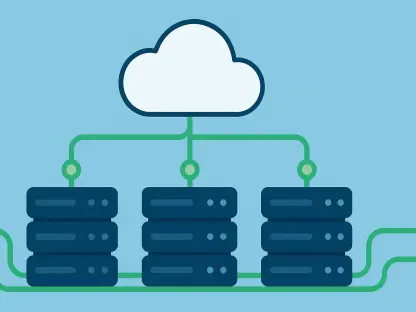
Disaggregated storage, like the new all-flash arrays we’re seeing, allows a company to scale its processing power and its storage footprint independently, which is a game-changer for budget efficiency. In the past, if you needed more performance, you were often forced to buy more capacity than you actually wanted, leading to wasted resources and a cluttered data center. By decoupling the storage controllers, enterprises can now surgically add the “brains” of the operation when compute demands spike, without buying more “closet space” than necessary. It creates a much more organic, responsive infrastructure that can breathe and grow alongside the AI Data Engine as workloads become more complex.
In an increasingly crowded market featuring giants like Dell, Nutanix, and Vast, what specific role does a “connective layer” play in unifying file and object storage for multimodal data?
This connective layer acts as the vital bridge between the static world of file storage and the high-speed requirements of modern frameworks like Apache Spark. By bringing GPU- and CPU-accelerated processing directly into this layer, organizations can execute analytics and AI preparation without the latency penalty of constant data migration. It’s a shift that mirrors what Nvidia is pushing for in its own stack, focusing on deep integration that makes the storage layer an active participant in the compute process. For the end user, this means that whether they are dealing with massive object stores or traditional file systems, the execution model remains open and broadly integrated, preventing the dreaded vendor lock-in.
As storage management and data management continue to overlap, how will the “persona” of the traditional storage administrator evolve to meet these new technical demands?
We are seeing a total convergence where the person managing the disks must now also understand the nuances of the data processing layer and AI curation. The traditional storage admin is becoming a data architect who must ensure that information is not just “stored” but is “AI-ready” with the right sync and protection protocols in place. They are now targeting a much more sophisticated persona—one that cares as much about the performance of a Nucleus data processing engine as they do about the physical health of a flash drive. This transition is naturally stressful but ultimately rewarding, as it moves the role from back-office maintenance to the very front lines of enterprise innovation and strategy.
What is your forecast for the future of data processing in AI infrastructure?
I expect that within the next few years, the boundary between the storage rack and the compute node will effectively disappear, creating a singular, “intelligent” fabric. We will move away from the frustration of siloed systems toward a unified environment where data is prepared, cleaned, and analyzed the very millisecond it is captured. This will empower enterprises to finally move past the 68% failure rate in production AI, as the infrastructure itself will finally be as smart as the applications it supports. It’s an exciting time where the emotional relief of a streamlined, 10-times-faster workflow will finally allow data scientists to dream bigger than ever before.