
Chloe Maraina is a distinguished expert in business intelligence and data science, specializing in the intersection of big data analysis and future-ready infrastructure. With a deep passion for transforming raw information into compelling visual narratives, she has become a leading voice in how enterprises manage and integrate complex data sets. Her work focuses on bridging the gap between traditional storage systems and the high-demand requirements of modern AI, ensuring that businesses can leverage their proprietary assets with maximum efficiency and security.
Traditionally, vectorization occurs outside the storage layer. What are the specific architectural benefits of pushing data processing functions directly into storage systems, and how does this change the way enterprises extract value from proprietary data without expanding their physical footprint?
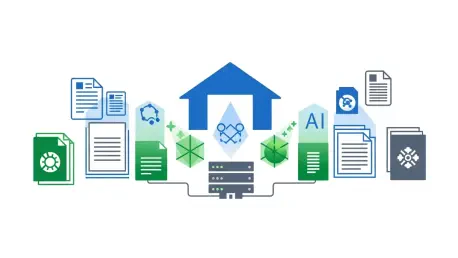
By pushing data processing functions directly into the storage layer, we eliminate the traditional bottlenecks associated with moving massive datasets between disparate environments for vectorization. This architectural shift, known as Content-Aware Storage, allows the system to handle document vectorization using LLM-based embedding models right where the data lives. It fundamentally changes the value proposition for enterprises because they no longer need to invest in separate, costly infrastructure just to prepare their proprietary assets for AI applications. We are essentially transforming passive storage into an active participant in the AI pipeline, which enables businesses to derive unprecedented insights from every document they own. This “under one roof” approach means organizations can scale their intelligence capabilities without the physical burden of adding racks of specialized processing servers.
Supporting 100 billion vectors on a single server requires a query latency of less than 700 milliseconds. What technical hurdles must be overcome to maintain 90% recall precision at this scale, and how does hardware collaboration help achieve such high system-level performance for AI workloads?
Achieving 90% recall precision at a 100-billion vector scale is a monumental challenge because as the dataset grows, the mathematical complexity of finding the “nearest neighbor” increases exponentially. To hit that 700-millisecond latency target, we had to move beyond software optimization alone and look at deep hardware integration. Our collaboration with Samsung and NVIDIA was vital here, as it allowed us to leverage enterprise solid-state drives and advanced GPU acceleration to handle the heavy lifting of semantic searches. By optimizing how the vector database organizes data for Approximate Nearest Neighbor searches, we ensure that the system remains both fast and incredibly accurate. This synergy between high-performance flash storage, like the ESS 6000, and specialized AI hardware is what prevents the system from buckling under the weight of such massive data volumes.
Infrastructure costs often skyrocket when deploying massive AI pipelines. How do improvements in vector density and reindexing time specifically reduce the number of servers required, and what practical steps should a business take to integrate these capabilities into their existing file systems?
The financial strain of AI often comes from the sheer number of nodes required to maintain performance, but by focusing on vector density, we can pack more intelligence into a smaller footprint. When you improve reindexing time and density, you effectively reduce the total server count needed to support a specific volume of documents, which slashes both capital expenditure and management complexity. For a business looking to integrate these capabilities, the first step is moving toward a storage-centric AI strategy that utilizes familiar file systems to lower the barrier to entry. Our approach integrates these advanced indexing capabilities directly into the storage software, meaning a company can deploy these tools without having to rewrite their entire data management protocol. It is about removing the artificial software barriers that have historically kept enterprise data isolated from AI processing.
Retrieval-augmented generation is used to ground AI responses in enterprise knowledge to reduce hallucinations. How does the process of identifying neighboring vectors within a high-performance storage appliance improve output trust, and what are the security implications of keeping this entire workflow under one roof?
Trust in AI is built on the accuracy of its context, and by identifying neighboring vectors within the storage appliance, we ensure the LLM is fed the most relevant, semantically similar “chunks” of proprietary data. When a user submits a query, it is converted into a vector and matched against stored data; those specific results are then passed to the LLM as part of the prompt, grounding the response in cold, hard facts rather than probabilistic guesses. This dramatically reduces the “hallucination” effect that plagues many generic AI models. From a security standpoint, keeping this entire workflow—from raw data to vectorization to retrieval—under one roof is a game changer. It means sensitive enterprise data never has to leave the secure perimeter of the storage system to be processed by a third-party service, significantly tightening the data governance loop.
What is your forecast for content-aware storage?
I believe we are entering a new paradigm where the distinction between “storage” and “compute” will continue to blur until the storage system itself becomes the primary engine for enterprise intelligence. In the coming years, I expect content-aware storage to become the standard for any organization handling sensitive or large-scale data, moving us away from a world of fragmented AI pipelines. We will see even higher levels of integration where the storage layer not only indexes and vectorizes data but also proactively manages the lifecycle of AI models. Ultimately, the goal is to make AI as ubiquitous and easy to access as the files on your desktop, turning every byte of stored data into a ready-to-use asset for real-time decision-making.