
Modern enterprise environments are increasingly defined by their ability to process vast quantities of unstructured data, yet many organizations remain paralyzed by the architectural gap between human-centric workflows and machine-centric analytics. The integration of unified storage ensures that a piece of information written as a file can be immediately read as an object by an AI system. This breakthrough effectively dismantles the technical barriers that have historically forced IT departments to choose between accessibility and scalability. By implementing a federated data architecture, businesses can finally move past the era of fragmented storage pools, allowing creative teams and engineering departments to work on the same data plane as the most sophisticated neural networks. This shift is not merely a technical upgrade but a fundamental reimagining of how data resides within a global enterprise, ensuring that every byte of information is instantly ready for high-performance compute cycles.
Data Silos: Overcoming the Divide between NAS and Object Storage
Historically, the storage landscape was split into two distinct and incompatible kingdoms: Network-Attached Storage and object storage. NAS systems, utilizing protocols like SMB and NFS, were built for the hierarchical needs of humans, providing a familiar folder structure that is essential for collaborative document editing and media production. However, as the volume of data exploded, these systems struggled to provide the throughput required by modern applications. Object storage emerged as a scalable alternative, utilizing the S3 protocol to handle massive repositories of unstructured data for cloud-native applications. Yet, this split created a massive operational burden, as files had to be manually migrated or translated before they could be ingested by machine learning models. This friction often resulted in data being trapped in silos, where it remained invisible to the very analytics tools designed to extract its value, creating a bottleneck that slowed down the pace of enterprise innovation.
Previous attempts to bridge this gap relied heavily on complex translation layers or storage gateways that often introduced more problems than they solved. These legacy approaches required proprietary “chunking” methods, where files were broken down into smaller pieces to fit into object storage buckets, making the underlying data unreadable to any system other than the original gateway. This effectively created a form of vendor lock-in and added significant latency to every read and write operation. Furthermore, the constant duplication of datasets to move them between human-readable file systems and machine-readable object pools inflated storage costs and complicated data governance. Enterprises were left managing multiple copies of the same information, which increased the risk of data inconsistency and regulatory non-compliance. Ctera Fusion Direct addresses these inefficiencies by offering a native approach that eliminates the need for middle-tier translation, providing a single source of truth.
Technical Innovation: Foundations for High-Performance AI Clusters
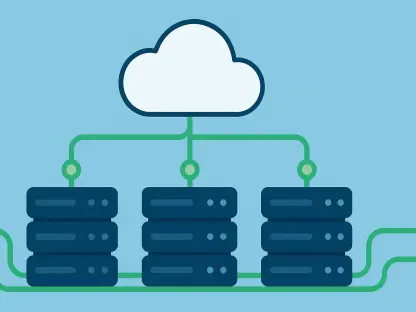
At the heart of this technological shift was the federated global namespace, which provided a unified view of data across edge locations and clouds. This architecture allowed a data scientist to write a training script for an S3 bucket while a creative director managed the same assets through a standard file explorer. To meet the demands of GPU clusters, the platform incorporated support for S3 over Remote Direct Memory Access, also known as RDMA. This technical advancement allowed massive datasets to be streamed directly from object storage into the memory of compute nodes at maximum bandwidth. In traditional setups, the network stack often became a bottleneck, forcing high-performance GPUs to sit idle while waiting for data. By utilizing RDMA, the storage fabric bypassed much of the software overhead, enabling a direct and highly efficient path for data transfer. This ensured that even the most data-intensive workloads operated at peak efficiency, maximizing the hardware return on investment.
The implementation of a unified data fabric was a strategic move that fundamentally altered how organizations approached long-term storage planning. Rather than treating file and object storage as competing technologies, leaders integrated them into a cohesive strategy that prioritized mobility and accessibility. To capitalize on these advancements, enterprises shifted toward a “data-first” architecture, where the storage layer was specifically optimized to support the high-throughput requirements of machine learning. The focus was directed at eliminating legacy gateways and adopting protocols that supported direct memory access for compute-heavy tasks. Moving forward, organizations should conduct thorough audits of their unstructured data silos to identify high-value assets that could benefit from immediate AI ingestion. Investing in a unified namespace proved to be the definitive step toward ensuring that human creativity and machine intelligence operated on a singular, synchronized platform.