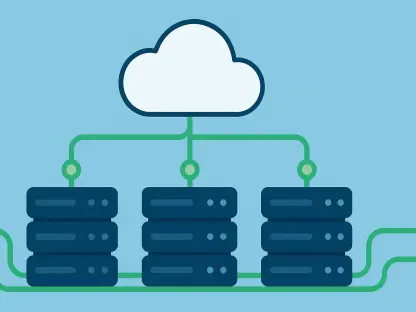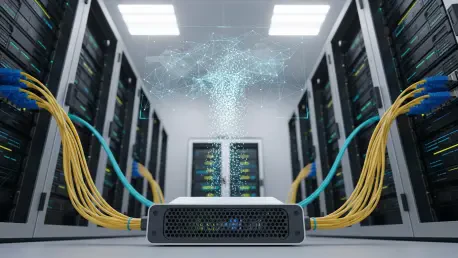

The rapid proliferation of industrial sensors has transformed modern manufacturing facilities into massive data generators that often overwhelm traditional IT infrastructures. While the previous decade focused on the simple act of connecting devices to the internet, the current priority has shifted toward extracting actionable intelligence at the exact moment a physical event occurs. Relying solely on centralized cloud environments introduces a range of complexities, from prohibitive bandwidth expenses to critical delays in response times. As organizations deploy thousands of vibration sensors and thermal cameras, the need for a more localized processing strategy becomes glaringly apparent. This shift represents a move toward a distributed intelligence model where the cloud acts as the brain for long-term strategy, while the edge functions as the nervous system for immediate reflexes. This balance ensures that critical machinery remains operational without the lag of external networks.
Overcoming the Limitations of Centralized Cloud Models
The physics of data transmission presents an immutable challenge for industries that operate on millisecond-level precision requirements. In high-speed robotics or power grid management, the round-trip time required to send a signal to a distant data center and receive a command back can exceed the safety thresholds of the equipment. This latency barrier effectively prevents the cloud from participating in closed-loop control systems where decisions must be made instantaneously. By moving inference engines and logic controllers to the network edge, engineers are successfully bypassing these communication delays to ensure that automated responses happen in real time. This technical necessity has driven the adoption of edge gateways that can process high-frequency telemetry without needing a persistent connection to the internet. Consequently, the edge has become the primary site for operational execution, leaving the cloud to handle tasks that are not time-sensitive.
Beyond the technical hurdles of speed, the financial implications of modern data growth are forcing a radical rethink of cloud-first strategies. Transferring terabytes of raw telemetry from thousands of field sensors into a centralized repository creates staggering bandwidth costs that can quickly outpace the expected return on investment. Furthermore, increasingly stringent data sovereignty regulations now mandate that sensitive industrial information must remain within a specific facility or geographic boundary. Relying on an exclusively cloud-based model creates significant legal risks and potential non-compliance issues that can disrupt international operations. Modern enterprises are instead choosing to filter and aggregate data locally, ensuring that only condensed, high-value insights are transmitted across the network. This approach not only slashes operational expenses but also provides a robust framework for maintaining compliance with local privacy and security laws.
Structuring the Multi-Tiered Architecture Continuum
Effective system design now centers on the concept of data gravity, which dictates that computational power must migrate toward the heaviest concentrations of information. To manage this efficiently, architects are implementing a four-tier model that begins at the device layer where raw signals are first generated. From there, an edge compute layer performs immediate filtering and anomaly detection to catch issues before they escalate into failures. The third tier involves regional cloud deployments that correlate data across multiple machines or production lines within a single site to identify broader patterns. Finally, a global cloud tier serves as the ultimate repository for long-term machine learning training and enterprise-wide reporting. By refining data at each step of this continuum, organizations prevent their central systems from being clogged with irrelevant noise. This hierarchical structure ensures that each level of the business receives the specific information it needs to function.
Determining when to move from a simple cloud setup to a sophisticated edge architecture often depends on specific operational inflection points. When a project scales to the point of managing over a terabyte of data per location or requires response times under 50 milliseconds, the business case for edge computing becomes unavoidable. These thresholds mark the transition from experimental pilot programs to mission-critical deployments where downtime has a direct impact on the bottom line. The global cloud does not lose its relevance in this scenario; rather, its role shifts from a primary processor to a strategic orchestrator. It becomes the environment where complex models are refined using historical data from across the globe before being pushed back down to the edge for local execution. This cycle of centralized learning and localized action creates a highly resilient ecosystem that can adapt to changing conditions in the field without manual intervention.
Engineering the High-Performance IoT Pipeline
A modern IoT pipeline requires more than just raw bandwidth; it demands a sophisticated transport spine capable of handling diverse data types. Connectivity begins at the edge with lightweight protocols like MQTT, which are designed to transmit small packets of sensor data over unreliable networks with minimal overhead. These edge signals are then bridged into enterprise-grade streaming platforms like Kafka at the regional level, allowing for high-throughput data distribution across the entire organization. To maintain consistency between the physical world and the digital representation, developers utilize digital twins as a foundational contract. These virtual replicas mirror the state and history of physical assets, allowing the edge and cloud to synchronize without constant manual reconciliation. This integration ensures that every stakeholder, from a local technician to a global analyst, is looking at the same version of the truth, regardless of where the data is stored.
Real-time intelligence is only as reliable as the underlying data, making rigorous governance at the ingestion point a non-negotiable requirement. Moving away from traditional batch updates toward continuous stream processing allows companies to identify anomalies and trigger automated alerts the moment they occur. However, this speed can be a liability if the incoming data is inconsistent or lacks proper context. Implementing schema registries and strict data quality checks at the edge prevents the phenomenon of data poisoning, where inaccurate sensor readings ruin the integrity of downstream machine learning models. By validating data formats and calibration states before the information leaves the gateway, organizations ensure that their analytics engines are fed with high-quality input. This focus on data integrity at the source transforms the IoT pipeline from a simple conveyor belt into a robust filter that enhances the value of information as it flows.
Navigating Governance and Strategic Outcomes
As processing power moves closer to the field, the security perimeter naturally expands, requiring a comprehensive Zero-Trust framework to protect distributed assets. In an environment where multiple vendors provide different components of the IoT stack, defining clear data ownership and access rights is essential for long-term stability. Every edge gateway must be treated as a potential entry point, necessitating robust authentication and end-to-end encryption for every data packet. This governance is further supported by detailed lineage tracking, which allows auditors to trace any piece of information back to its specific sensor and time of origin. By establishing a secure foundation, enterprises can confidently share insights across departments without compromising intellectual property or operational safety. This proactive stance on security ensures that the benefits of real-time intelligence are not overshadowed by the risks of a decentralized network.
The ultimate goal of this architectural evolution is to move organizations beyond basic descriptive monitoring into the realm of prescriptive operations. Instead of simply knowing that a machine has failed, businesses can now predict when maintenance is required based on actual wear and tear data rather than arbitrary calendar dates. This shift toward predictive maintenance significantly reduces unplanned downtime and extends the lifespan of expensive capital equipment. Furthermore, the ability to process data in real time enables unprecedented agility within the supply chain, allowing production schedules to adjust dynamically based on live market demand. As energy costs fluctuate, smart architectures can also optimize consumption curves to minimize waste and reduce the overall carbon footprint of industrial facilities. These outcomes demonstrate that edge-cloud integration is not just a technical upgrade but a fundamental shift in how modern businesses survive.
The strategic shift toward integrated edge-cloud architectures provided a clear roadmap for organizations seeking to master their industrial data streams. Leaders who prioritized the creation of a tiered compute continuum successfully turned massive volumes of raw telemetry into a competitive advantage. The focus remained on building modular systems that could scale from 2026 to 2028 and beyond, ensuring that infrastructure did not become a bottleneck for future innovation. By adopting decentralized processing, these companies bypassed the physical limits of latency and the rising costs of traditional cloud storage. The implementation of robust data governance at the edge ensured that artificial intelligence models remained accurate and trustworthy over time. Moving forward, the integration of autonomous decision-making at the local level allowed for a more resilient and self-healing industrial base. This transformation ultimately shifted the focus from connectivity to a comprehensive strategy of distributed intelligence.