
The staggering reality of modern computational needs has transformed the once-commoditized cloud market into a high-stakes arena where the ability to secure raw processing power determines the survival of the world’s most ambitious technology firms. As generative artificial intelligence evolves beyond its initial hype, the global demand for advanced computing has far outstripped the traditional capacities of legacy data centers. This “GPU gold rush” is no longer just about buying hardware; it is about securing a spot in a queue that stretches months, or even years, into the distance. Traditional hyperscalers, while robust, are finding it increasingly difficult to pivot their massive, generalized architectures to meet the hyper-specialized requirements of frontier AI training models.
Consequently, the industry is witnessing a strategic departure from the “one-size-fits-all” cloud philosophy that dominated the previous decade. A new class of “neocloud” power brokers has emerged to challenge the status quo by offering hardware-centric environments tailored specifically for massive neural network workloads. These providers do not seek to host every company’s website or email server; instead, they operate as specialized refineries designed to process the massive datasets required for the next generation of artificial intelligence. This shift marks the beginning of a bifurcated cloud market, where the choice of infrastructure is as critical as the selection of the AI architecture itself.
The roadmap for this transition involves navigating a complex landscape of market shifts and economic risks. While the rapid adoption of neocloud infrastructure offers a path to accelerated development, it also introduces significant financial liabilities for firms that move too quickly without a coherent strategy. Understanding the nuances of this “bifurcated” model—where general business logic remains on traditional clouds while high-intensity training migrates to specialized providers—is essential for any enterprise looking to maintain a competitive edge. This trend analysis explores the mechanics of the specialized revolution, the operational Moats being built by neoclouds, and the technical debt that threatens the unprepared.
The Specialized Revolution: Defining the Neocloud Phenomenon
Market Momentum and the Scarcity Economy
The current market maturity is best signaled by landmark infrastructure agreements that dwarf the typical enterprise contracts of the past. A primary example is the recent $10 billion agreement between Anthropic and Volta, which serves as a definitive marker for the shift toward specialized infrastructure. Such deals are not merely about scale; they are credibility markers that allow neocloud startups to secure priority access from hardware manufacturers like NVIDIA. When a specialized provider can demonstrate a multi-billion-dollar commitment from a premier AI lab, it gains the leverage necessary to navigate a supply chain currently defined by the scarcity of advanced accelerators and High-Bandwidth Memory (HBM).
This scarcity model has fundamentally changed the economics of cloud computing by placing a premium on physical resource availability over software-defined flexibility. Statistics from the current year show that the shortage of specialized cooling systems and power-dense data center racks has become a larger bottleneck than the silicon chips themselves. Neoclouds capitalize on this by building facilities that are designed from the ground up to support the thermal and electrical demands of modern clusters. By focusing on these physical constraints, neoclouds offer a value proposition that traditional hyperscalers, burdened by legacy server footprints, find difficult to match without massive reinvestment.
Furthermore, investment signals suggest that the “moat” in the AI era is no longer just proprietary code, but the relationship between the provider and the supply chain. Startups that once struggled to compete with the sheer capital of big tech are now finding that their agility allows them to adopt new hardware generations, such as the latest liquid-cooled architectures, faster than their larger rivals. This has created a secondary market where specialized compute is treated as a high-value commodity, often traded or reserved long before the actual hardware is even installed.
Real-World Applications and the New Infrastructure Stack
In the realm of frontier model training, specialized providers enable AI firms to manage massive GPU clusters with an efficiency that traditional hyperscalers often struggle to replicate. These “AI refineries” are optimized for ultra-low-latency communication between thousands of interconnected processors, a requirement that general-purpose cloud environments were never intended to handle at this scale. By bypassing the layers of virtualization and general-purpose management software that define traditional clouds, neoclouds provide a “bare-metal” level of performance that is crucial for the stability of training runs that last for months.
Beyond training, the focus of neoclouds is shifting toward optimized inference and model serving. These providers are building high-intensity environments focused on ultra-low-latency serving, ensuring that a model’s response time remains consistent even under heavy global demand. This level of operational excellence allows companies to leverage specialized infrastructure without the astronomical capital expenditure required to build proprietary, liquid-cooled data centers. For a firm developing a real-time AI assistant, the difference between a neocloud and a legacy provider could mean the difference between a seamless user experience and one plagued by lag.
Moreover, the operational advantages of neoclouds extend to the environmental and thermal management of the data center. Traditional air-cooled facilities are increasingly inadequate for the heat output of modern AI chips. Neocloud providers have led the way in implementing advanced liquid-cooling technologies and direct-to-chip thermal management, which not only improves performance but also reduces the long-term energy costs associated with high-intensity computing. This specialized focus allows AI labs to outsource the “physical” headaches of infrastructure management to experts, focusing their internal resources entirely on model innovation.
Industry Perspectives: The Bifurcated Cloud and Expert Insights
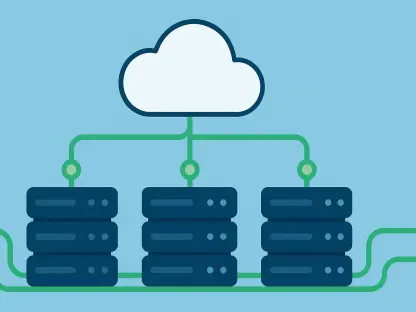
The consensus among industry analysts suggests a “coexistence theory” rather than a zero-sum game between neoclouds and the “Big Three” hyperscalers, which include Amazon Web Services, Azure, and Google Cloud. Experts argue that neoclouds complement traditional providers by handling the “heavy lifting” of massive training tasks, while hyperscalers remain the ideal home for enterprise data, security compliance, and customer-facing application logic. This hybrid model allows a corporation to keep its primary database on a traditional cloud while bursting its AI training workloads into a specialized neocloud environment for the duration of a project.
The specialized versus general divide is becoming the defining structural characteristic of the cloud market from 2026 to 2030. Hyperscalers are expected to maintain their dominance in the general utility market, where reliability and a vast ecosystem of integrated tools are the primary requirements. In contrast, neoclouds will likely capture the high-performance computing niche, where every millisecond of latency and every watt of power efficiency translates directly into millions of dollars in savings. This efficiency mandate has turned operational expertise in networking and thermal management into a new competitive moat that is difficult for generalists to replicate.
Thought leaders in the space emphasize that the real value of a neocloud is its ability to provide a tailored “stack” that includes not just hardware, but specialized software for cluster orchestration and fault tolerance. When a single hardware failure can derail a multi-million-dollar training session, the provider’s ability to detect and mitigate issues in real time becomes more important than the per-hour cost of the compute itself. This shift from “utility billing” to “performance-guaranteed partnerships” represents a fundamental change in the relationship between technology firms and their infrastructure providers.
Future Outlook: Navigating Innovation and Technical Debt
One of the most pressing warnings for the next few years concerns the accumulation of technical debt resulting from the “panic-buying” of compute capacity. Many enterprises, fearing they will be left behind in the AI race, are committing to long-term infrastructure contracts without a clear architectural strategy for how those resources will be used. This lack of planning could lead to significant financial consequences if the purchased capacity does not align with the actual requirements of the models being deployed. The market is expected to stabilize as enterprises begin to distinguish between the massive power needed for frontier training and the relatively modest resources required for basic fine-tuning.
As the economic evolution of the sector continues, the “Ferrari-level” compute market will likely see a correction where only the most demanding projects utilize the highest tier of neocloud infrastructure. Meanwhile, risk mitigation will become a priority for boards of directors who are increasingly wary of an infrastructure “bubble.” Matching the workload to the appropriate hardware is not just a technical necessity but a financial imperative. Over-provisioning for a task that could be handled by mid-range processors could drain the R&D budgets of even the most well-funded startups.
Looking at the broader implications, the widespread availability of specialized AI infrastructure is expected to lower the barrier to entry for non-tech industries over the next decade. Sectors such as pharmaceuticals, material science, and logistics will be able to rent “supercomputer-grade” capacity on demand, allowing them to run complex simulations that were previously the exclusive domain of national laboratories. This democratization of high-end compute power will likely trigger a wave of innovation across the global economy, provided that companies manage the transition with strategic discipline rather than reactive spending.
Conclusion: Balancing Speed with Strategic Discipline
The transition from generalized cloud utilities to specialized AI power brokers represented a fundamental shift in how organizations viewed their technology stacks. It was determined that the winners of the early AI era were not necessarily the companies that signed the largest infrastructure contracts, but those that demonstrated architectural precision. Leaders realized that the era of “limitless compute” came with hidden costs, and that the strategic value of a neocloud provider was found in its ability to solve physical bottlenecks rather than just providing virtualized instances.
The path forward required a disciplined approach to matching specific workloads with the appropriate hardware tier. Organizations that succeeded were the ones that avoided the trap of panic-buying and instead focused on the long-term economics of their AI models. It became clear that the neocloud was not a replacement for the traditional cloud, but a specialized extension of it, designed for the unique rigors of machine learning at scale. The industry moved toward a more mature understanding of resource allocation, where the focus shifted from sheer processor count to total system efficiency.
Enterprise leaders were encouraged to prioritize workload clarity and economic modeling before committing to the next generation of cloud scale. The transition proved that speed, while important, was no substitute for a well-defined architectural strategy. By treating infrastructure as a strategic asset rather than a commodity, businesses were able to navigate the complexities of the AI revolution without falling into the trap of unsustainable technical debt. The era of the neocloud ultimately taught the market that in a world of scarce resources, the most valuable asset was not the hardware itself, but the wisdom to use it correctly.