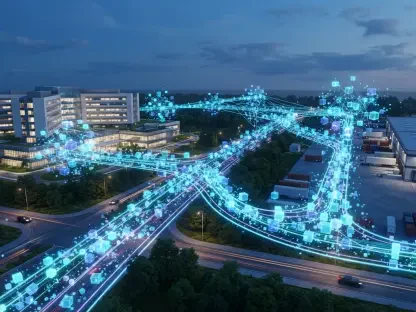

The evolution of urban management focuses on making infrastructure reason through data rather than simply collecting it via thousands of isolated IoT devices. This transition marks a departure from the first wave of smart city initiatives, which often resulted in an overwhelming influx of information that municipal staff could not realistically process. By 2026, the focus has shifted toward cognitive infrastructure, a system defined by its ability to integrate sensing, reasoning, and execution across various urban silos. Rather than merely alerting a technician to a potential leak, these systems use agentic AI to prioritize the severity of the issue, check resource availability, and suggest an optimal repair schedule. This evolution solves the long-standing “data-rich, action-poor” paradox that hindered earlier digital transformations. By embedding reasoning capabilities directly into the network, cities are creating a more responsive environment that anticipates needs before they become public emergencies.
Enhancing Utility Oversight: Automated Detection
One of the most tangible examples of this cognitive shift is the transformation of subterranean utility management, specifically in the maintenance of sewer and water networks. Historically, inspecting these systems required remotely operated rovers to capture thousands of hours of video footage, which human operators then had to review manually to spot structural defects or root intrusions. Today, systems like Pipe Sleuth have fundamentally changed this workflow by utilizing advanced computer vision to identify anomalies automatically. This automation removes the significant human bottleneck that once delayed critical repairs for weeks. By instantly flagging cracks or blockages, the cognitive system allows operational teams to transition immediately from detection to action. Furthermore, the ability of these platforms to generate automated documentation for regulatory compliance and audits has significantly reduced administrative burdens. This allows highly skilled engineers to move away from mundane data entry and focus on complex long-term strategic planning.
Beyond the underground, cognitive infrastructure is finding a new home on the city’s surface through the use of existing municipal assets as mobile sensor platforms. Transit buses and refuse trucks, which already navigate nearly every street in a jurisdiction daily, are now being outfitted with edge computing devices and high-definition cameras. This approach eliminates the need for expensive, static sensor networks by turning the daily journeys of city vehicles into continuous surveys of road health. These systems can detect potholes, illegal dumping, and even sidewalk obstructions in real-time. A critical nuance of this technology is its contribution to urban equity and accessibility. For instance, the AI can identify a minor sidewalk crack that might be a trivial inconvenience for most pedestrians but constitutes a total barrier for a citizen using a wheelchair. By prioritizing repairs based on these accessibility metrics, city leaders are moving beyond generic maintenance toward a model of equitable service delivery that directly improves the quality of life for all residents.
Strengthening Resilience: Edge Processing and Virtual Models
Resilience in the face of natural disasters has become a primary driver for moving intelligence out of centralized clouds and toward the edge of the network. In scenarios involving wildfires or flash flooding, traditional communication systems often experience significant latency or complete failure, rendering cloud-dependent smart systems useless. Cognitive infrastructure addresses this vulnerability by deploying localized intelligence, such as platforms that process drone feeds and thermal imagery directly on-site. When first responders utilize these tools, they maintain situational awareness regardless of the status of the broader internet connection. This localized “brain” allows for the real-time coordination of life-safety actions, such as identifying the fastest evacuation routes or spotting heat signatures in low-visibility environments. By ensuring that the infrastructure can think and react autonomously during a crisis, municipalities are creating a safety net that is both more reliable and more effective than previous passive monitoring tools.
The management of the built environment is also seeing a radical shift through the integration of digital twins with real-time cognitive reasoning. These virtual models of physical buildings are no longer static representations; they are dynamic entities that process occupancy and climate data to optimize energy consumption. Unlike traditional building management systems that follow rigid, pre-set schedules for heating, ventilation, and air conditioning, a cognitive digital twin reasons based on current usage patterns. If a specific floor is only partially occupied on a Friday afternoon, the system automatically scales back lighting and climate control to match the actual demand. This transition from static management to a dynamic response model leads to substantial operational cost reductions and furthers sustainability goals. By allowing buildings to sense their own environment and adjust their behavior accordingly, urban centers are significantly reducing the carbon footprint of their existing housing and commercial stock while improving overall comfort for occupants.
Establishing Secure Governance: Reflecting on Strategic Growth
As urban systems become more autonomous, the governance of these agentic platforms requires a robust ethical and security framework to maintain public trust. The industry has converged on a “human-in-the-loop” model, which ensures that while AI can identify problems and propose solutions, a human authority must grant final approval for high-stakes physical actions. This is particularly vital for systems controlling critical infrastructure like water valves, power grids, or traffic signaling. To support this, cities are implementing “zero exposure” security protocols that strictly authenticate every interaction between an AI agent and a physical asset. This defensive posture prevents unauthorized access and ensures that the system operates only within pre-approved parameters. By establishing these clear boundaries, municipalities can leverage the speed of AI while preventing accidental malfunctions or malicious interference. Security is thus treated not as an afterthought, but as the foundational layer upon which all other cognitive urban services are built.
The shift toward cognitive infrastructure represented a historical milestone in how urban environments functioned. By moving beyond simple data collection, cities successfully addressed the inefficiencies that plagued the early smart city movement. Leaders who prioritized the integration of agentic AI and edge computing found that their departments became significantly more responsive and resilient. The transition proved that the most effective strategy was not the pursuit of more data, but the development of better reasoning capabilities within existing systems. As the focus moved toward automated maintenance and dynamic resource allocation, the built environment became more sustainable and equitable for all residents. Moving forward, the lesson learned from this evolution was that technology must always serve as a support mechanism for human decision-makers rather than a replacement for them. The successful integration of these systems ensured that urban infrastructure remained as adaptable as the people it was designed to serve, securing a more stable future.