
By supporting dialects like Hausa, Yoruba, and Amharic, the TranslatePsy initiative seeks to remove the language barriers that hinder global scientific and educational advancement. This movement represents a fundamental pivot in the trajectory of artificial intelligence, moving away from the resource-heavy cloud structures that have dominated the landscape in recent years. Tether AI Research has introduced a framework that prioritizes the empowerment of the end-user by providing tools that function independently of high-speed internet connections. This release is a strategic effort to democratize high-level linguistic capabilities across diverse geographic regions. As the world becomes increasingly interconnected yet digitally divided, the necessity for localized, high-performance computing becomes paramount. By focusing on edge devices, the developers ensure that the most sophisticated translation tools are no longer restricted to those with access to fiber-optic networks.
Architectural Evolution: Optimization for Decentralized AI
Small Language Models: A Paradigm Shift in Performance
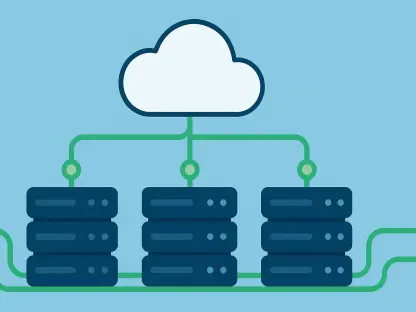
The reliance on massive, centralized data centers has often proven to be a bottleneck for real-time applications and regional inclusivity. The TranslatePsy project addresses this by optimizing Small Language Models to run natively on consumer hardware like mid-range smartphones and ultra-portable laptops. This architectural shift marks a departure from the “bigger is better” philosophy that characterized the early AI boom. Instead of chasing billions of parameters that require specialized server farms, the focus has shifted toward refining the internal logic and efficiency of the software. By doing so, performance is no longer tethered to sheer computational scale, allowing for instantaneous processing without the latency introduced by remote server communication. This approach ensures that sophisticated linguistic tools remain functional in environments where connectivity is sporadic, fostering a more resilient and inclusive digital ecosystem.
Digital Sovereignty: The Move Toward Localized Data
Beyond the technical merits of local processing, this transition to edge-based translation models addresses a critical gap in digital sovereignty. When AI operates directly on a device, the user maintains absolute control over the data being processed, which is a significant departure from the subscription-based service models of the past. This localized functionality is particularly vital for individuals working in sensitive fields where confidentiality is non-negotiable. Moreover, the reduction in energy consumption associated with local processing compared to maintaining massive data centers aligns with global sustainability goals. By utilizing the existing processing power found in modern consumer electronics, Tether leverages a decentralized hardware network that already exists, effectively turning every smartphone into a node of linguistic intelligence. This strategy not only democratizes access to information but also reduces operational costs for the end-user.
Data Curation: Refining the Foundation of Intelligence
The effectiveness of the TranslatePsy suite is largely attributed to a revolutionary approach to data curation rather than the volume of information ingested. Tether AI Research implemented a proprietary quality-estimation filtering method designed to purge low-quality or irrelevant data from common open-source training sets. This rigorous cleaning process successfully removed approximately 96% of the noise that typically hampers the performance of smaller models. By focusing on high-fidelity, linguistically accurate datasets, the engineering team proved that a model with only 800 million parameters could achieve results comparable to systems many times its size. This “less is more” philosophy challenges the conventional wisdom that intelligence is a direct product of dataset magnitude. The resulting efficiency allows the software to maintain a high degree of nuance and accuracy while remaining small enough to be stored on devices with limited storage capacity.
Performance Benchmarks: Proving Efficiency over Scale
Comparative testing has validated this refined approach, with the TranslatePsy-AfriSLM model demonstrating superior results in standardized benchmarks such as FLORES-200. Despite its compact 0.8B parameter architecture, the model consistently outperformed industry staples like Meta’s NLLB-3.3B and larger iterations like Qwen3.5-122B. These benchmarks highlight a significant milestone in AI development where optimized, data-centric architectures allow local devices to punch well above their weight class. The ability to outperform models that are over a hundred times larger suggests that the industry is entering a new era where quality and structural elegance are the primary drivers of innovation. For developers and researchers, this provides a blueprint for creating highly specialized tools that do not require astronomical budgets. It shifts the competitive landscape toward technical ingenuity and away from the simple accumulation of vast amounts of raw data.
Global Impact: Specialized Linguistic Solutions
Sub-Saharan Support: Bridging Linguistic Gaps
The localized focus of the TranslatePsy-AfriSLM family is a direct response to the historic neglect of African languages by major technology corporations. By providing native support for 19 major languages, including Swahili, Zulu, and Amharic, the initiative addresses the needs of nearly half the population of the African continent. This specialized support is crucial for digital inclusion, as it allows users to interact with modern software in their primary tongues rather than being forced to use second languages. The project recognizes that language is not just a tool for communication but a vehicle for culture and specialized knowledge. By dismantling these linguistic barriers, Tether is enabling a new generation of students, entrepreneurs, and researchers to access the global information commons on their own terms. This level of localization ensures that the benefits of the digital revolution are shared more equitably across all diverse global communities.
Physical Integration: Solar Hubs as Digital Gateways
In practical terms, the deployment of these models involves a unique synergy between advanced software and existing physical infrastructure. Tether is utilizing its established network of solar-powered kiosks to distribute the TranslatePsy software to communities that lack reliable internet access. These kiosks, which already serve as hubs for energy and financial services, now act as digital gateways where users can download these lightweight AI models to their personal devices. This physical-to-digital integration ensures that the technology reaches remote areas, providing essential tools for education and economic development. For instance, a small-scale farmer can now use a local device to translate complex agricultural research or market reports without needing a satellite link. This approach turns the concept of “Infinite Intelligence” into a tangible, local resource. It empowers individuals by giving them the tools to navigate a globalized world successfully.
The EuroNano Series: Efficiency for Modern Hardware
While the African initiative focuses on linguistic diversity, the TranslatePsy-EuroNano series emphasizes extreme storage and processing efficiency for European languages. The smallest version of the EuroNano model occupies a mere 36MB of storage space, representing a staggering 94% reduction in size compared to conventional offline translation tools used in modern web browsers. This level of miniaturization does not come at the cost of accuracy; the model retains approximately 98.4% of the translation quality found in resource-heavy systems that require gigabytes of space. Such efficiency is particularly beneficial for budget-conscious users and those using older hardware, as it allows sophisticated AI to run smoothly without overwhelming device memory. It democratizes access to high-quality translation by making it available on almost any digital platform, from entry-level smartphones to specialized industrial equipment that requires embedded linguistic capabilities.
Societal Application: Healthcare and Educational Growth
The introduction of the TranslatePsy suite established a new standard for how localized artificial intelligence should be implemented across diverse populations. By prioritizing open-source access and hardware efficiency, the project demonstrated that high-performance tools could be distributed without the gatekeeping of centralized cloud providers. Moving from 2026 to 2028, the focus shifted toward the integration of these models into critical social sectors such as healthcare and education. In remote medical environments, healthcare workers utilized the localized models to communicate vital health information to patients in their native dialects, ensuring clarity during emergency situations where every second counted. For future implementations, organizations looked to these lightweight architectures as a blueprint for data sovereignty. Developers were encouraged to build upon this open foundation to create niche applications that addressed local challenges.