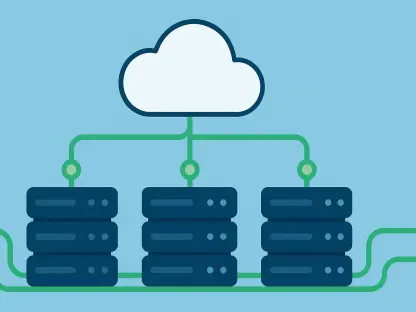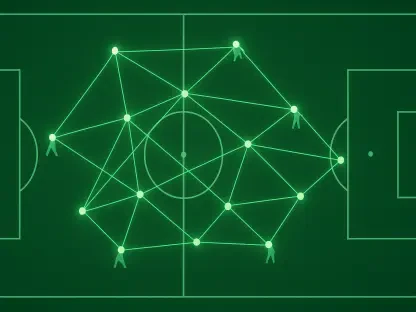

Traditional algorithmic trading often fails to account for human sentiment, yet the integration of social graph data now allows AI models to analyze community consolidation patterns as financial signals. This shift marks a significant departure from the siloed quantitative models that dominated the previous decade, where price action was viewed in isolation from the social structures driving it. The collaboration between AIW3 and UXLINK exemplifies this evolution by merging high-frequency algorithmic precision with the vast behavioral datasets of Web3 social networks. By treating social interactions as quantifiable nodes of liquidity, the partnership seeks to stabilize the often-volatile SocialFi sector. This initiative is not merely a technical bridge but a structural overhaul designed to transform decentralized finance into an ecosystem that understands not just the “what” of market movements, but the “why” behind collective investor behavior. As digital assets continue to mature, the necessity for such multi-layered analytical frameworks becomes paramount for long-term sustainability.
Strategic Distribution: Synergy and Community Data
A fundamental transformation is occurring in how market strategies are discovered and implemented, moving away from solitary research toward a community-driven model. Rather than relying on static technical indicators, users now look toward the collective intelligence of their social graphs to navigate market complexities. This social-driven distribution ensures that successful strategies are amplified while those with higher risk profiles are scrutinized by the collective. The integration allows for a dynamic feedback loop where the performance of an AI model is continuously refined by the real-world behavioral responses of the community it serves. This collaborative approach effectively turns every social interaction into a data point for risk assessment, making the entire ecosystem more resilient to sudden shocks. By fostering an environment where information is shared transparently and verified by peers, the platform reduces the information asymmetry that often leads to retail losses. This shift empowers the average participant to trade with the confidence of an expert.
The technical integration also allows social graph data to be used as a primary financial signal, addressing the high technical barriers that once hindered mainstream DeFi adoption. UXLINK simplifies the onboarding process by embedding financial functions within familiar social interactions, effectively masking the complexity of underlying blockchain technology. By using social logins and community-guided tutorials, the platform allows users to enter the world of algorithmic trading without needing to undergo a steep learning curve. This approach prioritizes user experience, ensuring that the transition from a casual observer to an active participant is seamless and intuitive. As a result, the technical “friction” that once hindered growth is replaced by a supportive social framework that encourages exploration. This user-centric design is crucial for moving Web3 beyond a niche audience into the mainstream digital economy. By decentralizing the educational process, the platform ensures that users are better equipped to handle the responsibilities of managing sophisticated AI-driven assets.
Infrastructure Evolution: Resilient SocialFi Models
This integration addresses a historical weakness in the SocialFi space where platforms were often hyper-speculative and short-lived due to a lack of functional utility. Unlike previous models where social and financial elements were loosely connected, the partnership between AIW3 and UXLINK ensures that both sides provide functional utility within a unified ecosystem. The social network gains a productive financial purpose, while the AI infrastructure benefits from human behavioral data and a robust distribution network, creating a self-reinforcing feedback loop. The broader trend highlighted by this partnership is the move toward “intelligent decentralization,” which pairs sophisticated backend technology with intuitive frontends. By mirroring real-world social dynamics within a community-driven financial ecosystem, this project sets a new standard for on-chain interactions. This evolution suggests that the future of finance lies in its ability to be both automated and deeply connected to human behavior, ensuring that liquidity is not just efficient but also sustainable.
The successful merger of social data and algorithmic trading highlighted a path for future decentralized protocols to achieve global scale. It was determined that the primary focus for developers should be the continued refinement of front-end social interfaces to match the sophistication of back-end AI engines. For those looking to capitalize on this trend, the most effective strategy involved moving capital into ecosystems that prioritized verifiable social proof over anonymous liquidity. Practical steps included the integration of cross-chain social identifiers and the expansion of AI models to include a wider range of non-financial social metrics, such as community governance participation. These considerations became standard practice for projects aiming to build sustainable on-chain economies. By prioritizing the human element within a framework of automated precision, the industry moved closer to a financial system that was both highly efficient and deeply connected to the needs of the global community, ensuring that digital finance remained resilient in a rapidly changing market.