
The persistent barrier between digital intelligence and physical execution is rapidly dissolving as autonomous systems move beyond simple repetitive motions toward genuine environmental understanding. The Allen Institute for AI, known as Ai2, has officially unveiled MolmoAct 2, a sophisticated foundation model engineered to bridge this gap by prioritizing open-science principles in the complex field of robotic manipulation. Unlike many proprietary systems that keep their inner workings hidden from the broader scientific community, this release provides full access to model weights, expansive datasets, and the necessary software tools to foster innovation across both academic and commercial sectors. By providing these resources, the institute aims to dismantle the high entry barriers that have historically favored a small number of well-funded corporations, allowing for a more diverse range of developers to experiment with high-level robotic control. This shift represents a significant move toward transparency, ensuring that the development of embodied AI progresses through collective scrutiny and collaborative enhancement rather than within isolated silos.
Bridging Vision and Action through Spatial Reasoning
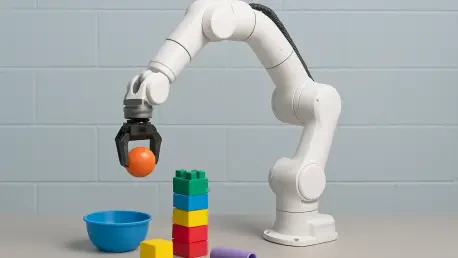
At the heart of this technical advancement is the model’s capacity to synthesize complex visual reasoning with precise physical action planning, creating a seamless loop between perception and movement. MolmoAct 2 does not merely identify objects in its field of view; it interprets spatial instructions to generate movement commands that allow robots to execute delicate tasks such as folding fabrics or handling fragile laboratory equipment. A defining feature of the architecture is its selective 3D reasoning capability, which optimizes performance by applying deep spatial analysis only when the task requires high precision. This targeted approach significantly reduces the computational overhead that often plagues real-time robotics, ensuring that the system remains responsive without needing massive server clusters for every minor adjustment. This efficiency makes the model particularly suitable for deployment in dynamic environments where lighting, object orientation, and workspace constraints can shift unexpectedly, requiring the robot to adapt its trajectory and grip in a matter of milliseconds.
The engineering team at Ai2 focused heavily on improving the speed and versatility of the model compared to its initial iteration, allowing it to generalize across a wider variety of tasks. Instead of requiring exhaustive retraining for every new object or environment, the system utilizes its pre-existing knowledge of physics and geometry to solve novel problems through zero-shot or few-shot learning techniques. This versatility is essential for practical applications where robots must transition between tasks, such as clearing a table and then organizing a shelf, without human intervention. By grounding the model in a robust understanding of three-dimensional space, the developers have ensured that the robot can anticipate the consequences of its actions, such as how an object might slide or tip when pushed. This predictive capability is a cornerstone of advanced manipulation, moving the industry closer to a reality where machines can operate alongside humans in domestic and professional settings with a high degree of reliability and minimal error.
Comprehensive Datasets for Bimanual Coordination
A central component of this release is the massive bimanual manipulation dataset, which serves as the training foundation for robots requiring human-like dexterity and coordination. This repository contains over 700 hours of high-quality demonstrations, representing the largest open-source collection of its kind specifically focused on two-armed tabletop tasks. The data covers a broad spectrum of activities, including grocery scanning, device charging, and the intricate coordination required to organize cluttered workspaces. Because many real-world tasks are difficult or impossible to perform with a single hand, the emphasis on bimanual control is a vital step toward creating truly useful robotic assistants. By observing thousands of successful trials, the model learns the nuances of how two arms should move in concert to avoid collisions while maximizing efficiency. This dataset allows researchers to bypass the often prohibitively expensive and time-consuming process of collecting their own teleoperated data, effectively democratizing the ability to train sophisticated robotic controllers.
Beyond the sheer volume of data, the quality and variety of the demonstrations provided in the MolmoAct 2 package offer a roadmap for mastering complex sequences of movements. The dataset includes labels and spatial metadata that help the model understand the relationship between visual cues and the resulting joint torques or Cartesian coordinates. This structured approach to training enables the robot to handle objects of varying weights and textures, from slippery glass vials to soft textiles, with appropriate force and precision. As the global research community begins to integrate this data into their own workflows, the collective knowledge base regarding two-armed manipulation is expected to expand rapidly. This collaborative effort is crucial for solving the long tail of robotics problems, where rare or difficult edge cases can lead to system failure. With a shared, high-quality data foundation, developers can focus on refining specific algorithms or hardware interfaces, knowing that the underlying behavioral models are rooted in extensive, well-vetted physical demonstrations.
Strategic Alliances and Practical Implementation
The validation and testing phases of MolmoAct 2 involved a network of specialized partners to ensure the model could transition from simulation to the messy reality of physical hardware. Cortex AI played a pivotal role by conducting independent benchmarking, which provided an objective evaluation of the model’s reliability across thousands of systematic trials. Simultaneously, I2RT Robotics provided the advanced hardware platforms necessary for physical testing, ensuring that the software could effectively control various motors, sensors, and end-effectors. This multi-organizational approach allowed the developers to identify and resolve performance bottlenecks that might not have been apparent in a controlled laboratory setting. By testing the model on standard industrial and research-grade robots, the team confirmed that the system is hardware-agnostic, capable of functioning across different robotic architectures. This compatibility is essential for wide-scale adoption, as it allows institutions to leverage their existing equipment while benefiting from the latest breakthroughs in AI-driven control.
One of the most promising applications of this technology was explored in collaboration with the Stanford School of Medicine, where the model was integrated into high-precision laboratory workflows. The system was utilized to automate complex tasks within CRISPR gene-editing processes, such as the precise handling of samples and the operation of sensitive analytical equipment. This initiative points toward the development of self-driving wetlabs, where robotic systems can manage the repetitive and highly exacting tasks of biological research with greater consistency than human operators. In these environments, the model’s ability to reason about 3D space and handle delicate objects is put to the ultimate test, as even a minor deviation could compromise an entire experiment. The successful implementation in a medical research context demonstrates the maturity of the system and its potential to accelerate scientific discovery by freeing human researchers from manual labor. These real-world successes provide a strong proof of concept for other industries looking to automate sophisticated physical processes.
Navigating Challenges and Future Considerations
The journey toward fully autonomous robotic manipulation was not without its hurdles, and the initial implementation phases still faced significant obstacles that required ongoing attention. While the model showed impressive results in controlled trials, issues such as camera occlusion and the precise timing of rapid responses remained areas where further refinement was needed. In dynamic environments where objects were frequently obscured or where lighting changed drastically, the system occasionally struggled to maintain a perfect spatial map. However, the open-source nature of the project was designed specifically to address these limitations by inviting the global engineering community to contribute solutions and optimizations. By acknowledging these technical gaps, the developers established a transparent baseline that encouraged honest peer review and iterative improvement. The focus shifted from claiming perfection to providing a robust, extensible framework that could be adapted for specific industrial needs or specialized research objectives, ultimately fostering a more resilient ecosystem.
Moving forward, the primary objective for practitioners should be the integration of this foundation model into diverse hardware stacks to test the boundaries of its adaptability. Organizations looking to leverage these advancements should prioritize the development of high-fidelity sensory feedback loops, such as tactile sensing, to complement the visual reasoning capabilities of the system. This multi-modal approach will likely be the next frontier in achieving human-level dexterity, especially in tasks involving occlusion or highly reflective surfaces. Researchers were encouraged to experiment with the provided dataset to fine-tune the model for niche applications, ranging from electronic waste recycling to assisted living technologies. As these systems become more prevalent in everyday environments, establishing standardized safety protocols and ethical guidelines for autonomous physical interaction remained paramount. The transition from digital intelligence to physical agency reached a critical inflection point, and the tools provided by this release served as a catalyst for a more accessible and collaborative future in robotics.