
The transition from singular personal assistants to complex, collaborative agentic systems represents a fundamental evolution in corporate productivity and operational efficiency. Y Combinator recently made a significant contribution to this trend by transitioning its internal multi-agent AI framework, known as Quartermaster or QM, to an open-source model under the MIT license. This move shifts the focus from individual AI interactions toward a multiplayer harness designed to bridge the gap between Slack communications and complex web-based workflows. Rather than functioning as a standalone chatbot, QM acts as an organizational infrastructure layer where multiple specialized agents collaborate across diverse departments. This enables seamless support for legal, accounting, engineering, and event planning tasks within a unified ecosystem. By moving this technology into the public domain, the aim is to provide a robust blueprint for how modern enterprises can integrate autonomous agents without sacrificing operational coherence or security.
Organizational Infrastructure and Deployment Requirements
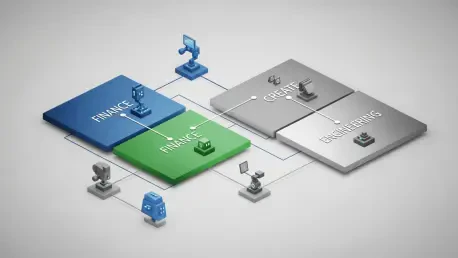
The design philosophy behind the release of QM centers on moving away from the conventional one-size-fits-all assistant model, which frequently introduces significant security risks and unmanageable complexity. In a traditional setup, a single high-permission agent might have access to too much data, but QM addresses this by providing isolated workspaces for every individual and shared channel within an organization. Each of these distinct environments maintains its own strictly scoped memory, dedicated file storage, and specific credential view. This meticulous isolation ensures that AI agents can perform background tasks or monitor active communication channels without the risk of sensitive data leaking between different organizational functions. For example, a legal agent operating in a private channel will never inadvertently share confidential contract details with a general engineering bot. This structural integrity allows for a high degree of trust in autonomous systems even when they are handling proprietary business information.
While the QM framework is now accessible to the broader public, it remains distinct from consumer-grade desktop applications or simple browser extensions. It is built specifically as organizational software that requires a sophisticated setup, including a cloud account, a Postgres database, and a technical platform engineer to manage the underlying infrastructure. The framework is ideally suited for startups and mid-sized companies ranging from 10 to 500 employees, where the need for automation is high but resources for custom-built internal tools are often limited. Deployment does not follow the standard route of a full repository clone followed by manual configuration; instead, technical teams utilize a specific initialization process designed to set up the necessary sign-in protocols and cloud infrastructure efficiently. This professional-grade requirement ensures that the system is stable enough for production environments while remaining flexible enough for specialized engineering teams to customize based on their specific needs.
Technical Architecture: Security and Execution Sandboxing
At the heart of the system lies a headless core written in TypeScript, which functions as the central nervous system for identity management, API routing, and agent reasoning. One of the most significant advantages of this technical foundation is its model-agnostic nature, which prevents organizations from being locked into a single AI provider. This flexibility allows businesses to power the harness with various AI engines, such as Claude or specialized Codex models, depending on the specific performance and cost requirements of the task at hand. The system interacts with its digital environment through a secure sandbox where agents execute commands and run scripts. This ensures that any tools or software dependencies the agents install during their workflows remain strictly isolated from the primary server infrastructure. By compartmentalizing the execution layer, the framework mitigates the risk of a compromised or malfunctioning agent affecting the broader stability of the corporate network during daily operations.
To manage the inherent risks associated with autonomous agents, the framework offers three distinct security postures that administrators can apply based on their comfort level: Strict, Auto, and Dangerous. The Strict mode is the most conservative, requiring manual human approval for almost every action an agent attempts to take, making it ideal for high-stakes financial or legal tasks. In contrast, the Auto mode utilizes an integrated classifier to screen for potential threats or anomalies before allowing a task to proceed. Even when the system is set to its most permissive setting, a series of hard-coded safety policies remains in place to block inherently destructive actions, such as recursive file deletions or unauthorized database wipes. This multi-layered defense ensures that the AI acts as a secure proxy for the human user, operating strictly within the specific permissions and credentials it has been granted. This approach provides a necessary safety net for companies experimenting with agentic automation in complex environments.
Practical Utility: From Internal Use to Community Standards
Practical evidence of the framework’s effectiveness comes from its extensive internal use, where it has demonstrated remarkable versatility in managing high-volume administrative and technical tasks. The system is capable of aggregating data from various internal notes and databases to provide comprehensive summaries, triaging complex email threads on a predetermined schedule, and even monitoring engineering pipelines to automatically open pull requests. By automating these repetitive and often time-consuming workflows directly within shared Slack channels, the framework maintains a durable and transparent history of project progress that is accessible to all relevant team members. This transparency is crucial for maintaining accountability and ensuring that human supervisors can quickly review AI contributions. Because the agents operate where the work is already happening, they become a natural extension of the team rather than a separate tool that requires constant switching, thereby increasing the overall organizational velocity.
The decision to open-source the Quartermaster framework established a clear precedent for how technical organizations approached the integration of multi-agent systems into daily operations. Developers who sought to implement this technology focused on auditing their existing cloud permissions and identifying specific Slack-based workflows that benefited from automated mediation. Engineering teams prioritized the setup of secure Postgres environments and evaluated which AI models best aligned with their specific budgetary and performance requirements. This proactive stance allowed companies to move beyond simple chat interfaces and toward a sophisticated, networked environment where agents performed meaningful work in the background. By adopting the isolated workspace model, organizations successfully mitigated the risks of data leakage while maximizing the output of their digital workforce. The resulting community-driven improvements transformed the experimental harness into a stable pillar of corporate infrastructure, offering a practical alternative to proprietary solutions.