
The integration of sophisticated artificial intelligence into corporate workflows often hits a glass ceiling not because of a lack of intelligence, but due to a fundamental lack of secure, manageable infrastructure. OpenAI has recently addressed this systemic gap by acquiring Ona, the platform previously recognized as Gitpod, signaling a massive shift in how the company intends to interact with the enterprise market during the current production cycle from 2026 to 2028. By moving beyond the provision of large language models and stepping into the realm of Cloud Development Environments, the organization is effectively providing the digital “office space” where its autonomous agents can work without supervision-related risks. This strategic move suggests that the race for AI dominance is no longer just about who has the most parameters, but about who can offer the most stable and governed environment for those parameters to execute complex tasks. Corporate leaders, previously hesitant to grant agents broad system access, now see a potential path toward safe, large-scale automation.
Building the Foundation: Securing AI Autonomy
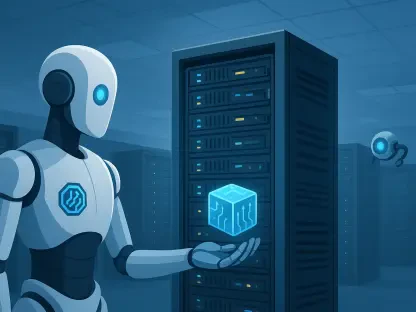
The primary obstacle preventing the widespread deployment of autonomous agents within Fortune 500 companies is the inherent unpredictability of AI when granted agency over internal file systems and databases. When an agent is tasked with a complex goal, such as refactoring a legacy codebase or optimizing cloud expenditure, the risk of accidental data deletion or unintentional financial drain through excessive token usage remains a significant deterrent. Ona’s inclusion into the OpenAI ecosystem solves this by providing specialized infrastructure designed to contain these agents within secure, isolated sandboxes that mirror the production environment without the associated risks. These environments allow for granular control, ensuring that any action taken by the AI is logged, monitored, and reversible. This shift transforms the AI from an unpredictable external collaborator into a governed internal asset that operates strictly within the security protocols defined by a company’s Chief Information Security Officer.
By acquiring a firm deeply rooted in the development of remote workspaces, OpenAI is transitioning from being a mere provider of intelligence to an end-to-end infrastructure architect for the automated workforce. While GPT-4 and its successors provide the cognitive logic, Ona provides the skeletal structure—the terminal, the file system, and the network access—required for that logic to manifest as tangible work. This “full-stack” approach effectively tames the wild nature of autonomous agents by embedding them in a context-aware development environment where they have access to the necessary tools without being “loose” on the open internet. This architectural integration is particularly relevant for sectors like financial services and healthcare, where regulatory compliance mandates that all automated actions occur within a verifiable and traceable digital perimeter. The move demonstrates a sophisticated understanding of the enterprise need for “contained autonomy,” where the AI can be both powerful and safely restricted simultaneously.
Persistence and State: Managing Professional Workflows
One of the most frustrating aspects of using early-stage AI agents was their lack of persistence, often resulting in a loss of context or progress whenever a session timed out or a connection dropped. Ona’s technology brings a sense of historical continuity to the OpenAI platform, allowing agents to maintain their “train of thought” and current state across multiple sessions and different human supervisors. This persistence is crucial for long-running tasks, such as multi-day software audits or complex data migrations, where the agent must remember what it has already checked and what remains to be completed. In a professional setting, a digital employee that forgets its work every time the browser is closed is more of a liability than an asset. By implementing persistent Cloud Development Environments, OpenAI ensures that its agents function as reliable, long-term members of a technical team, capable of resuming work exactly where they left off, which significantly reduces the friction of human-AI collaboration.
IT departments frequently struggle with the “shadow AI” problem, where employees use external tools that bypass internal security controls and data residency requirements. The integration of Ona allows OpenAI to hand-deliver a solution that sits directly within a corporation’s Virtual Private Cloud, effectively bringing the AI to the data rather than sending the data to the AI. This setup enables IT administrators to apply their existing logging frameworks, credential management systems, and read/write permission levels directly to the environment where the autonomous agent resides. This level of oversight ensures that even if an agent attempts an unauthorized action, it is immediately blocked by the underlying infrastructure’s security policy, long before any damage can occur. This capability turns the AI into a standard part of the enterprise software stack, subject to the same rigorous audits and governance as any other internal application, which is a prerequisite for moving AI out of the experimental phase and into production.
Market Competition: Winning the Infrastructure Race
The timing of this acquisition is widely interpreted by industry analysts as a defensive reaction to the competitive pressures exerted by Anthropic and other rivals who have begun offering self-hosted options. As Anthropic continues to market its models as safer and more aligned with human intent, OpenAI needed a concrete way to prove that its own models are equally suitable for the most sensitive corporate environments. By owning the infrastructure, OpenAI can ensure that its coding models are deeply embedded in the daily workflows of software engineers, making it much harder for competitors to displace them with better models alone. This strategy acknowledges that the superior model is not necessarily the one with the highest benchmark scores, but the one that is the easiest and safest for a large organization to deploy at scale. Consequently, the acquisition of Ona serves as a protective moat, locking in enterprise customers by providing a comprehensive ecosystem that competitors cannot easily replicate without significant investment.
Beyond the technology itself, the onboarding of a specialized 79-person team from Ona represents a significant infusion of talent capable of building the “missing plumbing” required for industrial-grade AI development. This team brings years of experience in managing complex distributed systems and ensuring the reliability of cloud-based developer tools, skills that are distinct from those needed to train large language models. This move signifies OpenAI’s transition from a research-focused organization to a product-centric enterprise powerhouse, capable of managing the entire lifecycle of an autonomous agent. The focus has moved away from simply generating code snippets to managing the deployment, testing, and maintenance of that code within a live environment. By bridging the gap between raw intelligence and practical execution, OpenAI is positioning itself as the indispensable partner for any company looking to automate its most complex technical processes, effectively defining the standard for how AI work is monitored and verified.
Strategic Value: The Future of Corporate Governance
While Ona’s revenue prior to the acquisition appeared modest in comparison to OpenAI’s valuation, its strategic worth was found in its ability to grant immediate credibility with conservative institutions. Organizations such as sovereign wealth funds and global pharmaceutical giants demanded high-level governance and rigorous security before they would even consider granting an AI agent access to their intellectual property. The acquisition provided OpenAI with a proven platform that had already been vetted by these risk-averse entities, bypassing years of internal development and security certification. Industry experts noted that this “boring but necessary” step was what actually allowed AI to scale beyond simple chatbot interfaces and into the realm of real-world labor. The focus shifted from the novelty of AI capabilities to the reliability of the delivery mechanism, ensuring that the technology remained a stable asset rather than a source of potential liability. This emphasis on stability helped solidify OpenAI’s position as a mature leader in the enterprise sector.
The decision to acquire Ona fundamentally changed the trajectory of autonomous agent development by prioritizing safety and structure over raw speed. For organizations looking to mirror this success, the primary takeaway was that AI deployment required a robust infrastructure layer that was separate from the model itself. Future implementations focused on creating isolated, tool-rich environments where agents could be tested against real-world data without risking the integrity of the primary system. Companies that followed this blueprint successfully integrated autonomous agents into their dev-ops pipelines, treating AI as a high-privilege employee that required constant, automated oversight. This approach necessitated the development of new internal roles dedicated to AI environment management and security auditing. Ultimately, the industry learned that the true power of AI was only realized when the “workspace” was as intelligent and secure as the “brain” it housed. This shift in perspective prompted a wider movement toward standardized AI governance frameworks that prioritized operational safety across all sectors of the economy.