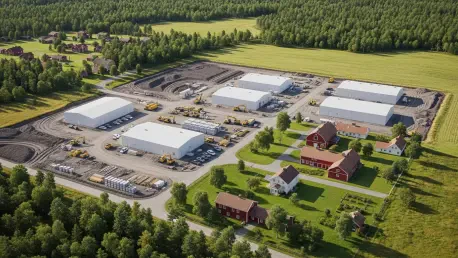

Across the rolling hills of the American Midwest and the quiet valleys of the Appalachian range, a silent but massive industrial revolution is fundamentally altering the horizon as windowless, gray monoliths rise where corn and soy once dominated the landscape. This migration of digital infrastructure from established fiber hubs into the heart of rural America represents a seismic shift in how the physical internet is constructed. While the expansion of data centers is often framed as a triumph of modern engineering and a necessary step for the growth of generative artificial intelligence, the reality on the ground is far more contentious. Local residents who once enjoyed the quiet seclusion of their countryside homes now find themselves living in the shadow of hyperscale facilities that consume vast quantities of electricity and water. This clash is not merely about land use; it is a fundamental debate over who gets to decide the destiny of small communities in a world increasingly dominated by the demands of Big Tech.
The Industrial Shift: Rural Migration of Digital Infrastructure
The geographical reconfiguration of the digital economy has pushed development toward non-metropolitan counties, where land is ostensibly cheaper and less regulated than in urban centers. Historically, the cloud lived in massive clusters near major coastal cities, but the sheer scale of current operations requires thousands of contiguous acres that dense municipalities simply cannot provide. This expansion into the countryside is often poorly understood because the metric of what constitutes a rural area varies significantly between federal and local agencies. Some classifications might show that only a small portion of existing data centers sit on rural soil, yet the pipeline of approved and upcoming projects tells a story of rapid, unprecedented industrialization. For a small township, the sudden arrival of a multi-billion-dollar project is not just a change in zoning; it is an identity crisis that pits the desire for modern economic relevance against the traditional heritage of an agrarian lifestyle.
Mapping the Boom: The Discrepancy in Rural Statistics
Understanding the true scale of this expansion requires looking past the number of currently operational facilities and focusing on the massive surge in local land acquisitions and permit approvals. While established tech hubs remain relevant, the growth rate in rural corridors has begun to outpace urban development for the first time in the history of the internet. This rapid influx often catches local municipalities off guard, leaving part-time officials to manage industrial developments that are fundamentally different from the residential or agricultural character of their districts. The mismatch between the speed of corporate investment and the pace of local planning creates a vacuum where developers can secure favorable terms before the community fully grasps the long-term implications. As these projects transition from blueprints to physical structures, the sudden transformation of the landscape serves as a wake-up call for rural populations who value their quiet environment over digital industrialization.
Legal Imbalance: Negotiating with Corporate Titans
Small-town governments frequently find themselves significantly outmatched when negotiating the complex details of development agreements with multinational technology giants. With limited legal budgets and few full-time administrators, these communities face a profound power imbalance that often leads to lopsided results. It is a classic David versus Goliath scenario where a single town attorney might be pitted against a phalanx of corporate lawyers representing some of the wealthiest entities in the world. This disparity makes it difficult for local officials to demand robust environmental protections or meaningful noise mitigation measures that could preserve the quality of life for residents. Furthermore, the use of non-disclosure agreements by developers often prevents the public from seeing the full scope of a project until it is already too far along to stop. This lack of transparency erodes trust and leaves many residents feeling that their local autonomy has been sold to the highest bidder.
Economic Dependency: The Risk of Single-Source Revenue
The financial promise of a massive data center campus can be a double-edged sword for local taxpayers who are eager for a lower tax burden. In some instances, a single facility can represent as much as half of a community’s entire tax base, providing an immediate and substantial influx of cash for schools and infrastructure. However, this creates a dangerous fiscal dependency that can lead to catastrophic budget holes if the facility were to close or if its tax valuation shifted due to state-level policy changes. If a tech company successfully argues for a lower property assessment or relocates its operations, the local government would be forced to implement massive tax hikes on residents to maintain basic services. This fragility makes small towns vulnerable to corporate pressure, as they become unable to say no to future expansions for fear of losing the revenue that now supports their entire public system. The immediate windfall often blinds leadership to the risks of tying a town’s survival to a single industry.
Power Logistics: The Necessity of High-Voltage Corridors
The placement of these massive facilities is rarely accidental; it is strictly dictated by the proximity to existing high-voltage transmission lines. Modern hyperscale data centers often require 345-kilovolt lines to function, a requirement that limits viable development to specific geographic corridors where the electrical grid is already robust. This technical necessity has created development hotspots in regions like the mid-Atlantic and parts of Texas, where the infrastructure exists to handle the immense load required to power thousands of high-performance servers. Conversely, rural areas lacking this high-capacity infrastructure remain largely untouched by the boom, as the cost of building new transmission lines is often prohibitive for both the developer and the utility provider. This focus on established corridors means that a few specific rural counties bear a disproportionate share of the industrial burden, leading to a concentrated environmental and social impact that is difficult for a single community to absorb.
Land Friction: The Conflict over Utility Right-of-Way
When existing power lines are insufficient, the expansion of the grid often leads to intense conflicts over land rights and eminent domain. Seizing agricultural land through right-of-way claims to build new transmission towers frequently sparks a fierce backlash from farmers and homeowners who have lived on the land for generations. These residents view the encroaching infrastructure not as progress, but as a direct threat to their livelihood and the aesthetic value of their property. This resistance makes developers wary of regions where the grid is not already capable of supporting industrial-scale energy consumption, yet the pressure to build more capacity remains relentless. The resulting legal battles over land use can drag on for years, creating a climate of uncertainty for both the tech companies and the local population. This friction highlights the fundamental disconnect between the invisible needs of the global digital economy and the very physical, tangible reality of land ownership in rural America.
Organized Resistance: The Rise of Grassroots Coalitions
As the industry continues its outward expansion, a sophisticated and organized movement of residents has emerged to challenge the unchecked growth of data centers. Over a hundred community groups across various states have formed specifically to coordinate legal strategies and public advocacy efforts against new developments. These organizations are not merely concerned with the visual impact of massive warehouses; they are increasingly focused on the broader systemic issues of rising electricity costs and potential water shortages. This resistance is uniquely non-partisan, bringing together diverse coalitions of neighbors who might disagree on nearly every other political issue but find common ground in protecting their homes. By sharing information across county and state lines, these groups have transformed local zoning meetings into high-stakes battlegrounds for the future of land use. Their ability to mobilize quickly and present technical counter-arguments has forced many developers to reconsider their expansion strategies.
Quality of Life: Addressing Noise and Utility Costs
Public skepticism is often rooted in the direct impact these facilities have on the daily lives and monthly budgets of the surrounding community. Beyond the initial construction phase, the persistent hum of massive cooling fans and backup generators can create significant noise pollution that carries for miles in a quiet rural setting. Furthermore, many residents are concerned that the immense energy consumption of these centers will drive up utility rates for everyone in the region, as power companies invest in costly grid upgrades to meet industrial demand. Public opinion polls reflect a growing wariness about how the infrastructure for artificial intelligence might impact local environments and individual pocketbooks. This shared anxiety has turned a once-passive public into a vigilant watchdog group that demands transparency and accountability from both tech firms and local officials. Without clear evidence that these projects will not harm the local way of life, residents are increasingly inclined to vote against any new industrial zoning.
Tangible Impacts: Legal Victories and Project Delays
The efforts of grassroots advocacy groups have already led to significant shifts in the development landscape, with several multi-billion-dollar projects being delayed or scrapped. In multiple states, residents successfully used environmental lawsuits and administrative appeals to hit the brakes on investments that they deemed harmful to the community. These victories demonstrated that rural areas were becoming increasingly effective at protecting their resources against the pressure of top-down industrialization. By highlighting potential violations of local ordinances or failures to conduct adequate environmental reviews, advocacy groups have raised the cost and complexity of building in the countryside. These setbacks sent a clear message to the technology industry that the path of least resistance no longer runs through the American rural heartland. Developers who once expected a smooth approval process now face a reality where every acre must be defended in the face of intense public scrutiny and sophisticated legal opposition.
Collaborative Solutions: Forging a Transparent Path Forward
The transition toward a data-heavy economy required a more sophisticated approach than the top-down models initially employed by technology firms. Rural communities demonstrated that they were not merely passive recipients of change but active participants in shaping their local environment. Moving forward, the most successful projects prioritized early engagement and meaningful concessions that addressed the specific fears of the populace regarding noise and utility rates. This shift in strategy acknowledged that the long-term viability of the digital backbone depended on the consent and cooperation of the people who lived beside it. By integrating advanced noise mitigation, grid improvements, and transparent fiscal policies, some developers began to bridge the gap between corporate goals and community needs. This evolution in rural development created a framework for a more sustainable partnership that respected local heritage while supporting global innovation. It ultimately proved that technological progress did not have to come at the expense of regional autonomy.