
While Python consistently dominates the global rankings of programming popularity, its transition from a developer’s local script to a distributable, self-contained application remains one of the most persistent bottlenecks in modern software engineering. The language was fundamentally conceived as a high-level scripting tool, prioritizing human readability and rapid prototyping over the rigorous constraints of binary compilation. This architectural heritage created a paradox where writing code is exceptionally fast, yet delivering that same code to an end-user without a pre-configured environment is notoriously difficult. This review examines the current state of deployment technologies, assessing how the ecosystem has adapted to meet the demands of a professional landscape that increasingly requires portability and performance.
The Evolution and Principles of Python Deployment
The history of Python deployment is essentially a narrative of retrofitting a “glue language” into a standalone software powerhouse. In its early stages, distribution was a localized affair, relying on the assumption that the target machine already possessed a matching interpreter and all necessary libraries. However, as the language became the backbone of data science, artificial intelligence, and cloud-native infrastructure, this assumption became a liability. The emergence of specialized environments was the first major step toward stability, providing a way to isolate project-specific requirements from the global system state.
At its core, the principle of Python deployment has shifted toward the concept of “reproducibility as a service.” It is no longer sufficient to provide source code; a modern deployment must encapsulate the entire execution context. This evolution was driven by the necessity of bridging the gap between a developer’s highly customized workstation and the heterogeneous environments of production servers, edge devices, and consumer desktops. Consequently, the technology has moved away from simple script execution toward sophisticated bundling strategies that attempt to simulate the behavior of compiled languages while retaining the flexibility of an interpreted runtime.
The Technical Architecture of Python Distribution
Runtime Dynamism and Interpretation: The Core Mechanism
The technical weight of any Python application stems directly from its interpreted nature. Unlike languages like Go or Rust, which compile logic into machine-specific instructions before distribution, Python relies on a persistent interpreter to translate bytecode at runtime. This means that a standalone Python application is essentially a Russian nesting doll: the outermost layer is often a bootloader, which unpacks a private Python runtime, which then executes the packaged source code. This dynamism is what allows for the language’s famous flexibility, such as dynamic imports and runtime type checking, but it imposes a significant performance and storage tax.
The interpretation layer also dictates how the system interacts with the underlying hardware. Because the Global Interpreter Lock (GIL) traditionally limits true multi-threaded execution of Python bytecode, deployment strategies must often account for process-level scaling rather than thread-level efficiency. Recent shifts toward a Just-In-Time (JIT) compiler approach represent a significant architectural change, aiming to bridge the gap between the ease of interpretation and the execution speeds associated with lower-level languages. This transition is not merely a performance upgrade but a fundamental change in how the runtime manages memory and instructions during the lifecycle of a deployed application.
Dependency Management and Package Integrity: Solving the Bloat
One of the most complex aspects of the Python architecture is the handling of external dependencies. Because the language encourages the use of specialized libraries for everything from linear algebra to web routing, a typical application might rely on hundreds of third-party packages. Managing these through a flat dependency structure often leads to “dependency hell,” where two libraries require different versions of the same sub-dependency. Modern distribution tools have addressed this by implementing strict version locking and cryptographic hashing, ensuring that the environment created during deployment is an exact mirror of the one validated during development.
The challenge of package integrity is further complicated by the lack of “tree-shaking” capabilities in the standard Python ecosystem. In a compiled environment, a linker can identify and remove unused code from a library, resulting in a lean binary. In contrast, because Python can dynamically call any part of a library at any time, deployment tools must bundle every byte of every dependency, regardless of whether it is actually used. This results in the “artifact bloat” that characterizes many standalone Python apps, where a simple utility can grow to hundreds of megabytes. Current architectural innovations are focusing on more granular packaging that can better identify essential components without breaking the dynamic links required for execution.
Current Trends and Innovations in Packaging
The most significant trend currently reshaping the landscape is the move toward “single-file” binaries that feel native to the operating system. Tools like PyApp and Nuitka have gained traction by focusing on different ends of the spectrum; one provides a highly efficient Rust-based bootloader for quick extraction, while the other attempts to translate Python code into C++ for actual compilation. This reflects a broader industry shift toward developer experience, where the goal is to hide the complexity of the Python runtime from the end-user entirely.
Moreover, the integration of WebAssembly (WASM) is beginning to offer a third path for deployment, particularly for browser-based and edge computing applications. By compiling the Python interpreter itself into WASM, developers can run full applications in environments that previously could not support a heavy runtime. This trend is coupled with a move toward “zero-config” deployment pipelines, where the build system automatically detects hardware architectures and optimizes the bundled binaries accordingly. These innovations are gradually eroding the distinction between a script and a professional application, making Python a more viable candidate for high-stakes software distribution.
Real-World Implementation and Sector Adoption
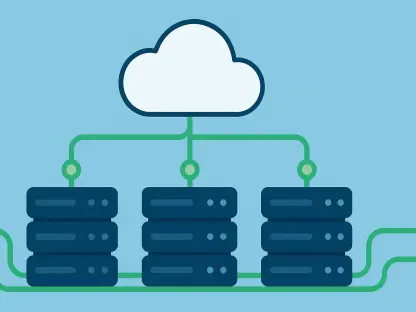
In the realm of enterprise software, the adoption of containerization has largely standardized how Python is deployed in the cloud. By wrapping the application, its dependencies, and a slimmed-down Linux distribution into a Docker image, organizations have achieved a level of consistency that was previously impossible. This is particularly prevalent in the financial and healthcare sectors, where the ability to audit the exact state of a deployed environment is a regulatory requirement. These sectors prioritize the immutability of the container, treating the Python application as a black box that performs predictably across varying infrastructure.
Outside of the cloud, the rise of edge AI and localized data processing has forced a different kind of implementation. In these scenarios, developers often use specialized distribution formats that optimize for low-power hardware and limited disk space. For example, in the automotive and industrial IoT sectors, Python is frequently deployed using “frozen” binaries that have been stripped of non-essential standard library modules. This specialized adoption demonstrates that while the core language is resource-heavy, the flexibility of the deployment ecosystem allows it to be tailored for environments ranging from massive data centers to small embedded sensors.
Structural Hurdles and Technical Limitations
Despite recent progress, the deployment of Python applications faces a significant hurdle in the form of cross-platform compatibility. Unlike the “write once, run anywhere” promise of the Java Virtual Machine, Python’s reliance on C-extensions for performance means that a package built on one operating system often fails on another. Developers are frequently forced to maintain separate build pipelines for Windows, macOS, and various Linux distributions, which increases the overhead of maintaining open-source or commercial software.
Security also remains a critical concern within the distribution lifecycle. Because many deployment tools involve unpacking code into temporary directories at runtime, they can inadvertently create vulnerabilities or trigger false positives from antivirus software. Furthermore, the practice of bundling the entire interpreter makes it difficult to patch security holes in the runtime without redistributing the entire application. These limitations have slowed the adoption of Python for desktop consumer software, where users expect small, fast, and inherently secure installation processes that do not require administrative privileges or complex background setups.
Future Outlook and Strategic Development
The strategic trajectory of Python deployment is clearly moving toward a more unified and standardized “official” solution. For years, the community has relied on a fragmented ecosystem of third-party tools, but recent initiatives from the core development team suggest a move toward bringing distribution capabilities into the standard library. This would likely involve a more native way to package scripts into executables, reducing the reliance on external utilities that often lag behind language updates. Such a shift would drastically lower the barrier to entry for new developers and stabilize the professional pipeline.
Furthermore, the ongoing work on the “Faster CPython” project is expected to have a secondary benefit for deployment. As the runtime becomes more efficient and less dependent on certain legacy structures, the “minimum weight” of a Python application should decrease. We are likely to see a future where the distinction between an interpreted script and a compiled binary becomes increasingly blurred, as hybrid approaches combine the rapid development cycle of Python with the deployment efficiency of traditional systems languages. This convergence will solidify Python’s position not just as a language for researchers, but as a primary choice for end-to-end software product delivery.
Assessment of the Current Deployment Landscape
The assessment of the deployment landscape revealed a technology that successfully overcame its humble beginnings to support a global digital economy. While the structural challenges of runtime overhead and artifact bloat remained present, the industry developed a diverse array of workarounds that proved effective for most professional use cases. The transition from manual environment management to automated, containerized, and bundled distributions represented a major leap in reliability and scalability. It became clear that the value of Python’s ecosystem and developer productivity outweighed the technical inconveniences associated with its distribution.
The review of the current methodologies indicated that the ecosystem reached a state of maturity where developers could finally choose their trade-offs. Those requiring absolute consistency chose containerization, while those seeking user-friendly desktop tools leaned toward advanced bundling utilities. The emergence of experimental compilers and WASM support suggested that the limitations of the past were being systematically addressed. Ultimately, the state of Python deployment was found to be a testament to the resilience of the community, turning a language never meant for distribution into a cornerstone of modern software delivery. This evolution established a clear path forward, ensuring that the language would remain relevant in an increasingly competitive technological market.