
Oxide’s rapid succession of funding rounds highlights a growing enterprise desperation to escape the constraints and unpredictable costs of public cloud infrastructure. This latest capital infusion of $445 million, spearheaded by Eclipse and supported by heavyweights like AMD Ventures and Jane Street, serves as a clear indicator that the tide is turning against total reliance on third-party data centers. As the industry moves through 2026, the complexity of agentic artificial intelligence has created a compute deficit that legacy cloud providers struggle to mitigate with standard pricing models. Large-scale organizations are finding that the initial promise of infinite elasticity often results in performance throttling and opaque billing cycles. By providing a vertically integrated alternative, this funding round allows the company to aggressively expand its footprint and meet the surging demand for high-performance hardware that operates with the fluidity of modern software. The shift represents a fundamental realignment of corporate IT strategy.
Rethinking Hardware: The Arrival of the Cloud Computer
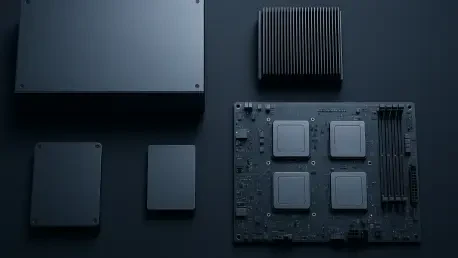
The core of the technological disruption lies in the development of the Cloud Computer, a rack-scale system that departs from the fragmented assembly methods of traditional hardware vendors. Rather than stitching together discrete components from a dozen different suppliers, the engineering team co-designs every element of the stack, from the printed circuit boards to the network switches and the underlying operating system. This holistic approach eliminates the “cabling spaghetti” and compatibility friction that often plague on-premise deployments, allowing a single rack to function as a unified, programmable entity. For engineers, this means the end of manual configuration for network protocols or firmware updates that often lead to system-wide outages. By controlling the entire manufacturing process, the company ensures that the hardware and software are intrinsically aware of one another, which leads to unprecedented levels of reliability. This level of integration was previously only available to tech giants with the resources to build their own custom data centers.
Building on this architectural foundation, the strategy effectively democratizes the operational efficiency of a hyperscaler for the broader enterprise market. Traditional vendors like Dell or HPE have historically operated as resellers of diverse components, which necessitates a layer of management software that is often clunky and prone to security vulnerabilities. In contrast, this new model treats the entire rack as a single computer, providing a clean API-driven interface that mimics the user experience of a public cloud environment. This allows DevOps teams to deploy workloads with the same speed and ease they expect from AWS or Azure, but on hardware they physically own and control. This synthesis of speed and ownership is crucial for industries with strict regulatory requirements, such as aerospace and finance, where data residency is a non-negotiable factor. By removing the overhead of virtualization and third-party orchestration layers, the system delivers higher throughput and lower latency, making it the preferred choice for mission-critical applications.
Strategic Evolution: Navigating the Future of Infrastructure
The current market environment is characterized by an acute infrastructure bottleneck, primarily driven by the transition from generative AI to autonomous agentic systems. These advanced models require immense amounts of memory bandwidth and networking speed to process real-time tasks, placing a strain on public cloud facilities that were designed for general-purpose computing. Consequently, many organizations have initiated a process of cloud repatriation, moving their primary AI training and inference workloads back to private environments to ensure dedicated access to resources. The ability to scale manufacturing capacity by twenty times over the last year has positioned the firm as a primary beneficiary of this trend. While public clouds still offer value for bursty or experimental workloads, the economic reality of 2026 dictates that steady-state production should reside on-site. This shift is not merely about cost savings; it is about securing the computational sovereignty required to compete in an AI-driven economy.
In the final analysis, the strategic path forward focused on the long-term sustainability of data center operations and the integration of specialized accelerators. Organizations evaluated their existing cloud expenditures and identified specific workloads that benefited from the enhanced security and performance of a local cloud computer. The infusion of $445 million provided the necessary resources to refine the next generation of hardware, ensuring that systems remained compatible with emerging liquid cooling standards and high-density power requirements. Decision-makers were encouraged to view infrastructure not as a utility bill, but as a strategic asset that defined their operational limits. By investing in integrated stacks, companies avoided the technical debt associated with managing disparate legacy systems. The success of this funding round proved that the market valued the precision of co-designed hardware over the generic flexibility of public alternatives. Ultimately, the industry moved toward a model where cloud software and private hardware existed in harmony.