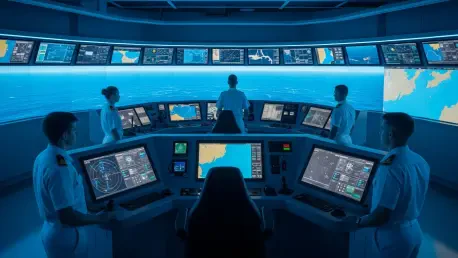

The global maritime industry is currently navigating a period of unprecedented technological transformation that demands a complete overhaul of traditional seafaring education and training methodologies. This shift has led to a strategic alliance between the Maritime Academy of Asia and the Pacific and Kongsberg Maritime, prioritizing comprehensive operational risk management over basic certification protocols. As modern vessels evolve into sophisticated digital hubs, the reliance on interconnected automated systems has introduced a new layer of complexity that previous generations of sailors rarely encountered. To address this, the academy has deployed eighty-four high-fidelity simulators that replicate navigation, engine room, and cargo operations with surgical precision. These environments are designed to mimic the intense psychological and technical pressures found on the bridge of a massive container ship or within the humming heart of a modern tanker. By immersing students in these near-to-reality scenarios, the partnership ensures that theoretical knowledge is instantly tempered by the demands of real-time operational decision-making.
Advancing Competency: The Integration of Simulation Technology
Central to this educational evolution is the integration of K-Sim technology, a platform that facilitates rigorous training scenarios developed by seasoned maritime subject-matter experts. This methodology transcends simple technical exercises by incorporating a structured pedagogical loop that involves precise scenario coding, validation, execution, and critical debriefing. Such a robust framework ensures that cadets are mentally and behaviorally prepared for the cognitive loads of modern maritime duties before they ever set foot on a physical vessel. Furthermore, the curriculum is being aggressively updated to include training for remote vessel operations and the management of alternative fuel systems, reflecting the industry’s rapid move toward decarbonization and increased autonomy. By utilizing digital twins, the training program allows students to interact with exact virtual replicas of existing ship systems, bridging the gap between classroom theory and practical shipboard experience. This proactive curriculum development effectively prepares the next generation of maritime professionals for a landscape defined by rapid technical shifts.
Strategic Resilience: Future-Proofing the Maritime Workforce
Shipowners increasingly viewed advanced crew training as a fundamental component of their overarching safety and financial strategies in a highly competitive global market. Because the risk of human error within complex digital environments remained a primary concern for insurers and operators, the partnership adopted a long-term lifecycle support model to keep simulation software aligned with the latest international standards. Industry leaders recognized that the depth of simulation-based training served as the ultimate safeguard for operational excellence as vessels became more autonomous. Moving forward, maritime organizations prioritized the establishment of continuous learning loops where data from actual sea voyages informed future simulation parameters. Stakeholders also focused on cross-disciplinary training that blended traditional seamanship with advanced cybersecurity protocols to protect digital assets. By synthesizing high-end technology with a structured educational framework, these initiatives effectively shaped a workforce capable of navigating the regulatory and technical hurdles of 2026 and beyond.