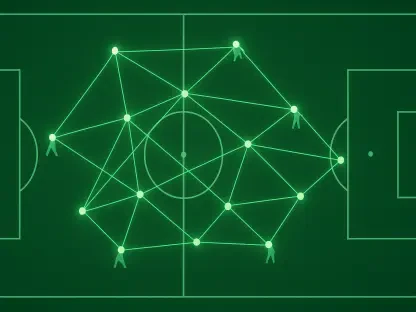

Modern corporate networks have undergone a fundamental shift where the traditional reliance on centralized gateways and domain name resolution is increasingly being bypassed by direct-to-IP traffic flows that facilitate low-latency connections between decentralized endpoints and distributed cloud services. This evolution is largely driven by the explosion of Internet of Things (IoT) devices, high-speed 5G connectivity, and the need for immediate responsiveness in edge computing environments that cannot afford the “tromboning” effect of routing traffic through a distant headquarters. However, this architectural efficiency comes at a significant cost to traditional visibility, as security teams often find themselves unable to monitor or filter connections that do not utilize standard DNS lookups. Without the diagnostic metadata provided by domain-based requests, many existing intrusion detection systems fail to categorize traffic accurately, leaving a massive opening for sophisticated threat actors to establish persistent command-and-control channels that operate entirely beneath the radar of legacy security monitoring tools and protocols.
The Erosion of Perimeter Control
The widespread adoption of software-defined wide area networks (SD-WAN) and specialized cloud-native applications has led to a scenario where applications frequently establish connections using hardcoded IP addresses or peer-to-peer mechanisms. This bypasses the Secure Web Gateway (SWG) and other inspection layers that depend on DNS to enforce security policies and filter malicious destinations before a connection is even established. When a device communicates directly with an IP address, it skirts the reputation checks and content filtering typically applied at the resolution stage, making it significantly harder to prevent access to known command-and-control servers. Furthermore, many operational technology systems and smart sensors are designed with fixed communication paths that do not rely on the standard web-based architecture, creating a fragmented network landscape where a large percentage of internal traffic remains essentially invisible to the primary security stack, which was originally built for a more centralized, domain-centric internet era.
Malicious actors have quickly identified this lack of visibility as a tactical advantage, increasingly utilizing direct-to-IP communication to facilitate data exfiltration and horizontal movement within compromised networks. By avoiding DNS requests, malware can circumvent traditional “sinkholing” techniques where defenders intercept domain requests to redirect traffic to safe monitoring environments. In contemporary attack scenarios, ransomware variants and advanced persistent threats often employ hardcoded IP ranges or decentralized IP generation algorithms to maintain contact with their operators, ensuring that even if a specific domain is blocked, the underlying connection remains active. This trend is particularly evident in the rise of specialized “shadow” IoT deployments where devices are connected to the corporate network but communicate through non-standard ports and protocols. Such devices often lack the local security agents required to log communication attempts, meaning that without a robust network-level inspection strategy, these direct-to-IP interactions represent a critical and growing blind spot in the enterprise.
Integrating Advanced Defensive Measures
To address these gaps, organizations began transitioning toward a Secure Access Service Edge (SASE) model that emphasizes identity-based security rather than location or protocol-based trust. This transition involves implementing localized security enforcement points that can inspect traffic at the packet level, regardless of whether a DNS request was initiated. By deploying lightweight agents or leveraging integrated network hardware, companies can now enforce strict firewall rules and deep packet inspection directly at the edge of the network. This approach ensures that every outbound and inbound connection is validated against real-time threat intelligence feeds that include known malicious IP addresses and suspicious traffic patterns. Moreover, the integration of Transport Layer Security (TLS) inspection at these distributed nodes allows for the decryption and analysis of encrypted direct-to-IP streams, which were previously a haven for hidden payloads. This granular level of control is essential for maintaining a Zero Trust posture where no connection, whether domain-based or direct-to-IP, is considered inherently safe by default.
Beyond just physical enforcement, the use of advanced behavioral analytics and artificial intelligence has become a cornerstone of modern network defense strategies aimed at uncovering direct-to-IP anomalies. Instead of relying solely on static blacklists, these systems analyze the characteristics of the traffic—such as timing, packet size, and frequency—to identify patterns that deviate from established baselines for specific device types or user roles. For example, if a smart thermostat suddenly begins sending large bursts of data to an unknown IP address in a different geographical region, the system can automatically flag the activity for investigation or isolate the device. This proactive monitoring capability is crucial for detecting “low and slow” data exfiltration attempts that might otherwise blend in with legitimate network noise. By correlating telemetry from various sources, including endpoint logs and cloud-native security tools, organizations can build a more comprehensive picture of their network environment, effectively closing the visibility gap that direct-to-IP communication once exploited.
Establishing Resilient Security Frameworks
The industry recognized that securing direct-to-IP communication required a fundamental departure from legacy security philosophies that prioritized the perimeter over the individual connection. Successful organizations implemented micro-segmentation strategies that isolated critical workloads and prevented unauthorized lateral movement by default. These frameworks ensured that even if a device established a direct connection to an external IP, its ability to communicate with other internal resources remained strictly limited. Security administrators also prioritized the deployment of unified observability platforms that consolidated data from across the hybrid cloud environment. This centralized visibility allowed for more effective incident response and enabled teams to identify the root cause of security events much faster than in previous years. The adoption of automated policy enforcement also played a significant role, as it allowed systems to respond to identified threats in real-time without requiring manual intervention from overstretched security analysts who were previously struggling to keep up.
Ultimately, the move toward a more resilient security posture was defined by the integration of autonomous defense mechanisms that adapted to the changing threat landscape from 2026 to 2028. These systems leveraged machine learning to continuously refine their understanding of “normal” behavior, significantly reducing false positives and allowing teams to focus on high-risk alerts. Organizations that embraced this shift found that they were better equipped to handle the complexities of a decentralized network architecture where direct-to-IP traffic became the norm rather than the exception. The collaboration between network engineers and security professionals also improved, leading to the development of “security-by-design” principles for new infrastructure deployments. By treating every connection as a potential risk and utilizing advanced inspection technologies, the enterprise was able to eliminate the direct-to-IP blind spot. This proactive approach ensured that as the network continued to evolve, security remained a core component of the operational fabric rather than an afterthought that required constant remediation.