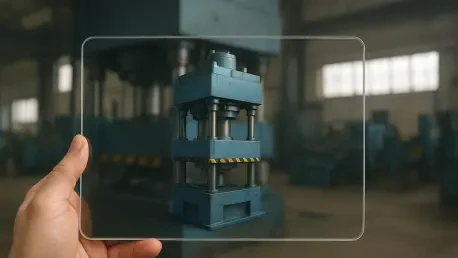

A critical challenge for modern manufacturing lies in the world’s vast number of brownfield sites where decades-old machinery lacks the native connectivity required for digital operations. This fundamental gap between the physical plant floor and the digital enterprise has necessitated a specialized category of technology known as OT-IT convergence bridges. These solutions are not merely cables or simple adapters; they represent a complex layer of hardware and software designed to translate the high-speed, deterministic languages of industrial automation into the structured data formats required by modern analytical engines. As of 2025, the market for these bridging technologies reached a valuation of USD 1.4 billion, but the current year of 2026 marks the beginning of an even more aggressive expansion. Industry experts now project that this sector will grow at a compound annual rate of 11.6%, eventually reaching a valuation of USD 4.5 billion by 2036. This growth is underpinned by the urgent need for real-time visibility into production processes that were previously invisible to corporate leaders and data scientists.
The Modernization Challenge: Bridging Legacy Infrastructure
The industrial landscape is currently defined by a massive installed base of equipment that was never intended to talk to the internet or a cloud-based server. Many of these machines, ranging from massive hydraulic presses to precision milling centers, have mechanical lifespans that span thirty or forty years, far outlasting the typical five-year cycle of information technology. For many global manufacturers, the prospect of replacing these multi-million dollar assets simply to gain digital connectivity is financially impossible and operationally reckless. Consequently, the OT-IT convergence bridge has become the primary tool for a “wrap-and-extend” strategy. By installing a gateway that can read serial data from an old controller and convert it into a modern protocol, companies can breathe new life into legacy assets. This approach allows for the extraction of critical performance metrics—such as cycle times, vibration patterns, and energy consumption—without disrupting the proven reliability of the underlying hardware, thus providing a cost-effective pathway to the digital age.
Furthermore, the integration of these legacy systems is moving beyond simple data extraction toward more sophisticated bidirectional communication. In earlier phases of digital adoption, these bridges were often used as one-way streets, merely reporting what a machine was doing at any given moment. However, by 2026, the technology has evolved to allow for controlled, secure commands to be sent back to the machine based on IT-level insights. For instance, an enterprise resource planning system might analyze current supply chain delays and send an instruction through the convergence bridge to slow down a production line to match the arrival of raw materials. This level of synchronization reduces waste and prevents the buildup of excess inventory, but it requires a bridge that is capable of handling the precise timing requirements of the factory floor while simultaneously interacting with the high-latency environments of corporate networks. The ability to manage these conflicting technical requirements is what separates modern convergence bridges from standard networking equipment.
Cybersecurity Priorities: The Death of the Air Gap
For decades, the primary defense for industrial control systems was the air gap—the physical disconnection of factory networks from the broader internet and corporate IT systems. This isolation provided a sense of security, but it also created a state of data poverty that modern industries can no longer afford. As companies integrate their operations to compete in a global market, the air gap is effectively dead, replaced by the sophisticated security architectures found in OT-IT convergence bridges. These devices now serve as the primary defensive perimeter for the plant floor, acting as intelligent gatekeepers that allow only authorized data to pass through. By implementing hardware-rooted security and certificate-based authentication, these bridges ensure that the sensitive controllers managing physical processes remain shielded from the chaotic environment of the public web. This shift represents a fundamental change in how industrial security is managed, moving from physical isolation to a model of managed, secure transparency.
The implementation of network segmentation has become the most critical security feature of these convergence bridges, currently accounting for a significant portion of the technology’s value proposition. Rather than allowing a flat network where a breach in the corporate office could lead to a shutdown of the assembly line, bridges divide the industrial environment into distinct zones and conduits. This architectural approach ensures that if a cyber threat enters one part of the system, it is contained and cannot move laterally to compromise critical safety systems or production controllers. As we move toward 2036, the integration of Zero Trust principles into these bridges will become standard. This means that every communication attempt, whether from a person or another machine, must be continuously verified. For the Chief Information Security Officer, these bridges provide the visibility and control needed to satisfy rigorous regulatory standards while still allowing the business to benefit from the wealth of data generated by modern automation.
Technical Standards: The Rise of Unified Architectures
In the complex world of industrial communication, the sheer variety of protocols has historically been a major barrier to effective integration. A single factory might use a mix of Modbus for power meters, PROFINET for high-speed motor control, and various proprietary serial links for specialized sensors. The OT-IT convergence bridge acts as the essential multi-lingual translator in this scenario, standardizing these disparate signals into a unified data stream. Currently, the industry is seeing a decisive shift toward OPC UA as the gold standard for these operations. Unlike older protocols that only move raw numbers, OPC UA provides a rich information model that allows the bridge to describe the data it is sending. When a temperature reading is sent through an OPC UA-enabled bridge, the receiving IT system knows not just the value, but also the units, the location of the sensor, and the historical context of the measurement. This semantic richness is what allows high-level AI models to process industrial data without weeks of manual preparation.
The dominance of protocol conversion as a functional segment of the market reflects the reality that manufacturers are prioritizing interoperability above all else. While legacy protocols will persist for years due to the durability of industrial hardware, the investment focus has shifted toward bridges that can handle a wide array of inputs while outputting a single, clean stream of data to the cloud or an on-premises data lake. This standardization is critical for the scalability of digital initiatives. If a manufacturer operates twenty plants across different continents, they cannot afford to build a custom data integration solution for every site. By utilizing convergence bridges that normalize data at the edge, they can create a “global view” of their operations. This allows for cross-site benchmarking, where the performance of a production line in Germany can be compared directly to a similar line in Japan or the United States, identifying inefficiencies that would otherwise remain hidden in localized data silos.
Data Destinations: The Cloud and the Digital Twin
As the flow of data from the factory floor becomes more reliable, the destination for this information has shifted toward centralized cloud environments. By 2026, cloud platforms have emerged as the primary target for bridged OT data, providing the massive computing power necessary to run complex simulations and predictive models. The concept of the Digital Twin—a virtual replica of a physical asset—relies entirely on the high-frequency data streams provided by convergence bridges. Without a constant, real-time link to the actual machine, a digital twin is nothing more than a static 3D model. However, when fed by a continuous stream of vibration, temperature, and performance data, the digital twin becomes a powerful tool for experimentation. Engineers can test changes to a machine’s operating parameters in the virtual world to see how it affects wear and tear before ever touching the physical equipment, significantly reducing the risk of unplanned downtime or expensive mechanical failures.
The push for cloud-based analytics is also driven by the need for better supply chain integration and executive decision-making. When operational data is moved through a convergence bridge into an enterprise resource planning system, it provides a level of transparency that was previously impossible. Executives no longer have to wait for weekly or monthly reports to understand the state of their manufacturing operations; they can see current output levels, quality metrics, and energy costs in real time on a centralized dashboard. This immediate feedback loop allows for a much more agile response to market changes or internal disruptions. Furthermore, the aggregation of data into cloud-hosted “data lakes” enables long-term historical analysis that can uncover subtle trends in machine performance. Over time, these insights lead to the development of highly accurate predictive maintenance schedules, ensuring that parts are replaced exactly when needed—neither too early, which wastes money, nor too late, which leads to catastrophic failure.
Regional Variations: Global Adoption Patterns
The adoption of OT-IT convergence bridges is not uniform across the globe, as it is heavily influenced by regional industrial traditions and government policies. Germany currently stands at the forefront of this movement, driven by its national “Industrie 4.0” initiative. German manufacturers have a long history of high-end engineering, and they are now focused on maintaining their competitive edge by integrating advanced data capabilities into their production lines. With a very high rate of cloud adoption among German firms, the demand for bridges that can connect precision machinery to advanced analytical platforms is particularly strong. This regional focus is characterized by a high degree of collaboration between hardware manufacturers and software providers, resulting in highly integrated solutions that are often exported to other markets as the benchmark for industrial excellence.
In contrast, the market in the United States is primarily defined by a rigorous focus on cybersecurity and the protection of critical infrastructure. American firms are often early adopters of Zero Trust architectures and advanced network segmentation, driven in part by guidelines from the National Institute of Standards and Technology. The U.S. market also places a high premium on ease of use and rapid deployment, leading to the popularity of “plug-and-play” gateways that can be installed by factory technicians without requiring a deep background in network engineering. Meanwhile, in Asia, Japan continues to lead through its mastery of robotics and high-tech manufacturing. Japanese firms are utilizing convergence bridges to support an aging workforce through increased automation and remote monitoring. By allowing expert engineers to monitor and troubleshoot machines from a central location, these bridges help maintain production quality even as the number of skilled workers on the plant floor begins to decline.
Competitive Landscapes: The Rise of Industrial Edge Platforms
The market for convergence bridges is currently undergoing a period of intense competition and strategic realignment. Traditional automation giants like Siemens, Rockwell Automation, and Schneider Electric are no longer just selling hardware; they are positioning themselves as providers of comprehensive digital ecosystems. A key trend in 2026 is the rise of “Industrial Edge” platforms, which combine the connectivity of a bridge with the computing power of a local server. These platforms allow for a significant amount of data processing to happen right next to the machine, rather than sending every single raw data point to the cloud. By filtering and analyzing data at the edge, companies can reduce their bandwidth costs and improve response times for critical applications. This shift toward edge orchestration represents a maturation of the bridge concept, moving from a simple translator to an active participant in the factory’s computational workload.
Strategic partnerships and corporate mergers are also reshaping the competitive field. The formation of Velotic, a massive new entity focused specifically on industrial connectivity and protocol conversion, highlights the industry’s recognition that connectivity is a foundational layer that requires specialized expertise. These new players are focusing on making the bridge “invisible” to the user, providing software-defined solutions that can be updated remotely to support new protocols or security standards. For the manufacturer, this means that the bridge they install today will not become obsolete in five years; it can evolve as their digital needs change. This flexibility is essential for long-term planning, as it allows companies to start small with basic data monitoring and gradually add more advanced features like machine learning or autonomous control as their organizational maturity increases and their data strategies become more sophisticated.
Implementation Hurdles: Navigating the Cultural Divide
Despite the clear technical and economic benefits of OT-IT convergence, the path to implementation is often blocked by a significant cultural gap within the organization. On one side are the operational technology teams, whose primary mission is to keep the factory running safely and reliably. For these professionals, any new connection to the network is viewed as a potential risk to uptime or safety. On the other side are the information technology teams, who are driven by the need for data agility, security, and standardization. IT professionals may not fully appreciate the mission-critical nature of a millisecond delay in a control loop, while OT professionals may not understand the necessity of a complex password policy for a machine controller. Bridging this gap is as much a human challenge as it is a technical one, and the most successful projects are those that bring both teams together from the very beginning of the planning process.
Technical complexity also remains a formidable barrier, particularly when dealing with proprietary or highly customized legacy systems. Even with a modern convergence bridge, the process of mapping thousands of data points from an old PLC into a usable format for a cloud-based AI model can be a labor-intensive task. Many companies find that they lack the internal expertise to manage these integrations, leading to a surge in demand for specialized systems integrators who understand both the “bits and bytes” of IT and the “gears and grease” of OT. Furthermore, as the number of connected devices on the plant floor increases, so does the “attack surface” for potential cyber threats. Managing this expanded risk requires a commitment to continuous monitoring and regular software updates, a task that can be difficult to maintain in a busy production environment. If these challenges are not addressed proactively, they can lead to project delays and a failure to realize the full return on investment from digital initiatives.
The Path to 2036: Toward the Autonomous Factory
As we look toward the 2036 horizon, the evolution of OT-IT convergence bridges will lead the industry toward the realization of the “Autonomous Factory.” In this advanced state, the bridge will no longer be an external device added to a machine; it will be an intrinsic part of the industrial fabric. These future bridges will possess enough local intelligence to not only move data but to make complex decisions in real time. For example, if a bridge detects a specific vibration pattern that historically precedes a bearing failure, it could automatically adjust the machine’s speed to minimize damage while simultaneously ordering a replacement part and scheduling a maintenance technician. This level of self-healing and self-optimization is the ultimate goal of the digital transformation, and it is only possible through the seamless, high-fidelity link provided by next-generation convergence technologies.
The move toward autonomy will also change how manufacturers think about their labor force. Instead of spending their time manually collecting data or performing routine inspections, workers will transition into roles as “orchestrators” of the digital system. They will use the insights provided by the converged network to oversee multiple production lines, focusing on high-level problem solving and process improvement. The bridge will serve as their primary interface to the physical world, providing a clear and accurate picture of what is happening inside every machine at every moment. By 2036, the distinction between “office” and “factory” data will have largely disappeared, replaced by a single, unified stream of information that powers the entire enterprise. This integration will define the successful companies of the next decade, allowing them to operate with a level of efficiency, safety, and flexibility that was once the stuff of science fiction.
Forging a Resilient Industrial Framework: Strategic Findings
The analysis of the global market for OT-IT convergence bridges revealed a clear consensus among industrial leaders: the future of manufacturing is defined by connectivity. The research demonstrated that the growth from USD 1.5 billion in 2026 to the projected USD 4.5 billion in 2036 was not merely a result of technological hype, but a necessary response to the fundamental limitations of legacy infrastructure. It was observed that the most successful implementations occurred when companies prioritized protocol flexibility and robust security architectures from the outset. The data confirmed that OPC UA has established itself as the indispensable standard for cross-domain communication, while cloud-based data lakes have become the essential repositories for long-term strategic analysis. Furthermore, it became evident that the regional leaders in Europe and North America reached their current positions by treating connectivity as a strategic asset rather than a simple IT expense.
Based on these findings, the next logical step for manufacturers involves the adoption of hardware-agnostic bridging solutions that can scale alongside their digital ambitions. It is recommended that firms move away from proprietary silos and instead invest in platforms that support open standards and edge computing capabilities. The focus must shift from simply collecting data to ensuring its contextual integrity, so that insights generated at the edge remain valid and actionable when they reach the corporate boardroom. Additionally, the integration of cybersecurity directly into the communication hardware should be viewed as a non-negotiable requirement. As the industrial world continues to navigate the complexities of the next decade, those who successfully bridge the gap between their physical operations and their digital aspirations will be the ones who define the future of the global economy. The journey toward 2036 is already well underway, and the foundation is being built one bridge at a time.