
The open-source ecosystem has long functioned on a foundation of implicit trust where developers download community-maintained code without hesitation, yet the FakeGit campaign has fundamentally shattered this reliability by weaponizing the very tools meant to foster collaboration. By orchestrating a massive, automated operation that populates GitHub with thousands of malicious repositories, the threat actors have turned a primary resource for innovation into a hazardous delivery platform for malware. This coordinated effort represents a significant shift in how cybercriminals approach software supply chain attacks, moving away from simple typosquatting toward sophisticated, AI-driven deception. Users are no longer looking at a few suspicious names but are navigating a constructed hall of mirrors where every project appears legitimate, complete with professional documentation. The scale of this campaign highlights the urgent need for a complete re-evaluation of how developers and automated systems interact with public codebases in 2026.
The Mechanics of Deceptive Infrastructure
The architecture of the FakeGit campaign is built upon a sophisticated framework that exploits the inherent openness of the GitHub ecosystem. By creating a massive network of over 7,600 repositories, the threat actors have established a deceptive infrastructure that is both resilient and highly scalable. This operation does not rely on a single point of failure; instead, it utilizes a distributed model where thousands of seemingly unrelated projects point toward malicious payloads. The group behind this effort, known as Water Kurita, has demonstrated a keen understanding of how developers search for and select software, positioning their traps within popular categories such as DevOps tools and containerization integrations. This strategic placement ensures that the campaign remains visible to its target audience while the automated nature of the repository creation allows it to persist despite ongoing takedown efforts by security teams. The result is a pervasive threat that fundamentally alters the safety profile of the world’s largest code hosting platform.
Orchestration: Generative AI and Automation
A defining feature of this campaign is the extensive use of generative AI to produce professional and convincing documentation for every malicious repository. By automating the creation of ReadMe files and project descriptions, Water Kurita is able to maintain a high standard of quality that bypasses the initial skepticism of most users. These AI-generated materials are often indistinguishable from those found on legitimate open-source projects, featuring clear instructions and well-formatted code snippets. Furthermore, the group employs automated scripts to fabricate social proof, such as star ratings and fork histories, which trick both humans and ranking algorithms into perceiving the software as trustworthy. This artificial popularity is crucial for ensuring that the malicious tools appear at the top of search results, effectively crowding out genuine community contributions. The combination of high-quality presentation and manipulated reputation makes the campaign exceptionally effective at deceiving even experienced engineers.
Technical Delivery: The Role of LuaJIT
From a technical perspective, the infection chain begins when a user downloads a malicious ZIP file from the release section of a repository, which is often presented as a pre-compiled binary for convenience. These archives are carefully structured to include a mix of legitimate library files and hidden scripts that execute silently in the background once the main file is opened. A critical component of this delivery mechanism is the inclusion of the LuaJIT runtime, a high-performance interpreter that the attackers use to run their malicious logic. By leveraging a legitimate executable to load and run scripts, the malware effectively hides its behavior from traditional antivirus software that typically focuses on identifying suspicious binary signatures. This “living off the land” strategy allows the initial infection to bypass local security prompts and establish a persistent foothold on the victim’s machine without alerting the user. This level of technical agility allows the campaign to adapt to new security measures effortlessly.
Advanced Evasion and Strategic Response
To maintain their operational longevity, the threat actors have integrated several advanced evasion techniques that specifically target the blind spots of modern security infrastructure. These methods are designed to ensure that the malicious components of the campaign remain undetected by both automated scanners and manual analysis. One of the most effective tactics involves the use of environmental awareness, where the malware adapts its behavior based on the characteristics of the machine it is running on. This prevents security researchers from observing the full extent of the malware’s capabilities in a controlled environment, as the most damaging features are only activated on genuine victim workstations. Additionally, the campaign utilizes encrypted communication channels and obfuscated code to hide its activities from network monitoring tools. By layering these defensive measures, Water Kurita has created a threat that is not only difficult to find but also incredibly challenging to analyze once a sample has been successfully captured by security teams.
Stealth Tactics: Bypassing Security Scanners
A particularly notable evasion technique used in this campaign is the practice of file bloating, where the size of the malicious archives is artificially increased to over one gigabyte. This is achieved by appending massive amounts of “null” or “garbage” data to the files, which has no impact on the malware’s functionality but significantly changes how security tools interact with it. Many cloud-based antivirus engines and automated sandboxes have strict file size limits for inspection to prevent resource exhaustion and maintain system performance. By exceeding these limits, the attackers ensure that their files are often skipped or only partially scanned, allowing the malicious code to bypass the first line of defense. This simple yet highly effective method exploits a fundamental trade-off between security and performance in modern computing environments. The result is a significant increase in the success rate of the initial infection, as the malware is able to land on the end-user’s workstation without ever being subjected to a comprehensive security review.
Broad Impact: Human and Machine Vulnerability
The targeting strategy of the FakeGit campaign extends beyond individual developers to include the automated AI agents that have become central to the modern coding experience. As these AI tools scrape public repositories to provide code recommendations, they frequently ingest the malicious data provided by the Water Kurita group. Because the AI models are trained to value well-documented and popular-looking code, they may unknowingly suggest a malicious repository to a developer who is looking for a specific tool or integration. This creates a dangerous feedback loop where the AI itself becomes a delivery mechanism for malware within a company’s internal development pipeline. This shift toward “AI-assisted poisoning” represents a significant evolution in cyberattack methodology, as it exploits the trust that organizations place in their automated productivity tools. By compromising the data sources that these AI agents rely on, the attackers are able to achieve a level of reach and persistence that would be impossible through traditional social engineering methods alone.
Mitigation: Actionable Pipeline Defenses
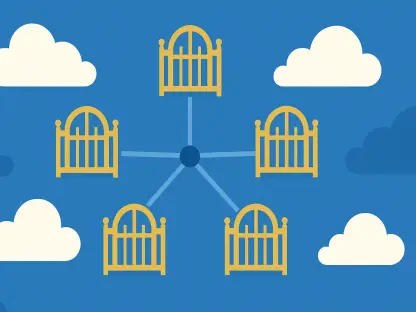
Organizations sought to mitigate the impact of the FakeGit campaign by implementing a series of proactive defense strategies that emphasized verification and isolation. Instead of allowing developers to download tools directly from public sources, security teams established internal repositories where every piece of code was thoroughly vetted before use. This “walled garden” approach was complemented by the mandatory use of sandboxed environments for testing any new software, ensuring that any malicious behavior was detected before it could affect the broader network. Furthermore, many companies updated their AI safety policies to include strict filters that prevented automated agents from accessing unverified or recently created repositories. Training programs were also launched to help developers recognize the signs of repository poisoning, such as inflated star counts and artificial documentation. These collective efforts proved essential in reducing the success rate of the Water Kurita group and demonstrated the importance of maintaining a zero-trust posture toward third-party code in 2026.