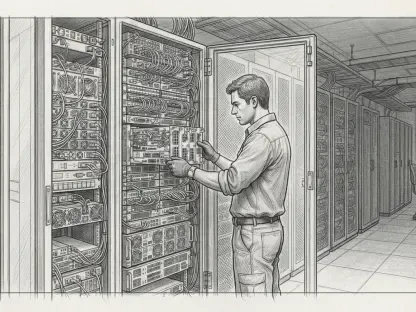

The sudden suspension of new subscriptions for GitHub Copilot signals a critical inflection point where the sheer volume of computational requests from autonomous agents has finally collided with the physical realities of global data center capacity. GitHub recently announced a significant adjustment to its service model, marking a pivotal moment in the evolution of software development. The company has officially paused new sign-ups for several of its individual tiers—specifically Copilot Pro, Pro+, and Student—while simultaneously implementing more stringent usage caps on existing accounts. This decision serves as a primary case study for the burgeoning era of agentic artificial intelligence, where the complexity of automated workflows has begun to outpace the existing infrastructure and pricing structures established by major technology providers. This shift from simple, line-by-line code completions to autonomous, long-running agentic sessions demands unprecedented levels of computational power, setting a new precedent for the entire industry.
From Code Completion to Autonomous Agents: The Evolution of GitHub Copilot
To understand the current infrastructure strain, one must look at the rapid progression of AI tools in the developer ecosystem over recent years. Originally, GitHub Copilot was designed as a “pair programmer” that provided passive, intermittent suggestions based on the immediate context of a single file. These interactions were relatively easy to scale using traditional cloud architecture because they relied on short bursts of activity. However, the industry has undergone a radical shift toward agentic capabilities, where the AI acts as an autonomous worker capable of refactoring entire codebases and running background validation processes. This transition has transformed the platform from a simple productivity layer into a heavy-duty computational engine, necessitating a re-evaluation of how resources are allocated to ensure service stability for the existing user base.
Analyzing the Infrastructure Strain of Agentic Workflows
The Computational Cost of Autonomy and Parallelized Coding
The primary catalyst for this infrastructure strain is the move toward parallelized, long-running agentic sessions. Unlike traditional coding assistants, modern AI agents analyze entire repositories and perform complex refactoring across multiple files simultaneously. Internal data suggests that these workflows push the platform beyond its original design parameters, creating sustained loads on Graphical Processing Units (GPUs) that far exceed the requirements of traditional text completion. By limiting new sign-ups and tightening usage caps, the company aims to protect the quality of service for its current users, as these intensive workflows were beginning to cause performance degradation across the global network. The shift represents a move from managing simple requests to managing continuous, resource-heavy operations.
Tiered Restructuring and the End of Unlimited Model Access
In response to these capacity constraints, the service is moving toward a more stratified and metered model. The Pro+ tier is now positioned as the high-capacity solution for power users, offering significantly higher usage limits than the standard Pro plan. However, even within these premium tiers, access to high-performance models is being narrowed to preserve compute resources. For example, specific high-performance models from partners like Anthropic are being phased out of standard plans or moved exclusively to higher-cost tiers. This restructuring signals a definitive move away from the era of unlimited access toward a highly metered environment where every token and model multiplier is accounted for. The focus has shifted from user acquisition to the sustainable management of high-value computational assets.
Global Industry Trends and the Reality of Capacity Rationing
Analysts view this move not as an isolated incident, but as a symptom of a broader structural shift toward capacity rationing in the technology sector. Early adoption of these tools was fueled by generous usage limits designed to foster habit formation, but as agentic development becomes a routine professional tool, the underlying unit economics are being forced to catch up. Other major players have already modified how time-based limits function during peak hours to prevent system overloads. The emerging consensus among market experts is that high-end AI tools must now be treated as metered infrastructure—similar to electricity or cloud storage—rather than simple software-as-a-service subscriptions. This trend highlights a maturing market where resource scarcity dictates the pace of innovation.
The Future of AI Infrastructure: Scaling Beyond Physical Limits
The pause on sign-ups highlights a fundamental reality: while the potential of software may seem infinite, the hardware and energy required to sustain it are finite and expensive. Moving forward, the industry is expected to prioritize rationalization, where service providers focus on the cost-per-task rather than just user growth. Future innovations will likely center on making models more efficient and specialized, reducing the reliance on massive, general-purpose GPUs. There is also a predicted rise in decentralized or edge-based processing to alleviate the strain on central cloud hubs. As regulatory and economic frameworks for resource distribution become more complex, the industry will likely see a surge in specialized hardware designed specifically for agentic workflows, moving away from the “one-size-fits-all” approach to cloud computing.
Strategic Best Practices for Managing Your Token Budget
For developers navigating this new landscape, the practical impact is a shift toward active token budget management. To maintain productivity under these new constraints, professionals should adopt several key strategies. First, utilizing specialized modes within the development interface to map out complex workflows before executing them can minimize wasted compute. Second, developers should consider switching to lower-multiplier models for routine syntax assistance, reserving high-power models for architectural changes or complex debugging. Finally, reducing parallel workflows and monitoring real-time usage via command-line interfaces can help users avoid hitting their rolling limits prematurely. These practices represent a new form of digital literacy, where efficiency is as important as the code itself.
Toward a Rationalized AI Ecosystem
The recent changes to the development landscape established a clear end to the era of infinite assistance and initiated the beginning of managed infrastructure. This strategic pivot underscored the physical limits of the digital cloud and highlighted the high cost of autonomous agentic work. As the industry moved toward more differentiated pricing and tighter controls on model access, the developer community adjusted to a more transparent and metered way of working. Ultimately, this rationalization promoted a more sustainable ecosystem, ensuring that these powerful tools remained reliable and available for the long term. These developments proved that the future of technology depended not just on the brilliance of algorithms, but on the efficient management of the physical resources that powered them.