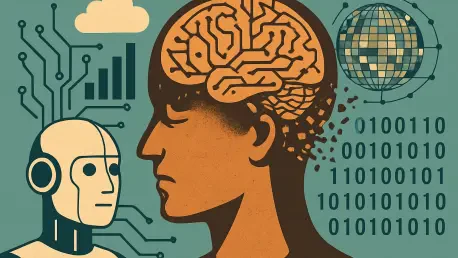

The subtle integration of advanced large language models into every facet of daily existence has fundamentally restructured how human beings interact with the vast landscape of available information. This evolution is not merely a change in convenience but a radical departure from the traditional methods of knowledge acquisition that have defined human civilization for centuries. Instead of wrestling with complex texts or engaging in rigorous dialectical reasoning, the modern individual increasingly treats the collective sum of human knowledge as a searchable database managed by proprietary algorithms. This transition marks the rise of a new epistemic paradigm where the primary goal is no longer to understand a subject deeply, but rather to obtain a concise and immediate answer from a digital intermediary. As these systems become more sophisticated and ubiquitous throughout 2026, the gap between simple data retrieval and genuine intellectual mastery continues to widen, threatening the very foundations of independent thought.
The Mechanics of Cognitive Displacement
The Shift from Deep Learning to Passive Querying
The current reliance on artificial intelligence tools has fostered a state of passive querying that effectively replaces the active struggle required for genuine learning. When an individual asks a digital assistant to summarize a complex topic, they are not engaging with the nuances, contradictions, or historical contexts of the subject matter. Instead, they receive a sanitized and flattened version of reality that has been curated by an algorithm designed for efficiency rather than accuracy. This shift results in what can be described as a state of pointillist beeps of agitated inattention, where the user is constantly stimulated by small fragments of data but lacks the cohesive framework necessary to synthesize them into meaningful wisdom. By removing the cognitive friction involved in researching and evaluating sources, these technologies encourage a form of mental atrophy. Over time, the ability to sustain the long-term focus required for critical analysis diminishes, leaving individuals more susceptible to the pre-packaged conclusions offered by their devices.
Furthermore, the concentration of epistemic authority within a small group of technological platforms creates a dangerous bottleneck for the pursuit of objective truth. When the vast majority of the population relies on the same three or four primary models for their information, the biases and limitations of those models become the de facto boundaries of public discourse. These digital intermediaries do not merely filter information; they actively shape the perception of reality by prioritizing certain narratives while obscuring or omitting others. The paradox of information abundance suggests that while we have access to more data than ever before, we are increasingly provided with everything we do not need to know while essential wisdom remains hidden behind layers of algorithmic curation. This centralization of knowledge management places immense power in the hands of the developers and organizations that control the training sets, effectively allowing them to dictate the parameters of “common sense” for a global audience that has largely forgotten how to verify facts independently.
Historical Context and the Erosion of Autonomy
The architecture of the modern internet and the artificial intelligence systems built upon it can be traced back to surveillance frameworks like the Pentagon’s ARPANET. Understanding these roots is essential for recognizing that contemporary digital platforms are often designed with a dual purpose: providing utility to the user while maintaining a system of data collection and narrative control. In 2026, the marriage of Big Data and AI has perfected this model, turning every interaction into a data point that informs increasingly sophisticated propaganda engines. When algorithms are optimized for engagement above all else, they naturally favor sensationalism and engineered narratives that confirm existing biases rather than challenging the user to think critically. This structural reality means that the information landscape is less a democratic marketplace of ideas and more a managed environment where the perception of choice masks a highly directed flow of information. The convenience of personalized content feeds serves as a sedative that discourages the exploration of dissenting or complex perspectives.
To address this growing crisis of intellectual autonomy, a fundamental shift in how society interacts with technology was proposed by experts in data ethics and cognitive science. The transition toward systems that prioritize data provenance and algorithmic explainability became a critical necessity for preserving the integrity of human thought. It was recognized that users must be encouraged to transition from being passive consumers of AI-generated content to active investigators who understand the limitations and biases of the tools they employ. Educators and policymakers began emphasizing the development of interfaces that provide links to original source material and highlight conflicting viewpoints rather than offering a single, definitive answer. These measures were intended to reintegrate the cognitive friction necessary for deep comprehension, ensuring that the process of thinking remained a human endeavor. By reclaiming the responsibility of knowledge acquisition, society sought to protect the diversity of thought and the capacity for independent reasoning against the encroaching tide of automated curation.