
The transition from being a passive consumer of cloud-based tokens to becoming a self-sufficient producer of artificial intelligence marks a significant turning point for the modern enterprise. As organizations grapple with the escalating costs of public cloud services, many are looking toward self-hosted inference as a path to digital sovereignty and long-term financial stability. However, this journey is fraught with architectural hurdles, from the precision required in bare-metal configuration to the cultural shift of managing internal “Model-as-a-Service” platforms. We explore the balance between the “easy button” of the public cloud and the complex, yet rewarding, reality of maintaining a private AI infrastructure. Our discussion delves into the nuances of total cost of ownership, the role of open-weight models in agentic workflows, and the operational efficiencies gained through modernized MLOps.
Managing massive daily token volumes on bare-metal clusters across multiple data centers requires precise sizing for overlay networks and storage. How do you approach these infrastructure calculations, and what specific steps ensure that a hosted control plane remains stable under high-load redundancy requirements?
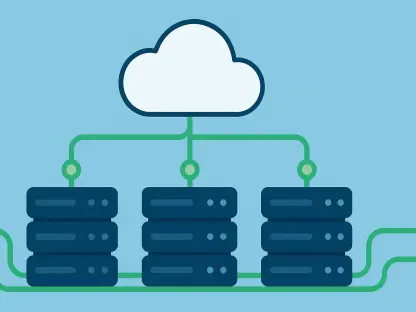
When you are processing something as staggering as 1.5 billion AI tokens every single day, the margin for error in your underlying architecture practically vanishes. We look at this through the lens of a nested management approach, where the control plane is hosted separately from the actual worker clusters to isolate the management overhead from the raw compute power. The real “gut-check” moment for many architects comes when they realize that standard configurations for overlay networks and etcd storage simply buckle under the weight of 150,000 end users. To maintain stability, we have to meticulously size the hosted control plane, ensuring that storage latency doesn’t become a bottleneck during the high-frequency state changes typical of redundant, high-load environments. It feels like tuning a high-performance engine; if the timing on your data synchronization is off by even a fraction, the entire cluster experiences a shudder that can disrupt inference across all three data centers. You have to treat the hardware resources not just as boxes in a rack, but as a fluid service that mimics the elasticity of the public cloud while remaining grounded in the reliability of bare metal.
Moving away from the public cloud entails accounting for server lifecycles, data center utility costs, and specialized staffing. How can organizations move beyond simple token pricing to build a comprehensive TCO model, and what metrics are most often overlooked when comparing in-house GPUs to cloud instances?
Calculating the true cost of moving away from the cloud is often a sobering exercise because it forces you to look far beyond the invoice from a provider. While cloud-hosted GPUs offer a transparent, per-token price that is easy to digest, an in-house model must account for the silent costs of the server lifecycle and the relentless hum of data center cooling systems. We often see organizations overlook the specialized staffing costs; you aren’t just paying for the silicon, you are paying for the human expertise required to keep a fleet of bare-metal clusters running at peak efficiency. It is difficult to communicate these “soft” complexities to leadership when they are used to the simplicity of an API call. You have to factor in the long-term depreciation of hardware and the shifting costs of power and networking over several years to get a realistic picture. It’s a transition from a predictable monthly subscription to a complex, multi-year capital and operational investment that requires a much more disciplined financial gaze.
Using virtualization to partition GPUs for lighter-weight workloads can significantly improve resource utilization. What are the practical trade-offs when choosing between dedicated bare-metal GPU access and virtualized allocation, and how does this decision impact the onboarding speed for data science teams?
The tension between raw performance and resource agility is palpable whenever a team decides how to slice up their GPU resources. For heavy, high-concurrency model training, nothing beats the direct, unencumbered access of bare metal, but for the vast majority of lighter-weight inference tasks, that approach is a recipe for massive waste. By utilizing virtualization to partition these high-end cards, we’ve seen organizations create a shared platform that feels instantaneous to the end user. In fact, some institutions have reported a 75% improvement in onboarding speed for their data scientists once they moved to a more flexible, shared resource pool. Instead of waiting weeks for hardware provisioning, a scientist can spin up an environment in minutes, which drastically lowers the frustration levels that typically plague large-scale MLOps projects. It transforms the data center from a rigid fortress of hardware into a dynamic playground where 200 different scientists can experiment without stepping on each other’s toes.
Shifting toward quantized, open-weight models offers potential cost savings but may struggle with the high reasoning demands of agentic workflows. In what specific scenarios should a portfolio approach be used instead of a single frontier model, and how does this affect long-term output governance?
The industry is rapidly realizing that relying on a single, massive frontier model for every task is like using a sledgehammer to hang a picture frame—it’s expensive and unnecessary. A portfolio approach allows an enterprise to deploy quantized, open-weight models for narrow, well-defined tasks like customer service, which can be run much more cheaply on-premises. While these smaller models might stumble when faced with the complex, multi-step reasoning of an agentic workflow, they excel at predictable, high-volume execution. This shift actually improves our ability to govern outputs because we can apply specific security and quality controls to a smaller, more manageable model. About 21% of companies are already looking at model efficiency techniques like quantization to curb their spending, recognizing that they need a mix of specialized tools rather than one expensive “everything” model. By matching the task to the most efficient model in the portfolio, you maintain data locality and control without the astronomical costs of a high-end cloud API.
Transitioning to modernized MLOps platforms often yields faster troubleshooting and more reliable service provisioning. When implementing GitOps-based deployment for sensitive or air-gapped environments, what are the primary hurdles to achieving consistency, and how can automation help bridge the gap for broad-scale production?
Deploying AI in an air-gapped or highly sensitive environment is a distinct challenge because you lose the “safety net” of constant cloud connectivity and external updates. The primary hurdle is achieving architectural consistency across environments that are physically and digitally isolated, which is where GitOps and Kubernetes operators become life-savers. We have seen defense contractors and banks use these automation tools to provision services in their first on-site GPU farms, leading to a 50% reduction in troubleshooting time. It’s about taking the manual, error-prone steps out of the hands of humans and letting code define the state of the infrastructure. Even in a classified setting, automation helps ensure that the deployment you tested in a low-side environment is identical to the one running in production. This level of reliability is essential when you are scaling from a single “lighthouse” project to a broad-scale production environment that must survive without a constant umbilical cord to the public internet.
What is your forecast for the balance between self-hosted AI inference and public cloud services?
I expect we will see a permanent shift toward a hybrid architecture where the public cloud acts as a laboratory for innovation, while the data center becomes the factory for production. While the “easy button” of the cloud will always appeal to startups and for initial prototyping, the economic gravity of processing millions of tokens per user will inevitably pull large enterprises toward self-hosting. Recent surveys indicate that nearly half of large organizations are already adopting open-source models, with 18% specifically moving workloads on-premises to escape the rising costs of cloud compute. We will likely see frontier model providers begin to package their offerings for self-hosted environments as they realize that the most lucrative enterprise use cases require the data sovereignty that only a private data center can provide. The future isn’t about choosing one or the other; it’s about building a seamless fabric where a portfolio of models—some large and cloud-based, others small and self-hosted—work in concert to drive agentic workflows without breaking the bank.