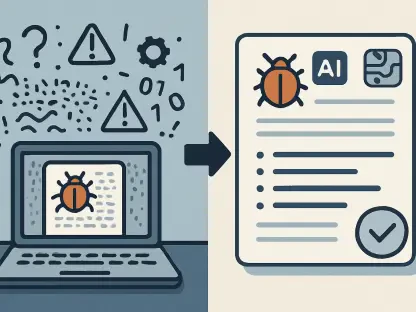

Artificial intelligence has decisively moved from a futuristic buzzword to an everyday reality woven into the fabric of modern business operations, with its transformative impact being most profoundly debated and observed within the discipline of project management. The field, once characterized by its reliance on manual tools like spreadsheets, checklists, and an endless cycle of status meetings, is now entering a new era where sophisticated algorithms are tasked with analyzing risks, automating repetitive tasks, and even drafting critical communication updates for stakeholders. For Chief Information Officers, the conversation surrounding AI has shifted from a question of innovation to one of orchestration. Project management, long considered a domain of human coordination and meticulous control, is rapidly becoming the primary proving ground for demonstrating how intelligent systems can fundamentally reshape enterprise delivery, accelerate business transformation, and unlock unprecedented levels of efficiency and strategic alignment across the organization.
1. A Shift in the PM’s Role Not Relevance
Across a wide spectrum of industries, project professionals are already witnessing and adapting to significant changes brought about by artificial intelligence. Early adopters participating in recent studies have reported remarkable project efficiency gains of up to 30%, but these successes depend less on the sophistication of the technology itself and more on how leadership strategically governs its implementation and use. The overwhelming majority of these organizations found AI to be highly effective in improving predictive planning, enhancing data-driven decision-making, and streamlining operational workflows. The critical question that emerges from these findings, however, is what this technological evolution truly means for the individuals responsible for running these projects. The data suggests a profound redefinition of the project manager’s role, moving away from administrative oversight and toward more strategic, high-value contributions that technology alone cannot replicate.
The consensus among industry leaders and professionals is that AI is poised to augment, not replace, the human project manager, though the specific nature of this evolution is still taking shape. Roughly one-third of survey respondents believed that AI would empower project managers to focus more on strategic oversight, allowing them to shift their attention from the minutiae of day-to-day coordination to guiding long-term project outcomes and ensuring alignment with broader business objectives. Another third predicted an enhancement of their collaborative roles, where managers would act as crucial facilitators who interpret complex AI-driven insights and integrate them seamlessly across diverse, cross-functional teams. The remaining professionals envisioned project managers evolving into supervisors of the AI systems themselves, tasked with ensuring that the algorithms are ethical, accurate, and consistently aligned with the organization’s strategic goals. These diverse perspectives all converge on a single, powerful point: the value of a project manager in the next decade will be measured not by their ability to manage tasks, but by their capacity to manage intelligence and translate AI-driven insights into measurable business outcomes.
2. Why Project Management Offices Must Act Now
For project management offices (PMOs), the strategic challenge is no longer about deciding whether to adopt artificial intelligence but determining how to integrate it effectively and pervasively across the enterprise. The pace of AI adoption is accelerating rapidly, with most large organizations already experimenting with tools for predictive scheduling, automated risk reporting, and the use of generative AI for creating comprehensive project documentation. However, the integration of these powerful capabilities is often uneven and fragmented. Many PMOs still treat AI as a tactical add-on—a collection of disparate tools rather than a core strategic capability that can fundamentally reshape how projects are delivered. This approach misses the essential value proposition of AI, which lies in its ability to augment human judgment and automate complex processes at scale. The organizations that are gaining a true competitive advantage are those that are thoughtfully embedding AI into their foundational project methodologies, governance frameworks, and performance metrics, creating a cohesive and intelligent delivery ecosystem.
To navigate this transformation successfully, leading organizations are adopting a structured, five-point approach that begins with contained, measurable initiatives. The most successful AI integrations often start with targeted pilot projects that address specific, high-impact use cases, such as automating the generation of project status reports, predicting potential schedule slippages before they occur, or identifying resource bottlenecks in complex portfolios. These pilot projects serve multiple crucial functions: they create tangible proof points that demonstrate AI’s value, generate enthusiasm and buy-in from stakeholders, and expose potential integration challenges early in the process when they are easier and less costly to resolve. One of the most common pitfalls in AI adoption is the failure to establish clear performance metrics from the outset. To avoid this, PMOs should define and track tangible key performance indicators (KPIs), such as a quantifiable reduction in manual reporting time, improved accuracy in risk forecasting models, shorter overall project cycle times, and higher levels of stakeholder satisfaction. Communicating these positive outcomes across the organization is just as important as achieving them, as success stories build momentum, foster broader acceptance, and effectively demystify AI for teams that may be skeptical of its benefits.
3. A Strategic Approach for Integrating AI
The long-term value of artificial intelligence will ultimately be determined by the capabilities of the people who use it, making workforce development a critical component of any successful integration strategy. Nearly half of the professionals surveyed in a recent study cited the lack of a skilled workforce as a significant barrier to effective AI integration. It is important to note that project managers do not need to become data scientists or machine learning engineers. However, they must develop a foundational understanding of AI fundamentals, including how algorithms work, where potential biases can emerge in data sets and models, and what constitutes high-quality data. In this evolving landscape, the most effective project managers will be those who can seamlessly combine data literacy with timeless, human-centered leadership skills. This includes the ability to apply critical thinking to AI-generated recommendations, demonstrate emotional intelligence when navigating team dynamics, and communicate complex technical insights clearly to non-technical stakeholders.
The increasing reliance on AI also raises pressing ethical questions, especially when algorithms begin to influence critical project decisions related to resource allocation, timeline adjustments, and risk mitigation. Project management offices must take a proactive leadership role in establishing robust AI governance frameworks that prioritize transparency, fairness, and consistent human oversight. Embedding these principles directly into the PMO’s charter does more than just mitigate legal and reputational risk—it builds essential trust among team members, stakeholders, and customers. Furthermore, as organizations mature in their AI adoption, many are evolving from a traditional PMO model, which focuses on execution excellence through the management of scope, schedule, and cost, to a Business Transformation Office (BTO). A PMO ensures projects are done right, whereas a BTO ensures the right projects are done. This strategic shift aligns project portfolios directly with value creation and continuous process improvement, ensuring that every initiative contributes directly to the organization’s overarching goals. A crucial element of this evolution is the transition from a rigid Waterfall mindset to more adaptive Agile and hybrid methodologies, which are essential for navigating the rapid changes brought by AI and digital disruption.
4. The New Career Path in Project Management
Looking ahead, it is projected that by 2030, artificial intelligence could capably manage the majority of routine and administrative project tasks, such as generating status updates, optimizing schedules, and flagging potential risks for review. This automation will free human leaders to dedicate their focus to higher-value activities that require uniquely human skills: setting a compelling vision, fostering deep collaboration among team members, and navigating complex ethical considerations. This technological shift mirrors past revolutions in the project management discipline, from the rise of the Agile movement to the imperatives of digital transformation, but it is occurring at an even more accelerated pace. This rapid evolution promises to elevate the role of the project manager, transforming it from a position centered on administrative control to one focused on strategic leadership and innovation.
As organizations increasingly adopt AI, a persistent risk is the potential loss of the human element that has always been at the core of successful project delivery. At its heart, project management has always been about people—aligning diverse interests, resolving interpersonal conflicts, and inspiring teams to achieve ambitious goals. While an AI system can analyze vast amounts of data to predict a potential project delay with remarkable accuracy, it cannot motivate a discouraged team to work together to overcome that delay. It cannot navigate the subtle nuances of stakeholder politics or build the deep, trust-based relationships that are essential for navigating challenges. The project manager’s distinctly human ability to interpret nuance, build genuine trust, and foster a collaborative and psychologically safe environment remains irreplaceable. By embracing AI thoughtfully as a powerful tool, project managers can elevate their roles from administrators to influential architects of change, guiding their organizations through complex transformations and delivering lasting value.
5. A Call to Action for Enterprise Leaders
It became clear that artificial intelligence represented the next frontier in enterprise project delivery, and the years ahead tested how well PMOs, executives, and policymakers navigated this profound evolution of transformation. To thrive in this new landscape, successful organizations invested in their people as much as they did in their platforms. They adopted ethical, transparent governance frameworks to guide their AI initiatives, fostered a culture of continuous learning and experimentation, and measured success by tangible business outcomes rather than technological hype. For CIOs, the mandate was clear: they led with a compelling vision, governed with unwavering integrity, and empowered their teams with the intelligent tools needed to succeed. In the end, AI was not a threat to the project management profession. Instead, it was a powerful catalyst for its reinvention. When executed responsibly, AI-driven project management not only delivered significant operational gains but also helped build more adaptive, resilient, and human-centered organizations prepared for the challenges of the future.