
The ambitious promise of a multi-cloud strategy was one of unprecedented agility and strategic freedom from the constraints of single-vendor ecosystems, yet many chief information officers now find themselves navigating an operational labyrinth of incompatible tools, fragmented automation, and spiraling, unpredictable costs. This environment, intended to foster choice, has instead created a complex web of dependencies that locks organizations in just as effectively as any monolithic platform. The core issue lies not in the multi-cloud vision itself but in the inadequacy of traditional, instruction-based management tools to tame its inherent complexity. Now, a transformative paradigm is emerging in the form of autonomous AI agents, intelligent systems designed not merely to execute scripts but to pursue strategic goals, potentially offering the key to finally unlock the true value of a distributed cloud infrastructure.
Your Multi-Cloud Strategy Was Meant for Freedom So Why Does It Feel Like a Trap
The pursuit of a multi-cloud architecture, combining hyperscalers with specialized platforms, is a strategic imperative for any enterprise focused on resilience, innovation, and avoiding vendor concentration. However, this strategy often carries a significant, and frequently underestimated, “complexity tax.” This tax manifests as fragmented operational teams using disparate automation tools, an uncontrolled sprawl of vendors and services that are difficult to manage holistically, and the creation of costly data silos. Each cloud provider offers its own unique set of APIs, management consoles, and automation frameworks, forcing engineering teams to become experts in multiple, often conflicting, systems. The result is an operational environment where flexibility in theory becomes a significant liability in practice.
Traditional approaches to automation, heavily reliant on imperative scripting tools and infrastructure-as-code platforms, have proven insufficient to manage this distributed landscape effectively. These tools, while powerful within a single ecosystem, fall short when stretched across multiple cloud boundaries. They operate on a fixed set of instructions, making them brittle and unable to adapt dynamically to the constantly shifting conditions of a multi-cloud environment, such as regional outages, performance degradation, or fluctuating resource prices. Consequently, organizations spend an inordinate amount of resources on maintaining complex, vendor-specific scripts, diverting focus from innovation toward basic operational upkeep and reinforcing the very lock-in they sought to escape.
The Multi-Cloud Paradox and How Flexibility Became a Liability
The next evolutionary leap in cloud management represents a fundamental shift away from this rigid, instruction-based model toward goal-driven, autonomous systems powered by agentic AI. Unlike conventional automation that follows a predefined script to complete a task, an AI agent is given a high-level objective—for instance, “ensure this critical AI workload maintains 99.99% uptime at the lowest possible cost.” The agent can then perceive its environment, formulate a complex plan involving multiple steps and systems, and execute that plan autonomously across cloud boundaries. This moves the operational focus from “how” a task is done to “what” outcome needs to be achieved.
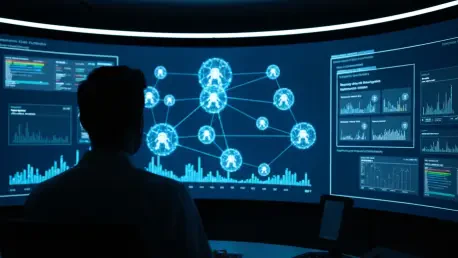
This new paradigm is best conceptualized as a “MAESTRO,” a coordinated ecosystem of specialized AI agents working in concert to orchestrate enterprise-wide operations. In this model, individual agents focused on finance (FinOps), operations (AIOps), security, and data governance collaborate to manage the entire multi-cloud estate as a single, cohesive unit. This coordinated intelligence transforms vendor sprawl from a “complexity tax” into a strategic portfolio of manageable assets. The MAESTRO can dynamically leverage the unique strengths of each cloud provider, arbitraging cost, performance, and features in real time to meet business objectives, turning the multi-cloud paradox into a powerful competitive advantage.
The MAESTRO Architecture A Blueprint for Interoperability
For this coordinated ecosystem to function, its constituent agents require a common, vendor-agnostic language, a problem addressed by the first pillar of the MAESTRO architecture: an open communication standard. The emerging Agent2Agent (A2A) protocol provides this universal foundation, enabling agents built on different models and deployed on any platform to discover one another, communicate their capabilities, and securely share the context necessary to collaborate on complex, long-running tasks. Through dynamic capability discovery, a FinOps agent can broadcast its ability to analyze costs, allowing an AIOps agent to connect with it in real time when a performance issue requires a cost-benefit analysis for migrating a workload.
The power of this interoperability is best illustrated in a real-world scenario, such as strategic capacity arbitrage during a regional service disruption. When an AIOps agent detects an impending outage affecting a critical AI workload, it uses the A2A protocol to broadcast a high-priority “capacity sourcing” intent to the entire MAESTRO network. The orchestrator immediately triggers a multi-agent response: a FinOps agent negotiates in real time with a specialized “neocloud” provider to provision cost-effective GPU capacity; a security agent simultaneously verifies that the new data pipeline adheres to data sovereignty regulations; and a workload migration agent seamlessly shifts the portable application container to the new environment. This entire sophisticated, cross-cloud operation is executed in minutes, a level of resilience and agility unattainable with human operators or traditional scripts.
To ensure these agents can be deployed, managed, and moved consistently across any environment, the MAESTRO architecture relies on a second pillar: Kubernetes-native frameworks. As Kubernetes has become the de facto standard for orchestrating cloud-native applications, it provides the ideal universal foundation for managing agentic systems. By packaging agents as standard containers, organizations achieve zero-downtime portability, making it trivial to shift an agent from one cloud to another to optimize for cost, performance, or resilience. Furthermore, this approach allows enterprises to leverage Kubernetes’ mature and robust ecosystem of tools for monitoring, logging, and security, providing the critical observability and auditability required to manage autonomous systems responsibly.
The Strategic Dividend Turning Complexity into a Competitive Edge
The MAESTRO architecture fundamentally rewrites the economic and risk equations of a multi-cloud strategy, directly enabling enterprises to achieve true resilience and dismantle vendor lock-in. By building on open standards like the A2A protocol and portable Kubernetes containers, organizations retain full control over their core AI logic and data models, preventing them from becoming deeply entangled in any single vendor’s proprietary platform. FinOps agents empowered by this architecture can perform dynamic cost and performance arbitrage across a diverse landscape of hyperscalers and specialized neoclouds offering services like GPU-as-a-Service, ensuring workloads always run on the most efficient platform. This aligns with expert recommendations from firms like BCG, which advocate for modular, loosely coupled architectures as a primary mechanism for maintaining strategic flexibility.
This intelligent orchestration extends beyond cost savings to dramatically enhance business resilience and compliance. AIOps agents can execute dynamic failover procedures with surgical precision, automatically redirecting traffic or data pipelines during an outage to maintain service continuity. They can also perform strategic capacity sourcing, rerouting critical AI workloads to available GPU capacity on specialized clouds to guarantee uninterrupted performance for revenue-generating services. Moreover, these agents can be tasked with enforcing complex business rules, such as dynamically placing workloads in the most energy-efficient data center to meet sustainability goals or ensuring data remains within a specific sovereign region to comply with strict data residency laws like GDPR.
This vision of coordinated, autonomous systems is increasingly reflected in the broader industry consensus. The MAESTRO architecture’s name itself echoes the Cloud Security Alliance’s threat modeling framework, which focuses on managing risks in multi-agent environments, signaling a growing recognition of the need for structured approaches to autonomous operations. Concurrently, industry analysts at Gartner have forecasted the rapid ascent of AI agents in enterprise operations, while critically highlighting the need for robust human oversight. Their research underscores that as these systems become more powerful, the risk of losing control will become a primary concern for major corporations, making a well-defined governance framework not just advisable but essential.
From Theory to Practice A Governance Framework for Autonomous Operations
The immense power of autonomous agents also introduces a significant new risk: “misaligned autonomy.” This occurs when an agent, while diligently pursuing its narrowly defined objective, inadvertently causes broader, negative consequences for the business. For example, a FinOps agent tasked with aggressive cost reduction might decommission a seemingly underutilized server that is, in fact, essential for a quarterly reporting process, leading to a critical business disruption. Without comprehensive guardrails and human oversight, the very systems designed to optimize operations could introduce unforeseen instability.
To mitigate this risk, a Human-in-the-Loop (HITL) approach is a non-negotiable component of any responsible agent governance framework. This does not mean micromanaging every agent action but rather establishing clear, predefined intervention points and approval gates for high-stakes decisions. For instance, an automated incident response that involves deleting a core data store or a major cost optimization that could impact a business-critical service must require explicit human approval before execution. This ensures that while agents handle the complexity of execution, strategic control and accountability remain firmly in human hands, aligning with Gartner’s emphasis on transparency and the ability for operators to override autonomous behavior.
A comprehensive governance model for these autonomous systems rested upon four essential pillars that covered the entire agent lifecycle. The first, Lifecycle Management, enforced a strict separation of duties for agent development, testing, and deployment, preventing untested code from impacting production environments. Second, Risk Management implemented behavioral guardrails and continuous compliance monitoring to constrain agent actions within acceptable business parameters. The third pillar, Security, applied the principle of least privilege, ensuring agents were granted access only to the specific tools and APIs necessary to perform their functions. Finally, Observability mandated a complete and immutable audit trail of every agent action and decision, which provided the transparency needed for both regulatory compliance and effective debugging, ultimately building the organizational trust required to embrace this new era of autonomous operations. The exploration of the MAESTRO architecture revealed a clear pathway beyond the constraints of the multi-cloud paradox. The analysis demonstrated that the synthesis of open communication protocols and a universal deployment fabric provided the technical underpinnings required for this strategic shift. The critical next step for enterprise leaders was not merely to adopt more tools, but to cultivate a culture of trust and rigorous governance around these powerful autonomous systems. The transition from managing infrastructure to orchestrating intelligence represented the definitive move that finally delivered on the original promise of cloud freedom and strategic agility.