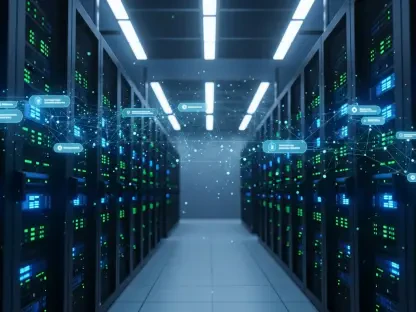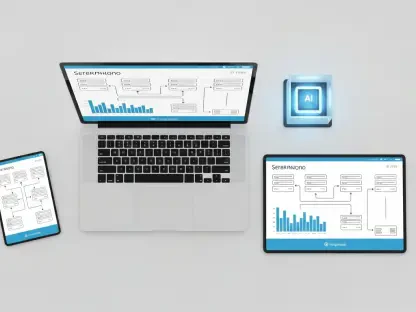

Corporate leaders have long struggled with the paradox of having too much information but too little actionable insight, a challenge that SAP is now addressing through its high-stakes acquisition of Reltio to fortify the foundation of its Business Data Cloud. This strategic move signals a fundamental departure from the era of static databases toward a corporate landscape where enterprise software functions as a living, breathing network of intelligence. By integrating Reltio’s cloud-native data management capabilities, SAP is not merely adding another tool to its arsenal; it is architecting a unified environment where internal corporate records and disparate external data sources converge seamlessly. This integration is vital for enterprises that have spent the last few years attempting to harmonize fragmented datasets across global operations. The goal is to provide a clean, reliable, and high-performance landscape that serves as the essential bedrock for the next generation of artificial intelligence agents. As businesses navigate the complexities of 2026, the demand for precision over volume has become the defining competitive advantage in the digital economy.
Defining the Golden Record: Precision for Reliable AI
At the core of this acquisition lies the pursuit of absolute data integrity, a concept frequently described in the industry as the “golden record.” Reltio brings to the table a sophisticated suite of AI-driven entity resolution tools designed to sift through mountains of information to identify and merge duplicate records across thousands of different applications. Whether a company is dealing with customer profiles, product specifications, or supplier details, the ability to maintain a single, definitive version of the truth is paramount. This process eliminates the redundancy and conflicting information that often plague large-scale organizations, ensuring that every department operates from the same factual baseline. By implementing these advanced data cleansing techniques, SAP allows businesses to move past the era of manual data reconciliation, which has historically drained resources and slowed down digital transformation efforts. This foundation of accuracy is not just a luxury; it is the fundamental prerequisite for any organization that intends to leverage advanced machine learning models effectively.
The reliability of artificial intelligence is directly proportional to the quality of the data it consumes, making the “golden record” the most important asset for modern AI agents. When systems are fed inconsistent or low-quality information, they are prone to “hallucinations,” generating errors that can lead to catastrophic business decisions or compromised customer trust. By incorporating Reltio’s technology, SAP ensures that its AI agents operate within a trusted data environment, providing users with the real-time context necessary for nuanced decision-making. This level of precision allows for more accurate forecasting, personalized customer experiences, and optimized supply chain management. Furthermore, the integration of high-quality data management layers helps maintain compliance with increasingly strict global data privacy regulations. As AI agents become more autonomous in their execution of complex business tasks, the assurance that they are working with validated, ethically sourced information becomes the primary differentiator for enterprises seeking to lead their respective industries.
Overcoming Fragmentation: The Path to Data Interoperability
Historically, many large software providers operated within relatively closed ecosystems, but the current enterprise landscape demands a shift toward radical interoperability and open data sharing. Most large-scale companies today do not rely on a single vendor; instead, they distribute their critical business information across a diverse array of platforms including Snowflake, Google BigQuery, and Microsoft Fabric. This distribution often leads to a “fragmentation crisis” where valuable insights are trapped in isolated silos, inaccessible to the broader organization. Reltio addresses this challenge by providing the specialized tools needed to pull external data into the SAP environment, facilitating a fluid, two-way flow of information that was previously nearly impossible to manage. This transition allows SAP to transcend its traditional role, transforming into a central intelligence hub that oversees the entire data estate of an enterprise. By bridging the gap between internal ERP functions and external data lakes, the platform provides a comprehensive view of business operations that is both inclusive and highly accessible.
This move toward interoperability is a direct response to the reality that data maturity is no longer about how much information a company stores, but how effectively that information can be moved and utilized across different domains. In the past, cleaning internal data was seen as sufficient, but the rise of the SAP Business Data Cloud in 2026 demonstrates that true intelligence requires external context. Reltio’s technology simplifies the complex task of managing data across hybrid and multi-cloud environments, ensuring that information remains consistent whether it resides in a legacy on-premise system or a modern cloud warehouse. This capability is particularly important for global enterprises that must navigate different regional standards and technological infrastructures. By enabling a more open approach to data management, SAP is helping its clients reduce the technical debt associated with fragmented systems. Ultimately, this interoperability empowers organizations to react faster to market changes, as they can now draw upon a unified and synchronized data stream to inform their strategic initiatives and operational adjustments.
Evolving Infrastructure: From Systems of Record to Intelligence
The broader software industry is currently undergoing a massive evolution as traditional ERP giants transition from being simple “systems of record” to sophisticated “systems of intelligence.” Reltio’s technical maturity, specifically its move toward highly scalable cloud-native architectures like Google Cloud Spanner, aligns perfectly with the current cloud-first strategy of major software providers. This shift is not just about where the data is stored, but how it is structured to support the autonomous capabilities of modern software. Traditional databases were designed to keep track of transactions, but modern business requires platforms that can analyze those transactions and suggest or execute the next best action. Reltio’s master data management layers provide the structural integrity needed to support these high-level functions, acting as a sophisticated organizational layer that sits atop traditional storage systems. This architecture ensures that the data is not only available but is also contextually relevant and ready for immediate use by the most advanced analytical engines in the world.
This evolution is fundamentally driven by the rapid emergence of AI agents, which are autonomous programs capable of executing complex business processes with minimal human intervention. To function correctly, these agents require a level of data filtration and organization that traditional databases simply cannot provide on their own. Without a sophisticated master data management layer, an AI agent might struggle to distinguish between two similar customer accounts or fail to recognize a supplier that exists under different names in different systems. Reltio’s suite of tools provides the necessary filtration, ensuring that every piece of information fed into an AI model is clean, compliant, and accurately categorized. This reduces the “noise” that often hampers automated systems, allowing AI to perform at its peak potential. As companies move toward 2027 and beyond, the integration of these intelligence layers into the core ERP infrastructure will be seen as the standard for any business that wants to automate its operations while maintaining the highest levels of accuracy and operational efficiency.
Future Considerations: Simplifying Complexity for the AI Era
By successfully integrating Reltio’s technology, SAP has effectively built a high-performance “filtration system” for the massive data lakes that define modern corporate infrastructure. While storage partners provide the raw capacity to hold petabytes of information, Reltio ensures that the data remains clean, compliant, and ethically sourced before it ever reaches an AI model. This approach significantly reduces the burden on internal IT teams, who have historically spent a disproportionate amount of their time managing messy data pipelines and resolving manual errors. With these automated management layers in place, technical staff can pivot their focus toward generating actionable insights and driving innovation, rather than getting bogged down in the minutiae of data maintenance. This acquisition has secured a strategic position in the market by proving that the most successful companies will be those that prioritize organized and contextually relevant data over sheer volume. The ability to refine raw information into usable intelligence is now the hallmark of a truly data-driven organization.
Looking back at the implementation of these strategies, it became clear that the path to enterprise AI required a fundamental reimagining of how data was governed and utilized across the corporate structure. Organizations that adopted these unified data management practices saw a significant reduction in the time required to deploy new AI-driven applications, as the foundation of trusted data was already established. For leaders moving forward, the primary recommendation was to treat data quality as a continuous business process rather than a one-time IT project. The integration of Reltio into the broader business cloud ecosystem provided a blueprint for how companies could leverage both internal and external streams to drive smarter planning and more effective outcomes. By focusing on the “golden record” and maintaining high standards of interoperability, businesses successfully mitigated the risks of data fragmentation. This transition marked the definitive end of the siloed enterprise, ushering in an era of truly connected, data-driven business landscapes where intelligence was built into every layer of the corporate stack.