
Passionate about creating compelling visual stories through the analysis of big data, Chloe Maraina is our Business Intelligence expert with an aptitude for data science and a vision for the future of data management and integration. She joins us today to dissect the accelerating trend of consolidation across the enterprise software landscape, where the lines between observability, feature management, and even core data platforms are rapidly blurring.
We’ll explore the profound shift this causes, turning passive monitoring tools into active systems of control that can automate and optimize software rollouts. Our conversation will cover the tangible benefits for engineering teams, the pivotal role of open standards like OpenFeature in taming complexity, and how the fusion of AI with this rich data paves the way for truly autonomous operations. Finally, we’ll examine the fundamental market pressures driving this convergence and what it means for the future of enterprise data strategy.
How does acquiring a feature management tool shift an observability platform from a passive monitoring system to an “active system of control”? Could you walk me through a practical, step-by-step example of how a team would use this integrated capability to manage a new feature rollout?
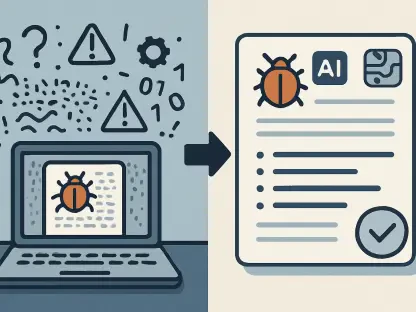
It’s a fundamental transformation in capability and mindset. For years, observability platforms were like incredibly sophisticated alarm systems; they were fantastic at telling you when something was wrong, presenting a flood of signals about the problem. But the action was always manual. This integration turns the alarm system into a fully automated response system. It connects the “what” with the “why” and the “how to fix it” in a single motion.
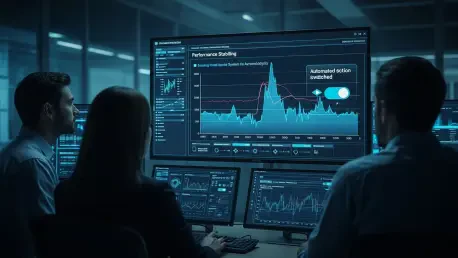
Imagine a team is rolling out a redesigned checkout process. Step one, they use the integrated feature management to release it to just 5% of users in Germany. Within minutes, the observability side of the platform detects a spike in API errors and a 200-millisecond increase in latency, but only for that specific cohort. Because the feature flag and the performance data live in the same context, the system doesn’t just report an anomaly; it identifies the root cause is the new checkout feature. Instead of a frantic 2 a.m. page triggering a war room call, the platform can, as Alois Reitbauer envisioned, take direct action. It can automatically disable that feature flag, instantly reverting all users to the stable version. The whole event becomes a calm, controlled, and automated course correction instead of a high-stress, all-hands-on-deck incident.
For customers currently using separate observability and feature flagging tools, what are the primary benefits and potential challenges of consolidating them? Please share some specific metrics that could improve, such as deployment frequency or mean time to resolution, and why they would change.
The primary benefit is a drastic reduction in cognitive load and operational toil. When these tools are separate, an engineer has to play detective. They see a performance dip in their observability tool, then have to manually cross-reference deployment logs and feature flag dashboards to correlate the event. This manual process is slow and error-prone. Consolidating them, as a customer like Vivint Smart Home is considering, eliminates that investigative gap.
Mean Time to Resolution (MTTR) is the most immediate metric to improve. When an issue is tied to a feature flag, the resolution isn’t a complex code fix; it’s flipping a switch. With an integrated platform, you go from detection to resolution in minutes. This safety net directly boosts deployment frequency. Teams can ship smaller changes more often because they have an instant kill switch if anything goes wrong. The challenge, of course, is migration. Teams are often deeply invested in their existing feature flagging tools. However, with solutions like DevCycle being built on the OpenFeature standard, the transition doesn’t have to be a painful rip-and-replace. Teams can initially use the new tool to standardize the management of their existing flags, creating a smoother, more gradual path to full consolidation.
The OpenFeature standard aims to standardize feature flagging integrations. How does this CNCF project change the landscape for platform engineering teams? Could you describe a “before and after” scenario for a team that adopts this standardized approach to manage multiple feature flagging tools?
OpenFeature is doing for feature management what OpenTelemetry did for observability—it’s a massive step toward sanity and interoperability. For a platform engineering team, the “before” scenario is a constant struggle. Imagine they support three different product teams. One team uses LaunchDarkly, another uses an in-house tool, and a third uses something else. The platform team has to build and maintain three separate, brittle integrations to connect these flags to their central observability and CI/CD pipelines. It’s a tangled, inefficient mess that slows everyone down.
In the “after” scenario, with an OpenFeature-compliant manager, the world changes. The platform team now interacts with a single, standardized API. It doesn’t matter what underlying feature flagging system each team uses. As Torsten Volk pointed out, the focus shifts to the logic, not the tool-specific implementation. The platform team can build one robust integration and know it will work with any compliant tool. This dramatically simplifies their architecture, reduces maintenance overhead, and gives product teams the freedom to use the best tool for their specific job without creating a downstream integration nightmare. It’s the difference between custom-wiring every appliance in your house and just using a universal power outlet.
As AI becomes more integrated with these platforms, we hear about the possibility of asking an AI which feature performs best. How does this combination of observability data and feature management enable more advanced, autonomous operations? What does that journey to self-remediation and optimization look like?
This combination is the very fuel for advanced, autonomous operations. The observability component provides the rich, real-time data—performance metrics, error rates, user behavior, business KPIs—while the feature management component provides the control levers. The AI acts as the brain connecting the two. Mark Tomlinson’s suggestion of asking the AI, “Hey, which do you think is best?” is just the first step.
The journey begins with AI-powered insights. The system runs an A/B test and doesn’t just show you two graphs; it provides a recommendation: “Version B is showing a 5% higher conversion rate with no performance impact. I recommend rolling it out.” The next phase is AI-driven action with human approval. The AI might automatically generate a Git pull request to deprecate the old feature flag. The final stage is what Dynatrace calls an “intelligent resilience platform”—true self-remediation and optimization. Here, the system is empowered to act autonomously based on predefined goals. If a new feature causes a critical error spike, the AI doesn’t wait for approval; it rolls it back. Conversely, if a feature is wildly successful, it can automatically and progressively increase its rollout percentage to maximize positive business impact. It’s about moving from human-in-the-loop to human-on-the-loop, where we set the strategy and the system executes it intelligently.
We’re seeing major consolidation across observability, feature management, and even data platforms like Snowflake. What fundamental market pressures are driving this convergence? What are the long-term implications for how organizations will structure their data strategy, from real-time instrumentation to business intelligence?
The fundamental market pressure is the collapsing of decision-making timelines. The business can no longer afford to have a wall between real-time operational data and strategic business intelligence. The impact of a software release needs to be understood in minutes, not in a quarterly business review. This is why you see a data warehouse giant like Snowflake acquiring an observability company and an observability leader like Dynatrace positioning its Grail data lakehouse for business use cases. They are all racing to own the single, unified data pipeline.
The long-term implication is the end of the bifurcated data strategy. For years, as Mark Tomlinson from FreedomPay noted, companies had two painful, separate paths: one for real-time instrumentation with strict security and another for getting business data into a system of record like Snowflake, each with its own compliance and cost overhead. This convergence promises a single path. Your real-time performance data, your security logs, your user clickstreams, and your transaction data will all live and be analyzed in one cohesive platform. This will radically simplify governance and security, reduce costs by eliminating data duplication, and, most importantly, empower organizations to make smarter, faster decisions by analyzing business and operational health as two sides of the same coin.
What is your forecast for observability consolidation?
My forecast is that this consolidation will accelerate and broaden dramatically. The trend is moving beyond just merging observability with feature management or security. We are at the dawn of an era of unified data platforms where the traditional silos between DevOps, SRE, security, and business analytics completely dissolve. The winning platforms will be those that can provide a seamless experience from the application code all the way to a C-level business dashboard, all powered by the same underlying data fabric. Vendors who remain niche players, focusing only on logs or traces without connecting them to business impact and automated control, will be acquired or become irrelevant. The future is an intelligent, self-optimizing system of record for all of an enterprise’s real-time data, capable of not just observing the business but actively and automatically improving it.