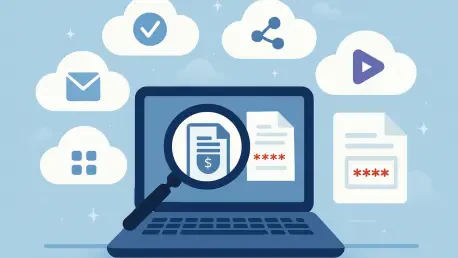

As enterprise workflows migrate entirely into interconnected software-as-a-service environments, the traditional perimeter has dissolved, leaving sensitive corporate intelligence vulnerable within the very tools meant to enhance productivity. Stratus Security created Sift to bridge the gap between traditional security auditing and the realities of modern cloud-based collaboration tools. This platform operates as a specialized scanner designed to navigate the intricate web of Slack channels, Google Drive folders, and Jira tickets that define the current corporate workspace. While legacy systems often struggle with the dynamic and ephemeral nature of chat-based communication, this tool treats these environments as primary data stores that require constant vigilance. By analyzing permissions, content, and context simultaneously, it identifies when a developer accidentally pastes an API key into a public channel or when a financial report is shared with an unauthorized guest. The goal is to provide a comprehensive visibility layer that moves as fast as the teams it protects, ensuring that collaboration does not come at the cost of catastrophic data exposure.
The Mechanics of Real-Time Data Discovery
Deep Integration with SaaS Ecosystems
At the core of the discovery engine is a sophisticated pattern-matching system designed to locate high-risk strings across vast datasets without slowing down user workflows. This involves more than just searching for simple keywords; it utilizes entropy-based detection to find cryptographic keys and cloud service tokens that often lack recognizable prefixes. For instance, in a high-speed development environment, a software engineer might temporarily share a production credential in a private message to troubleshoot a failing service. Without an automated listener, that credential remains a permanent vulnerability within the chat history.
The platform scans these interactions in real-time, matching discovered strings against a library of thousands of known formats for services like Amazon Web Services and Stripe. Beyond technical secrets, the system is calibrated to recognize personally identifiable information, such as social security numbers or passport details, which might be inadvertently shared during support interactions. This granular level of detection ensures that even the smallest fragments of sensitive data are flagged before they can be exploited by malicious actors or lead to significant regulatory fines for the organization.
Advanced Pattern Recognition and Classification
Effective security is often undermined by excessive alerts that lead to analyst fatigue, a challenge that this scanning tool addresses through advanced contextual analysis. Instead of flagging every numerical string that resembles a credit card number, the engine evaluates surrounding metadata and linguistic cues to determine the likelihood of a true positive. It considers the specific channel where the data was found, the roles of the individuals involved, and the historical sensitivity of the files referenced. This logic allows security departments to focus their energy on the most critical threats.
By integrating machine learning models that learn from previous remediation actions, the platform constantly refines its accuracy and reduces noise. A sequence of digits in a public marketing channel is treated differently than the same sequence found within a restricted financial planning folder. This iterative process not only secures the data but also builds trust between the security team and the broader workforce, as the system becomes less intrusive over time while remaining highly effective at spotting genuine risks that could compromise the integrity of the corporate cloud environment.
Scaling Security Across Distributed Workforces
Automating Remediation and Compliance Tasks
Modern businesses rely on a diverse array of platforms, making it difficult to maintain a unified security posture without a tool that offers broad native integration. The platform connects directly to the APIs of major SaaS providers, allowing it to ingest and analyze data without requiring the installation of local agents or complex network proxies. This agentless approach is crucial for the current year, where distributed workforces access tools from various personal and corporate devices. Whether data moves through Microsoft Teams or GitHub, the scanner maintains a consistent level of scrutiny.
This horizontal visibility is particularly valuable during mergers and acquisitions, where IT teams must quickly audit the security health of a newly acquired company’s cloud environment. The platform can be deployed in minutes, providing an immediate snapshot of historical exposure and current risks. By creating a single pane of glass for all collaboration security, the software eliminates the blind spots that typically exist between siloed applications, providing a truly holistic view of where an organization’s most valuable intellectual property resides and how it is being handled by employees.
Shifting Toward a Proactive Privacy Model
To maximize the utility of these scanning capabilities, forward-thinking organizations moved beyond simple detection toward a model of automated remediation and proactive governance. The implementation of automated workflows allowed the system to immediately revoke public access to sensitive files or redact passwords from chat histories the moment they were detected. Security administrators configured custom playbooks that balanced the need for protection with the necessity of uninterrupted business operations, ensuring that minor policy violations were handled without any manual intervention.
Educational prompts were often triggered to inform employees of the risk, turning every corrected incident into a learning opportunity that strengthened the overall security culture. Organizations that adopted this technology successfully reduced their mean time to remediation from days to seconds, effectively neutralizing threats before they could be intercepted. By establishing this dynamic boundary, enterprises finally moved away from reactive fire-fighting toward a resilient architecture. This shift ensured that data access was tied not just to a user’s role, but to the real-time sensitivity of the content.