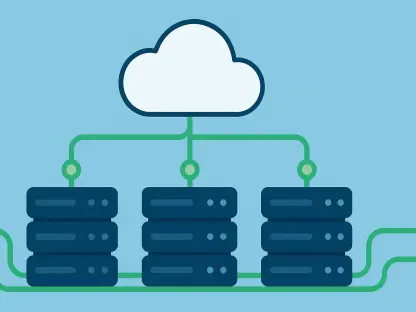

The current enterprise landscape is witnessing a fundamental shift as SAP SE moves aggressively to integrate Dremio and Prior Labs into its ecosystem, effectively turning its Business Data Cloud into a high-octane engine for agentic artificial intelligence and autonomous business operations. This strategic evolution addresses a critical bottleneck that has plagued corporate digital transformations for years: the disconnect between sophisticated AI models and the fragmented reality of enterprise data. By acquiring these specialized firms, the software giant is not merely adding features but is fundamentally redesigning how data is stored, cataloged, and consumed by autonomous agents. The goal is to ensure that AI agents, which are increasingly tasked with making high-stakes decisions, operate from a foundation of ground truth rather than isolated silos. This movement signals a departure from traditional software toward an intelligent architecture that can navigate complex global supply chains with minimal human intervention.
Building a Modernized Infrastructure for Enterprise Intelligence
Streamlining Information Access: The Power of Lakehouse Technology
The integration of Dremio into the SAP portfolio introduces a high-performance data lakehouse architecture that is deeply rooted in open-source standards like Apache Iceberg. This move is significant because it allows the Business Data Cloud to function as a unified repository where both internal SAP data and external third-party information can coexist without friction. Previously, organizations struggled with the high costs and technical complexities associated with moving massive datasets across different cloud environments just to perform basic analysis. By utilizing Dremio’s capability for federated analytics, businesses can now query data exactly where it resides, significantly reducing the latency involved in data preparation. This approach not only speeds up the time-to-insight for human analysts but also provides the high-speed data access necessary for AI agents to process real-time information. The shift toward an open foundation underscores a commitment to flexibility and scalability.
Furthermore, the adoption of Apache Polaris as a universal catalog marks a decisive step toward industry-wide interoperability. In the past, data engines from different vendors often operated in silos, making it difficult to maintain a consistent view of data relationships or access rights. By championing Polaris, SAP ensures that its data infrastructure remains compatible with various engines such as Spark, Snowflake, and Trino, effectively dismantling the “walled garden” approach that has long characterized enterprise software. This strategy positions the company as a central orchestrator in the multi-cloud era, offering a level of transparency and governance that is difficult to achieve in proprietary systems. As autonomous agents become more prevalent, having a single, governed point of access for business context becomes a prerequisite for reliable automation. This infrastructure serves as the essential bedrock for ensuring that every automated action is backed by accurate, traceable, and secure data sources.
Contextual Intelligence: Constructing the SAP Knowledge Graph
A primary advantage of this technological expansion is the creation of the SAP Knowledge Graph, a sophisticated layer that embeds deep business context directly into the underlying data fabric. While raw data provides the numbers, the knowledge graph provides the “why” and “how” by mapping out complex organizational hierarchies, intricate supplier relationships, and nuanced regulatory classifications. This enriched environment allows AI models to move beyond simple pattern recognition and toward a deeper understanding of the specific business rules that govern a company. For instance, an AI agent tasked with procurement can now automatically account for regional trade restrictions or specific departmental budgets because that information is woven into the data structure itself. This level of contextual awareness is what separates basic automation from true agentic AI, as it enables the system to make decisions that are not only statistically sound but also strategically aligned with corporate goals.
Building on this foundation, the knowledge graph acts as a vital bridge for Joule, the company’s natural-language copilot, providing it with a reliable source of truth for executing complex workflows. When a user asks an AI assistant to optimize a supply chain or forecast revenue, the assistant no longer has to guess the relationships between different data points. Instead, it can traverse the knowledge graph to find precise answers that reflect the current state of the business. This integration is particularly crucial for maintaining compliance in highly regulated industries such as finance and healthcare, where every AI-generated decision must be auditable and grounded in established legal frameworks. By prioritizing data readiness and governance at the architectural level, the system ensures that AI-driven insights are actionable and trustworthy. This transition effectively transforms the data cloud from a passive storage utility into an active, intelligent participant in daily business operations.
Advancing Predictive Capabilities Through Specialized Models
Mathematical Precision: Leveraging Tabular Foundation Models
While many recent AI breakthroughs have focused on Large Language Models that excel at processing text, Prior Labs brings a specialized focus on Tabular Foundation Models that are designed for the structured numerical data of the corporate world. Large Language Models often falter when faced with complex spreadsheets or statistical trends because they are fundamentally optimized for linguistic patterns rather than mathematical accuracy. Prior Labs addresses this gap with its TabPFN-2.6 model, which has demonstrated superior performance in handling structured datasets without the need for extensive manual tuning. This technology allows businesses to extract value from their most critical assets—their transactional and operational tables—with a level of precision that was previously unattainable. By focusing on the unique requirements of tabular data, the system can provide more reliable predictions regarding customer behavior, financial trends, and operational risks.
One of the most transformative aspects of this acquisition is the introduction of “zero-shot” prediction capabilities, which allow for instant insights without the traditional, weeks-long process of model training. In a standard machine learning pipeline, developers must clean data, select features, and train a model before they can generate a single prediction; however, the technology from Prior Labs enables “in-context learning” where predictions are generated on the fly. This means a manager could theoretically upload a new dataset regarding supplier performance and receive an immediate risk assessment without waiting for a data science team to build a custom solution. This democratization of predictive analytics is essential for maintaining agility in a fast-paced market where delayed decisions can lead to significant financial losses. By streamlining the path from raw data to actionable prediction, the company is making advanced intelligence accessible to a much broader range of business users.
Strategic Integration: Fueling the Next Generation of Automation
To ensure the continued evolution of these capabilities, the formation of an independent AI research lab will allow for dedicated focus on the next generation of Tabular Foundation Models. This lab is designed to operate with the speed and innovation of a startup while having full access to the vast resources and domain expertise of a global enterprise leader. By maintaining this semi-autonomous structure, the research team can push the boundaries of what is possible in AI without being bogged down by the immediate requirements of current product cycles. The innovations developed here will directly feed into the broader ecosystem, ensuring that the autonomous agents of tomorrow are equipped with the most advanced predictive tools available. This long-term commitment to research highlights a transition from being a consumer of AI technology to a primary innovator in the field, particularly in the niche but vital area of structured business data modeling.
Looking forward, the combined power of unified data access and specialized predictive models sets a new standard for how companies will interact with their information. The goal is to move toward a future where AI agents do not just assist humans but proactively manage routine tasks, identify emerging opportunities, and mitigate risks before they manifest. With the Dremio integration finalizing in 2026 and the Prior Labs transaction following closely, the technological roadmap is clearly defined. Organizations should begin by auditing their current data structures and identifying areas where fragmented information inhibits decision-making. Adopting open table formats and investing in data governance now will ensure that businesses are prepared to fully leverage these new agentic capabilities as they become available. The shift toward an intelligence-first infrastructure was the logical next step in the evolution of enterprise software, providing the tools necessary to thrive in an increasingly automated global economy.