
The rapid proliferation of multi-cloud architectures has fundamentally challenged the operational models of traditional Infrastructure-as-Code, creating a demand for tools that are not only versatile but also deeply extensible by the teams that use them. The emergence of extensible, multi-cloud Infrastructure-as-Code (IaC) platforms represents a significant advancement in the DevOps and platform engineering sectors. This review will explore the evolution of this technology, focusing on the recently updated formae platform, its key features, performance implications, and the impact it has on modern infrastructure management. The purpose of this review is to provide a thorough understanding of the platform’s new capabilities, its approach to extensibility, and its potential future development in the competitive IaC landscape.
The Shift Towards User-Extensible IaC
Infrastructure-as-Code has become a foundational practice for automating and managing technology infrastructure. However, the industry’s shift toward multi-cloud and hybrid environments has exposed the limitations of traditional IaC tools, which often struggle with cross-platform complexity and rigid, vendor-controlled extension models. This creates a bottleneck where engineering teams must wait for official support or resort to fragile, custom-built scripts to integrate their unique systems.
In this context, platforms like formae have emerged to address the need for a unified, developer-centric tool that empowers engineers to directly integrate their own custom systems, moving beyond the constraints of predefined provider ecosystems. The core philosophy is to shift the power of extension from the tool vendor to the end-user, who possesses the deepest understanding of their internal services and operational requirements. This model fosters a more agile and responsive approach to infrastructure automation.
A Deep Dive into Formae’s Core Features
Native Multi-Cloud Resource Management
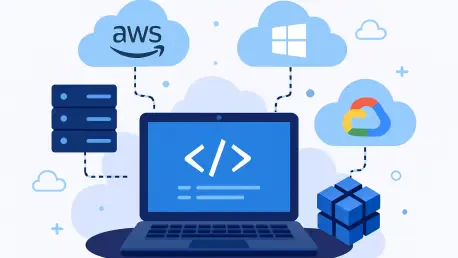
The platform’s primary enhancement is the introduction of native, beta-level support for Google Cloud Platform (GCP), Microsoft Azure, Oracle Cloud Infrastructure (OCI), and OVHcloud. This expands its reach beyond its initial scope, allowing teams to manage diverse cloud resources from a single control plane. This consolidation simplifies workflows and reduces the cognitive load on engineers who would otherwise need to master multiple, disparate toolsets.
This native integration is designed to provide a more seamless and consistent operational experience compared to using separate tools or abstraction layers for each cloud environment. By offering a unified syntax and workflow, it minimizes the context-switching and potential for error inherent in managing a heterogeneous infrastructure portfolio. This approach promotes operational efficiency and a standardized management practice across all cloud providers.
The Schema-Safe Plugin SDK
A central innovation is the new Plugin SDK, which provides a “clean, predictable surface” for infrastructure builders. This schema-safe framework allows engineers to create first-class support for custom, in-house, or niche systems without relying on vendor roadmaps or brittle workarounds. The SDK ensures that user-built extensions are robust and interact with the platform’s core in a stable and reliable manner.
The SDK is designed to make extending the IaC platform feel more like conventional software development, empowering the users who best understand their systems to build the integrations they need directly. This developer-centric approach not only accelerates the integration of proprietary technologies but also cultivates a more powerful and adaptable IaC ecosystem, tailored precisely to an organization’s specific needs.
Automated State Discovery and Codification
Unlike traditional IaC tools that require explicit state file management, formae operates by automatically discovering infrastructure resources and codifying changes into a unified source of truth. This design eliminates a significant source of operational friction, removing the need for complex state migrations or manual interventions when infrastructure drifts from its defined configuration. The platform continuously reconciles the actual state with the desired state.
This approach simplifies the entire lifecycle of infrastructure management. By abstracting away the complexities of state locking, storage, and synchronization, it allows engineers to focus on defining infrastructure rather than managing the tooling itself. This ultimately leads to a more reliable and less error-prone automation process, particularly in large-scale, dynamic environments.
Emerging Trends in Infrastructure Tooling
The latest update to formae aligns with several key industry trends. Its focus on user-driven extensibility is a direct answer to the rise of platform engineering, where internal teams are tasked with building robust, customized developer platforms. This model provides platform teams with the foundational tooling needed to create tailored experiences for their internal development customers.
Furthermore, by designing the platform to be compatible with both human engineers and AI coding agents, it positions itself at the forefront of the movement toward AI-assisted operations and automated infrastructure generation. The open-source nature of the project, under the FSL license, also reflects the industry’s continued preference for transparent, community-driven development, encouraging collaboration and broad adoption.
Real-World Applications and Strategic Use Cases
The platform is particularly well-suited for organizations operating complex, heterogeneous environments. A primary use case is for companies with a deliberate multi-cloud strategy for reasons of cost optimization, resilience, or feature availability. It enables them to enforce consistent policies and management practices across what would otherwise be siloed cloud deployments.
Its Plugin SDK also unlocks significant value for enterprises that rely on a mix of public cloud services and proprietary on-premises hardware or software, enabling them to manage their entire infrastructure estate with a single, unified tool. Platform engineering teams can leverage formae to build internal platforms that abstract away underlying complexities while providing deep integration with their organization’s unique systems, from custom databases to legacy networking gear.
Navigating Current Challenges and Limitations
Despite its innovative approach, the platform faces several challenges. The new cloud provider integrations are currently in a beta stage, which may present stability and feature-completeness risks for production workloads. Early adopters will need to carefully evaluate its readiness for mission-critical systems and contribute feedback to help mature these integrations.
As a newer entrant in the market, it must also contend with the extensive ecosystems and established user bases of incumbent tools like Terraform and Pulumi. Gaining community adoption and building a robust library of user-contributed plugins will be critical for its long-term success and overcoming the hurdle of market inertia. The platform’s ability to attract and sustain a vibrant community will be a key determinant of its future.
The Future of Composable Infrastructure Management
The trajectory for formae points toward a future where IaC tooling is more modular, extensible, and developer-friendly. Its architecture could pave the way for a new standard where infrastructure platforms serve as a core framework that users can easily and safely extend. This vision of composable infrastructure allows organizations to assemble a toolchain that perfectly fits their needs, rather than adapting their processes to a rigid tool.
Future breakthroughs may involve deeper integration with AI agents, enabling fully autonomous infrastructure provisioning and remediation. In the long term, this approach could democratize infrastructure management, allowing teams of all sizes to build highly customized, automated systems that perfectly match their operational needs without requiring deep expertise in multiple underlying technologies.
Final Assessment and Key Takeaways
The updated formae platform represented a thoughtful and powerful evolution in the Infrastructure-as-Code space. Its combination of native multi-cloud support, a developer-centric Plugin SDK, and automated state discovery directly addressed critical pain points felt by modern infrastructure teams. While its success depended on maturing its new features and fostering a vibrant user community, it offered a compelling vision for the future of infrastructure tooling. It stood as a valuable solution for platform engineering teams and any organization that sought to unify the management of a diverse and complex technological landscape.