
The current surge in artificial intelligence adoption has fundamentally transformed the requirements for enterprise data infrastructure, shifting the focus from simple capacity to a complex intersection of performance and rapid recovery. As organizations scale their generative AI models and massive data lakes, they find that traditional storage frameworks often buckle under the weight of unrelenting ingest rates and the necessity for low-latency processing. This supercycle is not merely a temporary spike but a systemic shift that requires a meticulous evaluation of how data is stored, protected, and retrieved. Beyond the technical demands of model training, there is a mounting pressure to defend against ransomware and sophisticated cyber threats that target the very data driving these AI initiatives. This evolution requires a proactive stance on infrastructure, ensuring that every byte of data is not only accessible for high-speed analysis but also resilient enough to survive an era of constant digital hostility.
Storage MediNavigating the Balance of Capacity
Despite the historical tendency to prioritize flash storage for high-performance computing, the sheer scale of modern AI workloads has necessitated a renewed reliance on spinning disk drives to manage the exploding volume of unstructured data. While flash remains the gold standard for latency-sensitive operations, the global production capacity of solid-state media cannot keep pace with the petabyte-scale growth required for training extensive large language models. Hard disk drives offer a cost-effective alternative that allows enterprises to maintain vast repositories of training data without exhausting their capital budgets prematurely. A sophisticated strategy acknowledges that not all data requires sub-millisecond access; instead, it categorizes information based on its role within the AI pipeline. By utilizing high-capacity drives for cold and warm data layers, companies can reserve expensive flash resources for the most intensive inferencing and real-time processing tasks.
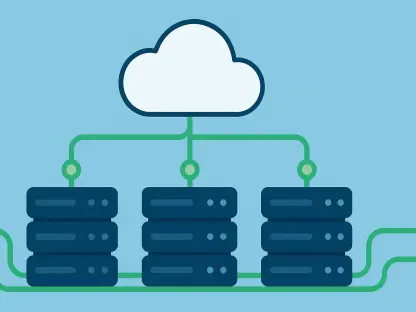
The move toward a hybrid storage ecosystem represents a departure from the flash-only trend that dominated the previous decade, emphasizing instead the intelligent orchestration of diverse hardware assets. Successful infrastructure designs now leverage software-defined layers to move data seamlessly between high-performance tiers and economical mass-storage pools as the demands of the AI lifecycle evolve. This balanced approach ensures that the economics of the storage layer remain sustainable even as data volumes increase exponentially from 2026 to 2028. Furthermore, modern controllers can now manage these hybrid environments with enough precision to hide the latency differences from the end-user applications. As AI continues to permeate every facet of the business, the ability to scale capacity without a linear increase in cost becomes a critical success factor for long-term viability. Integrating high-density drives ensures that the foundational data remains available for future retraining.
Security Operations: Strengthening Defense Through Validation
Modern operational resiliency demands a level of rigor that extends far beyond the mere creation of immutable snapshots or isolated backup copies of critical production data. Many organizations currently maintain vast archives of backup information that have never been subjected to rigorous validation or recovery testing, creating a false sense of security. To be truly prepared for a ransomware event or a systemic failure, enterprises must implement automated validation processes that confirm the integrity of these copies in real-time. This proactive approach ensures that recovery points are not only clean and uncorrupted but also ready for immediate deployment when a crisis occurs. Without such verification, the restoration process becomes a high-stakes gamble where the discovery of corrupted data only happens during an actual outage. Shifting the focus toward continuous integrity checks allows IT teams to identify potential issues before they can jeopardize business continuity or data availability.
Effective recovery is intrinsically linked to the speed and accuracy of threat detection, particularly when security operations and storage management are treated as separate silos within an organization. If a security team cannot pinpoint the precise timestamp of a breach, identifying the correct snapshot for restoration becomes a time-consuming process of trial and error that extends downtime significantly. By integrating storage recovery protocols directly into the Security Operations Center, businesses can automate the transition from detection to restoration with surgical precision. This collaboration allows for the immediate identification of unaffected data sets, drastically reducing the window of vulnerability following a cyberattack. Furthermore, using advanced telemetry from the storage layer can provide early warning signs of an attack, such as unusual encryption patterns or mass deletions. Establishing this synergy between security and infrastructure ensures that recovery time objectives are realistic and achievable rather than purely theoretical benchmarks.
Architectural Design: Protecting the Stack for Continuity
A significant resiliency gap is currently emerging within new artificial intelligence environments, specifically concerning vector databases and the massive data lakes utilized for retrieval-augmented generation. These specialized projects are frequently managed by dedicated AI teams who may lack the deep expertise in data protection and lifecycle management found in traditional enterprise IT departments. As these AI applications transition from experimental prototypes to mission-critical business tools, securing their underlying unstructured data repositories becomes an urgent priority to prevent massive operational exposure. The complexity of these data structures often makes traditional backup methods ineffective, requiring new tools specifically designed for the high-velocity world of vector embeddings. Protecting the intellectual property stored within these models is just as important as protecting the operational data itself. Ensuring high availability for these assets requires a dedicated focus on resiliency that mirrors the protection of financial or customer records.
The path to a resilient enterprise during this supercycle required a multi-layered architectural approach that moved beyond traditional disaster recovery to a model of continuous availability. Organizations found success by implementing a three-site strategy that utilized synchronous sites for immediate continuity, asynchronous sites for regional protection, and air-gapped snapshots for an isolated final defense. By identifying the minimum viable company—the essential core assets needed to sustain operations—IT leaders streamlined their protection efforts and focused resources where they mattered most. This methodology ensured that even in the face of sophisticated threats, the business maintained a clear path toward total restoration. Decisions made during this period emphasized the integration of security directly into the storage fabric, treating data integrity as a foundational requirement for all AI initiatives. Ultimately, the transition to this robust framework provided the necessary stability to navigate the challenges of the current decade and beyond.