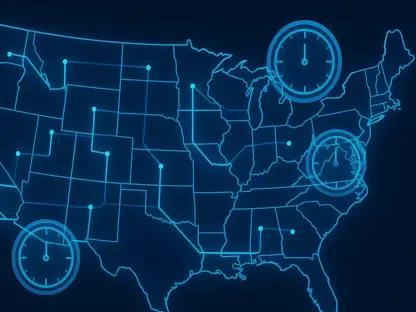

The July 24, 2026, outage at Amazon Web Services (AWS) serves as a stark reminder of the vulnerabilities inherent in our modern digital infrastructure and the fragility of global connectivity. While the event centered on the US-WEST-2 region in Oregon, its ripple effects were felt globally, temporarily disabling heavyweights like Apple Pay, DoorDash, and the PlayStation Network. This incident was not just a standalone glitch; it was the third major reliability failure for the provider within a single three-month window, signaling a possible shift in the stability of hyperscale cloud environments. This recent wave of disruptions highlights a “reliability reckoning” for the tech industry, where the convenience of centralized architecture meets the reality of systemic risk. As the internet becomes increasingly reliant on a handful of geographic hubs, a single connectivity hiccup can cause a massive cascade of failures across the consumer economy. The event forces a re-evaluation of whether the industry can still promise the high levels of uptime that businesses have come to expect as a baseline for digital operations. This persistent instability suggests that the period of effortless, guaranteed availability may be giving way to a more complex era of managed risk and active mitigation.
Chronology of the Oregon Connectivity Failure
The disruption began in the early morning hours, with users first reporting failed logins and broken checkout processes across dozens of high-traffic platforms around 3:40 a.m. PT. Although AWS acknowledged “internet connectivity issues” within an hour of the first reports, the speed of the modern economy meant that millions of dollars in potential transactions were already lost before a public status update was even issued. The incident followed a rapid and chaotic progression from initial detection to mitigation, with engineers working frantically behind the scenes to reroute massive volumes of traffic and restore the vital links between the Oregon region and the public web. This specific timeframe caught many overnight maintenance teams off guard, demonstrating that there is no “safe” window for infrastructure failure in a world that operates on a twenty-four-hour cycle. The technical struggle focused on the peering points that connect the private cloud backbone to the broader internet, where a bottleneck had formed that prevented external requests from reaching their intended server destinations. As the minutes ticked by, the cumulative impact grew exponentially, affecting everything from automated supply chain pings to personal financial management tools.
By the time full resolution was declared roughly 80 minutes later, the damage to consumer confidence was already done and the financial repercussions had begun to be calculated. While 80 minutes might seem relatively brief compared to the multi-hour or even multi-day meltdowns seen in earlier years of cloud development, the interconnected nature of today’s application ecosystems means that even a short window of downtime creates an immediate and widespread crisis. This compressed timeline of failure demonstrates that the window for error has shrunk to almost nothing, making rapid recovery and automated failover capabilities more critical than they have ever been in the history of enterprise computing. The brevity of the outage did little to soothe the frustrations of developers who watched their systems fail despite having designed what they believed were robust architectures. Instead, the incident highlighted how the external dependencies of the cloud can bypass internal safeguards, leaving businesses at the mercy of their providers’ ability to maintain fundamental connectivity. This event underscored the reality that in 2026, minutes of downtime are measured not just in lost revenue, but in damaged brand reputation and lost user trust that can take months to rebuild.
Infrastructure Dependencies and Cascading Platform Breaches
To understand why so many disparate applications broke simultaneously during the Oregon outage, one must look at the specific back-end services that failed, which act as the essential plumbing of the modern internet. AWS reported significant impairments in critical offerings such as Direct Connect, API Gateway, and IoT Core, all of which are foundational to how different software systems communicate with one another. When these underlying tools stop working, the high-level applications built on top of them—ranging from food delivery services to complex financial payment processors—simply cannot function, regardless of how well their internal application code is written or how many redundancies are in place within the app itself. The failure of Direct Connect was particularly damaging, as it severed the private links that many large corporations use to bridge their on-premises data centers with the cloud, effectively isolating their internal operations from the public-facing services they provide to customers. This highlighted a single point of failure that many IT departments had overlooked in their pursuit of seamless hybrid cloud integration and low-latency performance.
The downstream effects of these technical failures were particularly visible in the entertainment and logistics sectors, where platforms like Hulu and Reddit went dark for large segments of their user base. It is important to note, however, that AWS characterized this specific incident as a connectivity failure rather than a data loss event or a breach of security protocols. While users across the globe could not access their favorite streaming services or social media feeds, their personal information and stored data remained secure within the cloud’s storage layers, highlighting a critical distinction between service reachability and service integrity. This separation of concerns meant that while the “front door” to these services was locked, the internal records and customer databases remained untouched and uncorrupted by the network instability. Nevertheless, for the average consumer, the distinction between an unreachable service and a broken one is often academic; if they cannot use the product they pay for, the service is effectively nonexistent. This reality puts immense pressure on platform providers to ensure that their connectivity providers are as resilient as their own internal storage and processing layers.
Analyzing the Cluster of Operational Volatility
The July outage is part of a troubling cluster of events that have made 2026 an exceptionally difficult year for cloud reliability and infrastructure management. In May, a significant cooling failure in a Northern Virginia data center caused a 14-hour disruption, proving that physical infrastructure components like industrial chillers and power grids remain a significant threat to virtual services. This cooling issue was not just a local problem but forced the migration of heavy workloads to other regions, creating a secondary wave of latency and performance degradation across the eastern seaboard. This was followed by a multi-region network disruption in June, further cementing the idea that the links between cloud hubs are increasingly fragile as they are pushed to handle unprecedented volumes of data. These sequential failures have created a sense of “outage fatigue” among technical professionals who find themselves constantly in a reactive mode, patching holes in their deployment strategies rather than focusing on innovation or product development. The recurring nature of these incidents suggests that the physical and logical limits of current cloud architectures may be reaching a breaking point.
When these 2026 incidents are compared to the historic software-driven “Meltdown” of October 2025, a new and perhaps more concerning trend begins to emerge for industry analysts. While the 2025 event was characterized by a massive software logic error that lasted 15 hours and affected almost every global region, the 2026 events are typically shorter in duration but occur with much higher frequency. This shift toward a higher frequency of outages suggests a potential loss of granular operational control as global systems grow too complex to manage with perfect consistency across every edge location and data center. This trend is particularly worrying for enterprise customers who rely on predictable performance to meet their own service-level agreements with clients. The move from rare, catastrophic failures to frequent, “minor” disruptions indicates that the complexity of the modern cloud may be outstripping the current tools used to monitor and manage it. For many businesses, the unpredictability of these frequent interruptions is more damaging than a single large event, as it makes long-term planning and operational stability nearly impossible to maintain without constant, expensive oversight.
Information Deficit and Corporate Uncertainty
One of the most frustrating aspects for enterprise customers throughout these recent disruptions has been the perceived lack of detailed information regarding the actual root cause of the July 24 event. Unlike previous outages where providers often released deep dives into specific “race conditions,” software bugs, or hardware failures, the explanation for the Oregon incident remained frustratingly vague, citing only general “internet connectivity” issues. This lack of transparency makes it incredibly difficult for internal engineering teams to build specific defenses or technical workarounds against future occurrences of the same problem. Without knowing if the failure was due to a BGP routing error, a physical fiber cut, or a software-defined networking glitch, companies are left guessing how to best protect their own stacks. This information vacuum often leads to a “blame game” where customers, internet service providers, and cloud vendors all point fingers at one another, leaving the end-user with no clear understanding of why their services failed or when they might fail again.
This transparency gap creates a deep sense of uncertainty among IT leaders and Chief Technology Officers who must eventually answer to their own boards of directors about why their critical systems failed. When a major infrastructure provider stops providing clear, technical post-mortems, it leaves customers wondering whether the fault was a simple, preventable human error or a more significant internal backbone failure that could indicate deeper systemic problems. Without these details, the “black box” of the cloud becomes even harder to trust for mission-critical workloads that require absolute transparency for compliance and risk management purposes. Many organizations are now demanding more than just a status page update; they are calling for real-time access to the underlying health metrics of the services they consume. This shift in demand is changing the relationship between cloud providers and their customers, moving away from a model of blind trust and toward one of verified performance. If the current trend of vague reporting continues, it may lead to a broader push for industry-standard reporting requirements that force vendors to be more forthcoming about their operational challenges.
Risks of Regional Concentration and Herd Mentality
Cloud architects and independent industry analysts have long warned about the “herd mentality” that leads companies to cluster their data and applications in a few specific, high-density regions. US-EAST-1 in Northern Virginia and US-WEST-2 in Oregon have become the default choices for thousands of businesses due to their historical performance, low latency, and relatively low costs compared to newer or smaller regions. However, this massive concentration of digital assets has created a dangerous single point of failure for a significant portion of the global internet, where a local regional problem quickly escalates into a national or even global emergency. When a single geographic hub experiences a connectivity crisis, it doesn’t just affect the companies physically located there; it impacts every service, API, and platform that depends on those servers. This interconnectedness means that the “blast radius” of a regional outage is far larger than the geographic boundaries of the data centers themselves, leading to a ripple effect that can paralyze entire sectors of the digital economy simultaneously.
By choosing these popular hubs to save on operational costs or gain a slight edge in speed, companies inadvertently increase the impact and visibility of any single outage. When nearly every major player in a particular industry is in the same digital “building,” a small fire in the basement can effectively smoke out every tenant at once, leaving customers with no alternatives. This concentration risk is now a primary concern for international regulators and government agencies, who worry that a major cloud failure could eventually threaten broader financial stability or the delivery of essential public services. There is an increasing realization that the efficiency gained by concentration is being offset by the systemic risk it creates for the economy at large. As a result, many large enterprises are being forced to rethink their deployment strategies, looking for ways to spread their digital footprint across more diverse and less crowded regions. While this diversification can be more expensive and technically challenging, it is increasingly seen as a necessary cost of doing business in an era where regional stability can no longer be taken for granted.
Architecting for Resilience in a Fragile Ecosystem
In response to these frequent and unpredictable disruptions, forward-thinking engineering teams are shifting their primary focus toward more aggressive and proactive redundancy strategies. The most common move in 2026 is the adoption of a true multi-region approach, where an entire application and its associated data are mirrored across at least two different geographic areas with automatic failover capabilities. While this strategy effectively doubles certain operational costs and increases the complexity of data synchronization, it provides a vital safety net that ensures a company stays online even if a major hub like Oregon goes dark for several hours. This “active-active” configuration allows traffic to be rerouted in real-time, often without the end-user ever realizing that a major infrastructure failure has occurred in the background. The investment in such systems is no longer viewed as an optional luxury for high-end tech firms, but as a mandatory requirement for any business that relies on the internet for its primary revenue stream.
Some larger or more risk-averse organizations are even exploring the more radical choice of multi-cloud architectures, intentionally spreading their workloads across both AWS and major competitors like Microsoft Azure or Google Cloud. This offers the highest possible level of protection against provider-specific failures, but it comes with immense technical complexity and a significantly higher price tag, as engineering teams must master and maintain multiple sets of tools, security models, and deployment pipelines. For many companies, the decision now comes down to a simple, cold calculation of risk: is the high cost of maintaining multi-cloud redundancy lower than the potential brand damage and lost revenue caused by another hour of unexpected downtime? As the “all-in-one-cloud” dream begins to fade, the industry is seeing a resurgence of interest in platform-agnostic tools and containerization technologies that allow for easier movement between different infrastructure environments. This trend is driving a new wave of innovation in the DevOps space, as developers seek out ways to make their applications as portable and resilient as possible in the face of an uncertain infrastructure landscape.
Shifting Competitive Dynamics and Market Realities
Despite the recent string of outages and the growing frustration among its user base, AWS maintains its dominant lead in the global market, holding nearly a third of all cloud infrastructure business. However, the competitive landscape is shifting as challengers like Google Cloud and Microsoft Azure continue to grow at a faster percentage rate, often using these high-profile failures as a central part of their sales pitches to enterprise clients. A “rough year” for the market leader provides a golden opportunity for these competitors to highlight their own recent reliability records and the unique features of their global networks. In some cases, these competitors are offering specialized “migration credits” or enhanced support packages specifically designed to attract customers who have been burned by the recent instability in the major hubs. This increased competition is forcing all providers to be more aggressive in their reliability promises, even if those promises are becoming harder to keep as the underlying systems grow in scale and complexity.
The harsh financial reality of the situation is that most large companies will not leave their current provider immediately, as the process of migrating massive amounts of data and reconfiguring complex workflows is simply too expensive and risky for most boards to approve. Instead, these frequent outages are fundamentally changing the nature of the conversation during contract renewals and the planning phases for new, high-priority projects. Reliability has moved from being an assumed “given” to a top-tier negotiation point, with enterprise customers demanding more stringent Service Level Agreements (SLAs) and much more robust, integrated disaster recovery tools as part of their standard packages. We are seeing a move away from simple uptime percentages and toward more nuanced metrics that account for partial failures and latency spikes, which can be just as damaging to the user experience as a total blackout. This shift in market dynamics is pushing cloud providers to invest more heavily in their “under-the-hood” infrastructure, potentially at the expense of new, flashy feature releases that dominated the headlines in previous years.
Future of Monitoring and Regulatory Oversight
As the industry moves through the remainder of 2026 and looks toward the following year, the way companies monitor and respond to their cloud health is undergoing a fundamental transformation. Relying on a manual refresh of a provider’s public status page is no longer considered a sufficient or professional strategy; instead, businesses are moving toward fully automated, API-based monitoring systems that track service health from the perspective of the end-user. These advanced systems can detect an “impaired” status in mere seconds—often before the cloud provider even acknowledges there is a problem—and can trigger automatic failover protocols to backup regions or alternative providers. This proactive approach potentially saves vital minutes of uptime and allows companies to maintain control over their own availability rather than waiting for a vendor to resolve a massive, systemic issue. The rise of these “observability-first” architectures is creating a new market for third-party monitoring tools that specialize in identifying subtle signs of infrastructure decay before they lead to a full-blown outage.
The year 2026 proved that the assumption of flawless cloud uptime was no longer a sustainable business strategy for modern enterprises that required constant connectivity. As organizations navigated the aftermath of the Oregon incident, the focus moved toward implementing self-healing architectures and automated failover protocols that operated independently of a single provider’s status dashboard. The transition to these more robust systems reflected a broader understanding that regional concentration was a liability that required active mitigation through geographic diversity and vendor neutral strategies. Regulatory bodies eventually intervened in late 2026, proposing new standards for critical digital infrastructure that mirrored the stringent requirements long found in the banking and energy sectors. By the end of the year, the industry reached a consensus that while the cloud remained the indispensable backbone of the global economy, the responsibility for maintaining service continuity had shifted from the provider’s promises to the customer’s own engineering ingenuity. This transition marked the beginning of a more mature, if more demanding, era of cloud computing where resilience was built by design rather than expected by default.