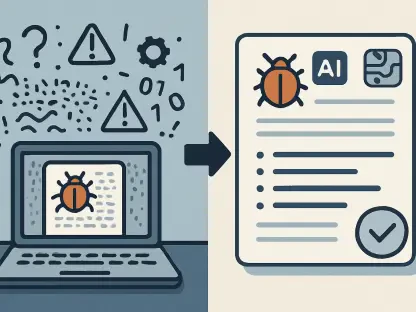
The enduring paradox of modern data management lies in the continued dominance of SQL, a language conceived in an era of monolithic systems, now tasked with navigating the distributed, hyper-scale demands of cloud computing and artificial intelligence. For decades, organizations have grappled with a fundamental choice: the structured reliability of relational databases or the flexible scalability of NoSQL alternatives. This dichotomy has led to fragmented, complex, and costly data ecosystems, where data engineers and administrators spend more time stitching together disparate systems than unlocking business value. Into this challenging landscape emerges SQLNet, a platform engineered not to replace SQL but to fundamentally evolve it. Positioned as a transformative solution, it proposes a future where the rigid boundaries between SQL and NoSQL dissolve, creating a unified, self-optimizing data fabric. By intelligently synthesizing the declarative power of SQL with the architectural innovations of distributed systems and embedded AI, SQLNet presents a compelling vision for a more integrated, efficient, and resilient data infrastructure, aiming to resolve the persistent challenges that have defined the industry for years.
The Foundational Principles of SQLNet
Core Architectural Pillars
At the very heart of SQLNet’s design philosophy is the intelligent fusion of legacy strength with contemporary agility, a principle that manifests through its hybrid architectural model. Rather than forcing enterprises to abandon decades of investment in SQL-based logic and expertise, the platform seamlessly integrates the transactional integrity and consistency of relational systems with the schema-on-read flexibility pioneered by NoSQL databases. This is most evident in its native support for semi-structured data formats like JSON, which allows organizations to manage diverse data types—from rigid financial records to dynamic user-generated content—within a single, cohesive environment. This capability eliminates the need for polyglot persistence strategies where different databases are used for different data shapes, a common practice that introduces significant operational overhead, data synchronization challenges, and architectural complexity. By providing a unified data layer, SQLNet simplifies development, reduces infrastructure costs, and ensures that all organizational data can be queried and analyzed together, breaking down the information silos that hinder comprehensive insights.
Building upon this hybrid foundation, SQLNet introduces a distributed, networked architecture coupled with deeply embedded artificial intelligence to address the critical challenges of scalability and manageability. It fundamentally departs from the limitations of vertical scaling—the costly and finite process of adding more power to a single server—by championing horizontal scaling, where workloads are distributed across a dynamic cluster of commodity servers. This is achieved through sophisticated sharding techniques and the implementation of proven consensus protocols like Raft, which guarantee data consistency and availability across all nodes without creating performance bottlenecks. This distributed nature is revolutionary, but the platform’s true innovation lies in its AI-driven autonomy. Machine learning algorithms are woven directly into the query optimization engine, enabling the system to learn from usage patterns, predict future workloads, and proactively tune itself for optimal performance. This self-optimizing capability automates routine yet complex administrative tasks such as index management and resource allocation, drastically reducing the manual burden on database administrators and allowing them to focus on high-value strategic initiatives rather than reactive firefighting.
Aligning with Key Industry Trends
SQLNet’s architecture is not designed in a vacuum; it is a direct response to the most significant trends shaping the enterprise technology landscape. Its inherent support for hybrid deployments makes it exceptionally well-suited for the modern cloud-native world, where organizations increasingly seek to avoid vendor lock-in and maintain operational flexibility. The platform allows for a fluid transition between on-premises data centers and public cloud environments like AWS and Azure, enabling businesses to leverage the best of both worlds. This architectural agility is critical for disaster recovery, data sovereignty compliance, and cost optimization, allowing workloads to be placed where they are most efficient and effective. This alignment with the principles of cloud computing and big data ecosystems ensures that SQLNet is not merely a database but a strategic component of a modern data stack, capable of scaling to meet the demands of petabyte-scale datasets and real-time analytical processing without requiring a complete overhaul of existing infrastructure.
Furthermore, SQLNet directly confronts two major pain points in modern enterprises: data ecosystem fragmentation and the technical barrier to data access. It is increasingly common for organizations to operate five or more distinct database technologies, leading to a complex and siloed environment that impedes holistic analysis. SQLNet addresses this by functioning as a powerful unifying abstraction layer, offering a single, cohesive interface to manage and query these disparate systems. This interoperability dismantles data silos and simplifies the data management lifecycle. At the same time, the platform is at the forefront of the movement to democratize data. Its roadmap includes advanced natural language query capabilities, which will empower non-technical business users to interact with complex datasets conversationally. This shift from code-centric to human-centric data interaction is a transformative trend, promising to make data-driven insights accessible to a much broader audience within an organization and fostering a more pervasive culture of data literacy and informed decision-making.
A Deep Dive into SQLNet’s Innovations and Impact
Unprecedented Performance and Scalability
The theoretical advantages of SQLNet’s design translate into demonstrable, real-world performance gains that redefine expectations for data platforms. Early benchmarks and pilot deployments have revealed significant improvements in efficiency, with some use cases showing query execution times reduced by as much as 40% compared to legacy relational systems. This acceleration is a direct result of its distributed query processing engine and intelligent data placement strategies. However, the platform’s true power is most evident in its mastery of horizontal scalability. By employing advanced sharding methodologies like consistent hashing, SQLNet can gracefully handle massive increases in transactional volume and concurrent users without performance degradation. A compelling case study from a major e-commerce firm illustrates this capability vividly: during a peak holiday sales event, the company experienced a 60% reduction in database-related downtime after migrating to SQLNet. This level of resilience and reliability ensures business continuity and protects revenue during critical operational periods, proving that the platform can sustain mission-critical workloads that would overwhelm traditional monolithic databases.
Beyond its transactional prowess, SQLNet is engineered to serve as the backbone for modern, real-time data applications through its native integration of stream processing capabilities. In an era where business intelligence is shifting from retrospective reporting to in-the-moment analytics, the ability to ingest and process continuous data streams is paramount. SQLNet incorporates a high-throughput event processing engine, akin to standalone tools like Apache Kafka, directly into its core. This allows for the seamless ingestion of data from sources such as IoT devices, application logs, and financial market tickers. By enabling continuous querying and analysis on data in motion, the platform empowers organizations to build sophisticated real-time applications, including fraud detection systems, dynamic pricing models, and predictive maintenance alerts. This convergence of transactional and analytical processing within a single system eliminates the architectural complexity and latency associated with moving data between separate operational databases and dedicated streaming platforms, providing a unified and highly efficient solution for the demands of an event-driven world.
A New Paradigm in Security and Compliance
In response to an increasingly hostile digital environment and a complex web of global regulations, SQLNet integrates a comprehensive, multi-layered security framework that is both robust and adaptive. The platform moves beyond standard security measures by incorporating advanced, end-to-end encryption for data both in transit and at rest, alongside sophisticated data replication protocols that ensure high availability and protect against data loss. The most significant innovation in its security posture, however, is the use of artificial intelligence to power dynamic, fine-grained access controls. Unlike traditional systems that rely on static, role-based permissions, SQLNet’s AI engine continuously analyzes query patterns and user behavior to detect anomalies in real-time. If an unusual or potentially malicious query is identified, the system can automatically flag the activity, restrict access, or alert administrators, providing a proactive defense mechanism that adapts to emerging threats without manual intervention. This intelligent, self-monitoring security model represents a critical evolution in protecting sensitive data assets.
Recognizing that modern data governance extends beyond threat prevention, SQLNet provides a powerful suite of built-in tools designed to streamline regulatory compliance and guarantee data integrity. For organizations operating under strict data privacy laws like GDPR, the platform offers features for enforcing data sovereignty, ensuring that data is stored and processed within specified geographic boundaries. It also includes automated auditing capabilities that create an immutable log of all data access and modifications, simplifying compliance reporting and forensic analysis. A truly groundbreaking feature is its support for proof-of-computation, a concept that leverages cryptographic verification to mathematically prove that SQL operations were executed correctly and without tampering. This provides an unprecedented level of assurance for critical transactions, establishing a verifiable chain of trust that is essential for industries like finance, healthcare, and supply chain management. By embedding these guarantees of integrity and verifiability directly into its core, SQLNet establishes a new standard for trustworthy data management.
Empowering Professionals and Delivering Strategic Value
SQLNet is engineered to be a force multiplier for the technical professionals who manage and build upon data infrastructure. For data engineers, the platform’s unified support for both low-latency stream processing and large-scale batch processing provides a single, cohesive environment for constructing resilient and high-performance data pipelines. This eliminates the need to integrate and maintain a patchwork of disparate tools, streamlining development cycles and reducing operational friction. Database administrators, in turn, benefit immensely from the platform’s AI-enhanced automation. By offloading routine yet critical tasks like performance tuning, index creation, and capacity planning to the system’s intelligent core, DBAs are liberated from the daily grind of reactive maintenance. This allows them to transition into a more strategic role, focusing on data architecture design, governance strategy, and optimizing the data ecosystem to drive business innovation, thereby elevating their contribution to the organization.
From the perspective of C-suite executives and business leaders, SQLNet presents a compelling case for a clear and substantial return on investment. The platform’s ability to consolidate disparate database technologies into a single, unified system directly translates into significant cost savings by reducing software licensing fees, minimizing hardware footprint, and simplifying management overhead. This consolidation lowers the total cost of ownership (TCO) while simultaneously increasing organizational agility. Furthermore, SQLNet’s architecture is designed to facilitate seamless migrations to modern data paradigms like open lakehouse models, empowering businesses to leverage their data for advanced analytics and machine learning without being locked into proprietary ecosystems. This combination of cost efficiency, operational simplicity, and strategic flexibility positions SQLNet not merely as a piece of technology, but as a powerful strategic asset that enables innovation, enhances competitive advantage, and future-proofs an organization’s data infrastructure.
The Enduring Legacy and Evolving Vision
The introduction of SQLNet ultimately marked a pivotal moment in the evolution of data management. It demonstrated that the industry’s foundational language, SQL, possessed a remarkable capacity for adaptation when augmented with modern architectural principles and intelligent automation. The platform provided a definitive answer to the long-standing debate between the structured world of relational databases and the flexible universe of NoSQL, proving that a unified approach was not only possible but superior. Its success laid down a blueprint for future database design, one where the convergence of transactional and analytical workloads, coupled with AI-driven optimization, became the new standard. The challenges of implementation and migration were navigated through a robust community fostered by its open-source components, which accelerated innovation and ensured its long-term viability. SQLNet’s arrival shifted the entire industry conversation, moving it away from a choice between competing paradigms and toward the pursuit of a holistic, intelligent, and truly unified data fabric.