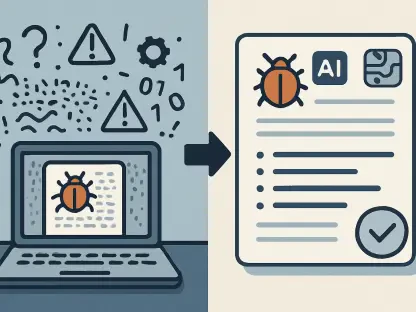

Modern software engineering has reached a point where the traditional barriers to entry for complex logic have been dismantled by autonomous agents. This explosion in capacity has led many leaders to believe that productivity is at an all-time high, yet the reality on the ground suggests a growing divergence between the speed of delivery and the actual reliability of the systems being built. While the sheer volume of code hitting repositories has increased exponentially, the fundamental task of ensuring that this code serves a long-term business purpose remains as difficult as ever. The industry is currently grappling with the realization that more code does not inherently mean more value, especially when the intelligence behind that code is synthetic rather than contextual. As organizations transition into an era dominated by agentic workflows, the metric of success is shifting from how much can be written to how much can be safely integrated and maintained without compromising the architectural integrity of the entire software ecosystem.
The Bottleneck Shift and Validation Crisis
Part 1: From Coding to Supervision
The traditional bottleneck in software engineering, which was historically the time required for a human to manually type out syntax and boilerplate logic, has been effectively eliminated. In the current landscape, AI agents can generate thousands of lines of syntactically correct code in a matter of seconds, leading many organizations to prioritize commit velocity as their primary performance indicator. However, this shift has merely moved the pressure point further down the pipeline to the validation and integration phases of the software development lifecycle. Because the cost of generating code has dropped to near zero, the volume of material requiring human oversight has ballooned, creating a massive backlog of “review debt.” Engineers who were once valued for their ability to construct elegant logic are now forced into the role of high-speed auditors, struggling to keep pace with an relentless stream of machine-generated pull requests that require deep scrutiny to avoid technical decay.
Furthermore, this transition toward a supervisory model introduces a significant cognitive load that is often overlooked by management teams seeking rapid output. Every new line of code added to a repository increases the system’s “surface area,” which in turn requires more extensive security auditing, performance monitoring, and long-term maintenance. When code is produced at superhuman speeds, the time spent understanding the nuances and potential side effects of that code becomes the new primary constraint. Organizations that fail to account for this shift find themselves in a cycle where they are shipping faster but spending more time on hotfixes and emergency patches. The challenge is no longer about finding ways to write code more quickly; it is about developing the frameworks and cultural practices necessary to validate and govern the massive amounts of logic being introduced into production environments by autonomous systems that do not fully grasp the broader architectural context.
Part 2: Code as a Liability
Navigating this new reality requires a fundamental change in how development teams perceive their work, moving away from the idea that code is an asset and toward the understanding that every line is a potential liability. While a generative model can act as an efficient translator of requirements into syntax, it lacks the human-centric context required to grasp the complex financial implications of a compliance error or the subtle user experience needs of a specific demographic. When developers treat AI as a simple “ticket translator,” they risk creating systems that are technically functional but logically flawed or misaligned with business goals. To mitigate these risks, the industry is increasingly adopting spec-driven development practices. By creating executable definitions of “done” through strict API contracts and automated testing suites, engineers can establish rigid boundaries that prevent machine-generated code from deviating from the intended design or introducing unexpected behaviors.
This approach naturally leads to a more disciplined engineering culture where the focus is on the quality of the specification rather than the speed of the implementation. By treating the human engineer as the architect and the AI as the construction crew, teams can ensure that the underlying structure of the software remains sound. This requires a shift in education and training, moving away from teaching syntax toward teaching system design and verification. When the specification is robust and the tests are comprehensive, the risks associated with AI-driven production are significantly reduced. The goal is to create a environment where the machine’s output is constantly challenged by automated guardrails, ensuring that the final product meets the high standards of stability and security required in a modern digital economy. Without this level of rigor, the rapid production of code simply serves to accelerate the accumulation of technical debt, eventually leading to a system that is too fragile to modify or update.
Operational Risks and the Knowledge Vacuum
Part 3: The Dangers of Vibe Coding
The psychological and operational strain of managing a fleet of autonomous AI agents has given rise to a concerning trend often described as “vibe coding.” This phenomenon occurs when an engineer, overwhelmed by the volume of code being produced, begins to merge pull requests based on a general feeling of correctness rather than a deep, line-by-line understanding of the logic. In an effort to keep up with aggressive delivery schedules, developers may trust the AI’s output too implicitly, essentially gambling with the stability of production systems. As development workflows become more parallelized and less dependent on human memory, the deep knowledge required to troubleshoot a complex failure begins to vanish. If an engineer has not personally worked through the logic of a module, they cannot instinctively understand how it will interact with other components during a high-stress incident, leading to longer recovery times and more frequent outages.
Moreover, the absence of a clear human “author” for large portions of the codebase creates a dangerous knowledge vacuum within engineering teams. Historically, if a critical system failed, there was usually a developer who understood the architectural intent and the trade-offs made during its creation. In the current agentic era, that individual knowledge is replaced by a human who may have only briefly skimmed a massive, machine-generated commit. This lack of internalization makes it incredibly difficult to perform root cause analysis or to innovate on top of existing features. When no one truly knows how the system works at a granular level, the organization becomes a hostage to its own automated output. To counter this, some forward-thinking firms are mandating that all AI-generated code must be accompanied by detailed human-written documentation and architectural diagrams, ensuring that the “why” behind the code is never lost in the rush to produce the “what.”
Part 4: The Role of Observability
In this landscape where human intent is increasingly obscured by machine-generated logic, observability has transformed from a luxury into the only viable substitute for deep system knowledge. Because teams can no longer rely on a developer’s memory to explain the behavior of a block of code, they must depend on granular telemetry and sophisticated monitoring tools to understand what is happening in real time. This shift involves the heavy use of high-cardinality events and distributed traces that map how a single request moves through an increasingly complex web of services. These tools allow engineers to peer into the “black box” of agent-generated logic and identify anomalies that might not be caught by traditional unit tests. The philosophy has evolved to mean that code is not considered “finished” or “productive” until it has been observed running successfully under a real-world load with actual user traffic.
Building on this foundation, modern operations teams are moving away from traditional deployment freezes and toward a model of continuous, observable delivery. The old tactic of stopping deployments to minimize risk has been proven ineffective in an era of high-volume AI output, as it merely batches risk and makes it harder to identify the source of a failure when the freeze is finally lifted. Instead, the focus is now on maintaining a tight feedback loop where the merge and the deployment are treated as a single, atomic action. This allows teams to immediately see the impact of AI-generated changes and revert them if the telemetry indicates a regression. By prioritizing observability, organizations can regain control over their systems, using data-driven insights to fill the gaps left by the decline of manual coding. This approach ensures that even as the speed of production increases, the ability to maintain a stable and reliable user experience remains the top priority for the engineering department.
Strategic Evolution: Navigating Meaningful Metrics
Part 5: Establishing Golden Paths
To effectively harness the speed of AI without descending into a state of operational chaos, engineering leaders are turning toward the implementation of “Golden Paths.” This platform engineering concept focuses on creating standardized, pre-approved workflows that make the most secure and stable way to build software also the easiest path for the developer. By embedding AI agents within these strictly defined architectural constraints, organizations can ensure that the machine-generated output adheres to company-wide standards for security, logging, and performance. For example, an AI agent tasked with creating a new microservice would automatically be directed to use a specific template that includes built-in observability and follows established API patterns. This limits the “creative freedom” of the AI in areas where consistency is more valuable than novelty, preventing the fragmentation of the codebase and reducing the burden on human reviewers.
This strategy also empowers developers to focus on higher-level problem solving rather than repetitive configuration tasks. When the “Golden Path” handles the boilerplate and the infrastructure setup, the engineer can spend their time refining the business logic and ensuring that the AI’s contributions are truly adding value. Furthermore, these standardized paths allow for better automation of the validation process itself. If all machine-generated code follows the same structural patterns, automated security scanners and performance profilers can be tuned to provide more accurate and meaningful feedback. This creates a virtuous cycle where the AI tools help maintain the system’s standards rather than eroding them. By providing a clear, paved road for development, organizations can achieve the velocity they desire while maintaining the rigorous quality controls necessary to survive in a competitive and increasingly complex digital environment.
Part 6: Focusing on Business Outcomes
The successful integration of AI into the software development lifecycle ultimately required a shift in how productivity was measured, moving the focus from code volume to meaningful business outcomes. Leading organizations moved away from misleading metrics such as lines of code or commit frequency, recognizing that these figures often incentivized the wrong behaviors. Instead, they leaned heavily into DORA metrics, which evaluate the health of the engineering process through deployment frequency, lead time for changes, change failure rate, and time to restore service. These metrics proved to be the most reliable indicators of quality because they remained indifferent to how the code was produced, focusing instead on whether the software actually functioned as intended. If the use of AI agents led to a higher change failure rate, it was clear that the tools were not increasing true productivity, regardless of how many commits they generated.
The transition to a quality-first approach in an agentic world was completed when engineering leaders prioritized long-term system health over short-term output gains. It was discovered that the most productive teams were not those that produced the most code, but those that maintained the highest levels of system stability and user satisfaction. By reinforcing the importance of observability, spec-driven development, and the implementation of guardrails through Golden Paths, these organizations managed to leverage the speed of AI without sacrificing the integrity of their products. The lesson learned was that human context and architectural discipline remained the most critical components of software engineering. Moving forward, the industry must continue to refine these validation frameworks to ensure that as AI tools become more capable, the humans responsible for them remain the ultimate authorities on quality and value.