
The seamless orchestration of stateful applications has officially become the benchmark for enterprise success as organizations move past the initial novelty of containerization into deep operational maturity. Current industry benchmarks from 2026 reveal that over 85% of global enterprises have transitioned their primary production workloads to Kubernetes environments, effectively ending the debate over whether containers are suitable for mission-critical data. However, this massive migration has highlighted a significant architectural friction point: the inherent conflict between the ephemeral nature of containers and the permanent requirements of enterprise data. While the early days of the cloud-native movement prioritized stateless microservices that could be destroyed and recreated at will, the current landscape demands that infrastructure treat persistent data with the same level of fluidity and automation as compute power. This evolution requires a sophisticated reimagining of the storage stack, moving away from rigid, hardware-centric models toward a dynamic, software-defined approach that can handle the massive throughput and low-latency requirements of modern, data-intensive applications.
Bridging the Gap: The Container Storage Interface Standard
The emergence of the Container Storage Interface (CSI) has served as the critical turning point in the struggle to harmonize physical storage hardware with the rapid lifecycle of containerized workloads. Before this standard gained universal adoption, integrating storage into Kubernetes was a fragmented and labor-intensive process that frequently required direct modifications to the core Kubernetes source code to support specific hardware vendors. This “in-tree” plugin model was inherently unsustainable, as it forced a tight coupling between the orchestration layer and the underlying physical infrastructure, limiting the speed at which both could evolve. The CSI successfully decoupled these layers by providing a standardized specification that allows storage vendors to develop and maintain their own drivers independently of the Kubernetes release cycle. This shift has enabled a vast ecosystem of storage providers, ranging from traditional storage array manufacturers to cloud-native startups, to provide immediate compatibility with any CSI-compliant orchestrator, thereby eliminating the vendor lock-in that previously plagued enterprise data centers.
Beyond simple compatibility, the implementation of CSI has empowered developers through the widespread use of StorageClasses, which function as an essential abstraction layer for resource provisioning. In a modern cloud-native environment, a developer no longer needs to possess deep expertise in Fiber Channel protocols or Storage Area Network (SAN) configuration to deploy a high-performance database. Instead, they can simply request a specific tier of service—such as “ultra-fast-ssd” or “geo-replicated-archive”—and the system automatically handles the provisioning and mounting of the requested volume. This self-service model drastically reduces the time between development and deployment, while simultaneously allowing storage administrators to maintain rigorous governance over performance and cost. By defining these classes on the backend, administrators can ensure that workloads are automatically matched with the most appropriate physical resources, maintaining a unified management plane that bridges the gap between on-premise legacy systems and public cloud storage services.
Scaling Architecture: Software-Defined Storage and Converged Infrastructure
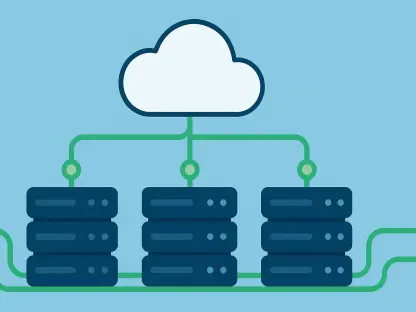
The maturation of persistent storage has been significantly accelerated by the rise of Software-Defined Storage (SDS), which shifts the intelligence of data management from specialized, proprietary hardware into flexible software layers. In 2026, solutions like Ceph, Longhorn, and OpenEBS have become foundational components of the cloud-native stack because they offer the same horizontal scalability and resilience that define containerization itself. Unlike traditional storage arrays that often act as centralized bottlenecks, SDS distributes data across a cluster of commodity servers, allowing storage capacity and performance to grow linearly as more nodes are added to the environment. This architectural shift is particularly vital for organizations maintaining hybrid cloud footprints, as it provides a consistent storage experience across diverse hardware environments. By treating storage as a programmable resource, SDS enables IT teams to automate complex tasks like data replication and thin provisioning, ensuring that the storage layer can keep pace with the dynamic demands of a containerized application ecosystem.
This software-centric approach is also being driven by the intense data requirements of Artificial Intelligence (AI) and Machine Learning (ML) pipelines, which have become standard across the corporate landscape. These workloads require massive datasets to be streamed with high throughput and minimal latency during the training phase, necessitating a storage layer that is both highly performant and deeply integrated with Kubernetes scheduling. Furthermore, the industry is witnessing a notable convergence between virtual machines and containers, as platforms like KubeVirt and Red Hat OpenShift Virtualization allow organizations to manage both types of workloads within a single cluster. This consolidation requires the storage infrastructure to be exceptionally robust, as it must now support the long-term stability and specific I/O profiles of legacy applications that were never originally intended for the cloud-native world. The result is a more resilient and versatile infrastructure that maximizes existing hardware investments while providing a clear pathway for the modernization of even the most complex enterprise systems.
Automating Reliability: The Vital Role of Kubernetes Operators
The successful operation of complex, stateful systems like distributed databases and messaging queues on Kubernetes relies heavily on the use of Kubernetes Operators to handle the intricacies of lifecycle management. An Operator is a specialized software component that effectively encodes the deep operational knowledge of a human database administrator into automated, repeatable logic. While the Container Storage Interface handles the physical connection to the disk, the Operator manages the application-specific tasks that are necessary for true data persistence, such as performing consistent backups, managing point-in-time recovery, and orchestrating complex failover scenarios. For example, if a primary database node fails, a well-designed Operator will automatically identify the failure, promote a replica to primary status, and reconfigure the application to point to the new source without any manual intervention from the operations team. This level of automation is what makes it possible for large-scale enterprises to run production-grade databases at scale, providing the same reliability as traditional VM-based environments.
Furthermore, the rise of Operators has addressed the critical “day two” challenges that often emerge after an application has been successfully deployed. Managing stateful sets in Kubernetes is notoriously difficult because each pod requires a unique identity and a dedicated persistent volume that must stay attached even as pods are moved across different nodes for load balancing or maintenance. Operators simplify this by continuously monitoring the state of the cluster and making real-time adjustments to ensure that the actual state matches the desired configuration defined by the administrators. This proactive management extends to software upgrades and security patching, which are historically risky operations for stateful systems. By automating the rolling update process and verifying data integrity at every step, Operators significantly reduce the risk of data corruption or downtime during maintenance windows. This shift toward automated, code-driven operations allows IT departments to scale their infrastructure without a proportional increase in headcount, focusing their resources on innovation rather than manual troubleshooting.
Managing Lifecycle: Operational Security and Multicloud Realities
As the technical foundations for cloud-native storage have solidified, the industry focus has shifted toward the rigorous demands of “Day Two” operations, specifically regarding data protection and multicloud portability. Ensuring the security and availability of persistent data in a distributed environment requires a different approach than traditional backup strategies, as data is often spread across multiple microservices and storage volumes. In 2026, leading organizations have implemented container-aware backup solutions that integrate directly with the Kubernetes API, allowing them to capture consistent snapshots of both the data and the application configuration simultaneously. This ensures that in the event of a catastrophic failure or a ransomware attack, the entire environment can be reconstructed quickly from a known good state. Moreover, the integration of advanced encryption and identity-based access controls within the storage layer has become a non-negotiable requirement for meeting modern compliance standards like GDPR and CCPA, which demand granular control over where data resides and who can access it.
Despite the theoretical portability offered by containers, the reality of “data gravity” remains a significant obstacle for organizations pursuing a true multicloud strategy. Moving petabytes of data between different cloud providers is often prohibitively expensive due to high egress fees and the time required for data transfer, leading many teams to adopt a “cloud-first, but not cloud-only” approach. In this context, the abstraction provided by the Container Storage Interface and software-defined storage acts as an essential insurance policy, ensuring that the application logic remains decoupled from the specific storage services of a single vendor. To navigate these complexities, IT architects must prioritize long-term planning that accounts for data sovereignty, disaster recovery across regions, and the ability to pivot infrastructure as business needs change. By building a storage strategy that emphasizes flexibility and automated governance, enterprises can finally realize the full potential of cloud-native architecture, transforming their data from a static liability into a dynamic and highly available asset.
The evolution of persistent storage in cloud-native systems has transitioned from an experimental endeavor into a highly standardized and automated discipline. Organizations that successfully integrated the Container Storage Interface with sophisticated Kubernetes Operators achieved a level of operational resilience that surpassed traditional infrastructure models. These teams moved beyond basic deployment to master the complexities of Day Two operations, implementing automated backup and security protocols that protected against both human error and external threats. The strategic move toward software-defined storage also allowed for the consolidation of virtual machines and containers, creating a unified management plane that reduced overhead and improved resource utilization. Ultimately, the industry established that stateful applications were not only viable in a containerized world but were essential to the long-term success of the modern digital enterprise. Future initiatives must now focus on further reducing the friction of data mobility and enhancing the intelligent automation of storage lifecycle management to keep pace with the ever-increasing volume of global data.