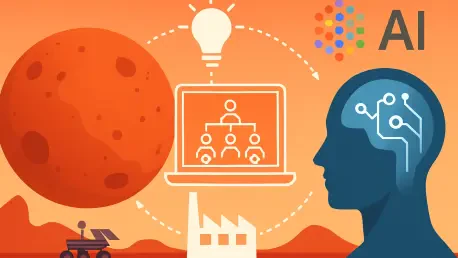

The global landscape of corporate operations underwent a seismic shift as Mars, Incorporated integrated Google Cloud’s Gemini Enterprise as its primary artificial intelligence operating system for its massive international workforce. This strategic expansion represents a fundamental transition from experimental, fragmented automation toward a cohesive, agentic model that empowers approximately 150,000 Associates across various business segments, including Petcare, Snacking, and Food & Nutrition. By establishing this sophisticated digital backbone, the organization is effectively redesigning the employee experience, ensuring that every individual has access to high-level collaborative partners rather than just static software tools. The central component of this massive overhaul is the proprietary platform known as Mars IQ, which now leverages Google’s advanced models to serve as a single source of truth for the entire company. This move allows the enterprise to move beyond the limitations of manual research and disconnected data streams, making decades of institutional wisdom instantly accessible to everyone from corporate executives to frontline staff.
Transforming Product Innovation Through Unified Intelligence
The implementation of a collaborative orchestration framework has fundamentally altered how major brands like M&M’S®, Royal Canin®, and Ben’s Original™ approach the marketplace through the proprietary “One Demand” model. This specific architecture allows marketing, sales, and research and development teams to work in a synchronized environment where the barriers between departments are effectively dissolved by agentic processes. By utilizing Gemini Enterprise, Mars Associates can now generate comprehensive creative briefs, produce high-quality preliminary brand assets, and perform complex market analyses at speeds that were previously impossible to achieve within traditional corporate structures. This synergy does not replace human creativity but rather provides a rigorous, data-grounded foundation that allows legendary creative sparks to flourish more efficiently. Consequently, the distance between a product concept and its appearance on retail shelves has been shortened significantly, turning what used to be months of iterative drafting into a streamlined, real-time process.
Furthermore, this technological shift enables the company to respond to fluctuating consumer trends with unprecedented agility by utilizing AI agents that function as active participants in the innovation cycle. Instead of relying on static reports that may be outdated by the time they are finalized, teams can now leverage real-time data synthesis to adjust marketing strategies or product formulations on the fly. This capability is particularly crucial in the fast-moving consumer goods sector, where digital shopping habits and dietary preferences can shift rapidly. By establishing an internal foundation of high-quality, synthesized data, the organization provides its external advertising and creative agency partners with more sophisticated starting points for collaboration. This approach ensures that the company remains at the forefront of the industry, maintaining its competitive edge by blending historical brand values with modern, data-driven precision. The result is a more resilient business model that thrives on constant, informed iteration across its global portfolio.
Bridging the Gap Between Legacy Knowledge and Modern Analysis
Addressing the long-standing challenge of information trapped within departmental silos has become a primary focus of the new unified enterprise search system powered by Google’s advanced AI infrastructure. In many legacy organizations, valuable data often exists in a vacuum, making it nearly impossible for different teams to leverage historical insights for current projects. By creating a secure, unified entry point for all internal information, Mars has unlocked a treasure trove of institutional wisdom that was previously difficult to navigate. This is especially evident in the scientific and technical sectors of the business, where researchers can now query forty years of internal nutritional studies alongside contemporary market data. This immediate access to historical research allows the company to identify emerging health trends for pets and humans with greater accuracy and speed. By synthesizing these deep internal archives with real-time external shifts, the organization positions itself to innovate more responsibly and effectively in a complex global market.
Moreover, the ability to synthesize decades of internal research with live market analytics transforms the way technical teams approach problem-solving and new product development. A research scientist focusing on pet health, for example, can now cross-reference historical clinical data with current consumer feedback to refine a formula in a fraction of the time it once took. This method effectively turns “trapped information” into a dynamic asset that drives the company’s mission forward while maintaining the highest standards of quality and safety. The integration of Gemini Enterprise ensures that this data remains secure and compliant with global regulations, providing a safe environment for deep exploration and discovery. This systematic breaking down of silos fosters a culture of transparency and collaboration, where knowledge is no longer a restricted resource but a shared utility. As a result, the enterprise can leverage its vast scale to solve local problems more effectively, ensuring that every innovation is backed by the full weight of the organization’s collective experience and modern analytical capabilities.
Empowering a Global Workforce With Specialized Digital Assistants
The democratization of technology within the organization is perhaps most visible through the introduction of low-code and no-code environments that allow non-technical staff to build their own AI assistants. This move shifts the power of innovation from centralized IT departments directly into the hands of those who encounter operational challenges daily, such as factory technicians and supply chain managers. For instance, an Associate working in a manufacturing plant can now develop a specialized diagnostic agent to troubleshoot production line issues in real-time, reducing downtime and improving efficiency. Similarly, procurement teams can utilize custom agents to identify alternative ingredient sources during global supply disruptions, enhancing the company’s resilience. This localized approach to problem-solving ensures that the technology is not just a top-down mandate but a practical tool that provides immediate value at every level of the company. It empowers employees to take ownership of their workflows, using AI as a partner to enhance their unique expertise and intuition.
Crucially, this widespread adoption of custom AI tools is managed through a rigorous governance framework that ensures all applications remain aligned with the company’s core values and global standards. Every assistant or tool created by an Associate is built within the secure Gemini Enterprise environment, which provides the necessary guardrails for data privacy, ethical compliance, and operational safety. This structured approach allows the company to scale its digital capabilities globally without risking fragmentation or the rise of “shadow IT” systems. By viewing AI as a collaborative partner rather than a replacement for human labor, the organization is setting a new blueprint for the agentic era. This philosophy emphasizes that the future of enterprise success depends on the ability to fuse human intuition with machine precision. As the rollout continues to expand, the focus remains on enhancing the Associate experience, ensuring that every technological advancement serves to amplify human potential. This commitment to responsible AI use ensures that the company remains a leader in both innovation and corporate responsibility.
The strategic transition to an agentic enterprise was successfully realized through the purposeful integration of unified AI systems that replaced scattered digital experiments. By prioritizing the Associate experience, the organization proved that large-scale technology deployments are most effective when they empower individuals to solve specific, local problems within a secure global framework. Moving forward, businesses should consider shifting away from isolated AI tools in favor of a modular, enterprise-wide operating system that can synthesize decades of institutional knowledge in real-time. This approach allowed the company to move beyond simple automation to a model where human intuition and machine precision functioned in a truly collaborative partnership. The successful rollout demonstrated that maintaining rigorous governance while providing low-code flexibility is the most viable path for legacy organizations to thrive in a digital-first economy. Ultimately, the focus shifted from merely adopting new software to redesigning the fundamental ways in which people work, innovate, and interact with data across a global scale.