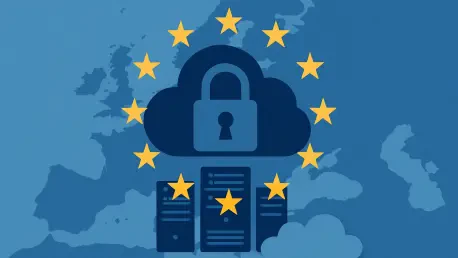

The long-standing dominance of American hyperscalers over the global data landscape has finally met a formidable challenger in the form of a decentralized, policy-driven architectural movement known as European Cloud Sovereignty. For years, the convenience of one-stop-shop providers like AWS or Azure outweighed concerns regarding data residency and jurisdictional overreach. However, a growing cohort of European enterprises is now demonstrating that “sovereignty” is no longer just a regulatory buzzword or a compliance checkbox; it has matured into a sophisticated technical posture that prioritizes digital autonomy without sacrificing high-end performance. This transition represents a shift from a consumption-based IT model to an ownership-based one, where the focus is on building resilient, multi-vendor stacks that can withstand both geopolitical shifts and the monopolistic pricing of global tech giants.
The Architectural Shift Toward Digital Autonomy
The emergence of sovereign cloud computing marks a departure from the centralized “all-in” strategy that defined the previous decade. At its core, this technology is built on the principle of data and operational control, ensuring that every byte of information remains within European borders and under the legal jurisdiction of the EU. This is not merely about moving servers to a different geographic region; it involves a fundamental redesign of the technology stack to decouple software from the underlying infrastructure. By leveraging open standards and local providers, organizations are creating a fail-safe environment that reduces concentration risk—the dangerous reliance on a single provider whose failure or policy change could cripple an entire industry.
Beyond simple compliance, the relevance of this shift lies in the democratization of infrastructure. In the past, only the largest corporations had the resources to build custom, private cloud environments. Today, the evolution of containerization and automated orchestration has allowed smaller enterprises to assemble “best-of-breed” regional services into a cohesive, high-performance system. This movement is a direct response to the “black box” nature of global hyperscalers, offering a transparent alternative where the flow of data is visible, auditable, and entirely under the user’s command.
The Core Components of a Sovereign Technology Stack
Decentralized Infrastructure and Multi-Vendor Strategies
A primary feature of the modern sovereign stack is its reliance on a decentralized network of specialized providers rather than a single monolith. For example, German providers like Hetzner have emerged as the backbone for primary compute and S3-compatible object storage, often delivering raw performance that rivals American counterparts at a fraction of the cost. The significance of this approach is found in the lack of “egress fees”—the punitive costs often charged by hyperscalers to move data out of their ecosystem. By utilizing a multi-vendor strategy, companies can use Scaleway for specialized container registries or transactional emails while relying on Bunny.net for edge computing and DDoS protection, ensuring that no single entity holds the keys to the entire operation.
This functioning model relies on the interoperability of services. Instead of using proprietary APIs that create vendor lock-in, sovereign clouds prioritize standardized protocols like Kubernetes for orchestration and Terraform for infrastructure as code. This allows an organization to treat its cloud providers as interchangeable utilities. If a provider changes its terms of service or experiences a localized outage, the architecture is designed to shift workloads to another regional node with minimal downtime. This level of fluidity represents the pinnacle of modern systems engineering, turning infrastructure into a dynamic resource rather than a static dependency.
Self-Hosted Service Ownership and Containerization
The second pillar of the sovereign movement is the aggressive adoption of self-hosted services. By moving away from Software-as-a-Service (SaaS) giants, organizations are reclaiming their internal tooling. Critical applications such as source control, secrets management, and error tracking are now routinely hosted on private Kubernetes clusters using tools like Gitea, Infisical, and Bugsink. This change shifts the operational contract from a subscription-based dependency to a direct ownership model. While this requires a higher degree of internal expertise to manage security patches and backups, it grants the enterprise total control over its intellectual property and operational data.
Containerization acts as the glue that makes this self-hosted reality possible. By packaging applications and their dependencies into portable containers, developers can ensure consistent performance across diverse European data centers. This technical maturity allows for the seamless integration of localized identity management solutions like Hanko, which supports modern authentication standards like passkeys. The result is a system that feels like a unified cloud experience but is actually a mosaic of independent, self-governed components that prioritize the user’s long-term autonomy over short-term convenience.
Emerging Trends in Regional Cloud Ecosystems
The trajectory of European cloud technology is increasingly defined by the rise of “sovereign AI” and localized GPU clusters. As the demand for artificial intelligence grows, there is a mounting concern about feeding sensitive corporate data into models hosted by foreign entities. In response, regional innovators like Nebius have begun providing high-density GPU capacity within the EU, allowing companies to run large language models (LLMs) on infrastructure that is physically and legally protected by European laws. This trend is shifting the industry focus from general-purpose computing to specialized, high-performance environments tailored for the next generation of data processing.
Moreover, there is a visible shift in consumer behavior toward “ethical tech” branding. Industry leaders are no longer viewing GDPR compliance as a burden but as a competitive advantage. This has led to the development of integrated observability platforms that provide real-time dashboards showing the physical location and jurisdictional status of every data packet. As these tools become more user-friendly, the friction of managing a multi-vendor stack is decreasing, making the sovereign approach attractive to a much wider range of sectors, from fintech to public healthcare.
Real-World Implementations of the “Made in EU” Framework
Practical applications of the “Made in EU” framework are most visible in sectors where data privacy is non-negotiable. For instance, European healthcare providers are utilizing sovereign stacks to manage patient records, ensuring that sensitive medical history never touches a non-EU server. By using local providers for core storage and decentralized CDNs for fast data delivery, these institutions can provide digital services that are both highly responsive and strictly compliant with local regulations. This demonstrates that the sovereign stack is not just a theoretical exercise but a functional reality for high-stakes industries.
In the financial sector, the movement toward sovereignty is driven by the need for resilience against geopolitical instability. Fintech startups are increasingly building their core banking platforms on a combination of German and French infrastructure providers to avoid being caught in the middle of trade disputes or regulatory shifts between the US and the EU. These implementations often feature a “hybrid-sovereign” model, where public-facing marketing tools may remain on global platforms, but the critical transaction engine and user database are housed entirely within the sovereign framework, creating a clear boundary between public interaction and private data.
Critical Hurdles and Operational Friction
Despite the rapid advancements, the path to full digital independence is fraught with operational friction. One of the most significant technical hurdles is the “engineering tax” associated with self-hosting. Managing a complex array of internal tools requires a level of platform engineering maturity that many small to medium-sized enterprises lack. When an organization moves away from a hyperscaler, it loses the “convenience layer”—the pre-configured, automated services that handle everything from database backups to email delivery. Replacing these with European alternatives often requires custom integration work, as the community support and third-party ecosystems for these regional providers are not yet as vast as those for the industry giants.
Furthermore, there are structural dependencies that remain nearly impossible to sever. The dominance of the mobile OS duopoly (iOS and Android) and the global nature of digital advertising mean that any consumer-facing business must still interact with US-based infrastructure for user acquisition and app distribution. Similarly, the loss of the GitHub ecosystem presents a major workflow challenge; leaving GitHub means abandoning an massive library of CI/CD templates and developer “muscle memory.” Organizations must weigh the benefits of sovereignty against the very real cost of rebuilding these established production lines from scratch.
The Future of Sovereign Computing and AI Integration
The future of this sector lies in the maturation of “automated sovereignty.” We are moving toward a landscape where AI-driven orchestration layers will automatically manage the distribution of workloads across various European providers based on cost, performance, and legal requirements. This will effectively hide the complexity of the multi-vendor stack behind a simplified user interface, allowing developers to focus on building products rather than managing infrastructure. As regional AI models become more capable, the need to send data to foreign APIs will diminish, creating a self-sustaining European digital ecosystem that spans from the silicon layer to the application layer.
In the long term, the impact of sovereign computing will extend beyond the IT department to influence global trade policy. As more regions follow the European example—developing their own local clouds—the internet may shift from a global monolith to a federation of interconnected, sovereign zones. This could lead to a breakthrough in digital rights, where users have greater visibility into how their data is used and stored. The integration of blockchain-based verification for data residency could further strengthen these frameworks, making the “Made in EU” label a gold standard for digital security and ethical technology.
Strategic Summary and Final Assessment
The evaluation of European Cloud Sovereignty revealed a technology landscape that has successfully transitioned from a reactive regulatory response to a proactive architectural strategy. While the movement was born out of a need for compliance, it has evolved into a high-performance alternative that offers genuine economic and operational advantages. The transition toward decentralized, multi-vendor stacks proved that it is possible to achieve world-class infrastructure without the deep-seated vendor lock-in associated with global hyperscalers. However, the analysis also highlighted that this path is not for the faint of heart, as it demands a significant commitment to engineering excellence and an acceptance of the friction inherent in building a custom digital ecosystem.
The final verdict on the sovereign framework was that its benefits significantly outweighed its drawbacks for organizations prioritizing long-term resilience and data control. The lower infrastructure costs associated with regional providers offered a compelling financial argument, even when offset by increased engineering requirements. Moving forward, the strategic focus shifted toward bridging the gap between convenience and autonomy. The emergence of more robust regional AI tools and automated orchestration platforms suggested that the “engineering tax” will continue to decrease. Ultimately, European Cloud Sovereignty established a new standard for digital citizenship, proving that independence in the cloud is not only possible but increasingly essential for a secure and competitive future.