
The dramatic 70 percent year-to-date surge in Intel Corporation’s valuation has forced market skeptics to reconsider the legacy chipmaker’s role in a world increasingly defined by extraterrestrial infrastructure and massive-scale artificial intelligence. This momentum stems from a profound strategic pivot, moving away from the commodity semiconductor race and toward high-stakes integrations within Google Cloud’s ecosystem and Elon Musk’s ambitious Terafab project. While the company spent years trailing competitors in the mobile and consumer segments, its recent focus on foundational infrastructure has turned the tide in its favor. By securing its place as a primary architect for the next generation of cloud-native AI, Intel is attempting to prove that its manufacturing prowess and architectural innovations are more relevant than ever. This shift represents a broader industry trend where hardware providers must offer more than just speed; they must provide the structural resilience required for the most demanding environments known to science, from massive data centers to the harsh vacuum of orbital space.
Solidifying the Foundation of Artificial Intelligence Infrastructure
Strategic Integration: Global Cloud Networks
Intel has successfully solidified its standing in the competitive artificial intelligence market by deepening its long-term partnership with Google Cloud. This collaboration ensures that the latest iterations of Intel’s Xeon processors continue to serve as the critical backbone for Google’s C4 and N4 server instances, which are essential for diverse enterprise workloads. However, the partnership extends far beyond simple processor supply; it emphasizes the deployment of specialized Infrastructure Processing Units designed to optimize system efficiency. These IPUs act as a secondary brain, offloading demanding networking and security tasks from the main central processing unit to ensure that AI applications run without bottlenecks. By focusing on these high-performance environments, Intel is positioning its silicon as a necessary component for scaling artificial intelligence beyond isolated accelerators. This approach addresses a growing need for holistic system performance in the cloud.
The current strategy, often highlighted by leadership like CEO Lip Bu Tan, revolves around the concept of a balanced system where every component is optimized for data throughput and power management. This move signifies a departure from the industry’s singular obsession with raw floating-point operations per second, favoring instead a more robust and reliable infrastructure model. As cloud providers move through 2026 to 2028, the requirement for sustained, predictable performance becomes paramount for maintaining service-level agreements with global clients. Intel’s ability to integrate its silicon deeply into the fabric of Google’s global infrastructure provides a level of market stability that few other chip designers can claim. Furthermore, the development of these custom-tailored solutions allows Intel to capture a larger share of the value chain within the data center, moving from a component vendor to a strategic infrastructure partner that influences how global compute is distributed.
Computational Supremacy: The Terafab Project
A central pillar of the company’s recent valuation growth is its substantial involvement in the Terafab initiative, a massive project spearheaded by Elon Musk. This venture seeks to achieve an unprecedented one terawatt of annual computing capacity, representing a leap in scale that is fifty times greater than the current global output for advanced artificial intelligence processors. Intel’s participation in this ecosystem is not merely as a supplier but as a key technological enabler through its breakthroughs in advanced manufacturing processes. The collaboration aims to address the sheer physical and energy constraints that have historically limited the expansion of massive AI training clusters. By integrating into the Terafab workflow, Intel is demonstrating its capacity to produce silicon at a scale and efficiency that aligns with the most aggressive industrial goals in the modern world. This participation signals to investors that the company is capable of meeting the massive supply demands.
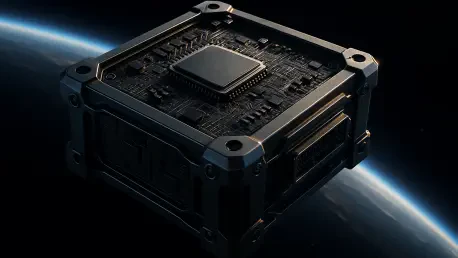
The technical success within the Terafab project is largely attributed to Intel’s groundbreaking work in gallium nitride chiplet technology. By successfully integrating these power-efficient electronics with traditional silicon logic circuits on a single 300mm wafer, the company has produced a revolutionary chip architecture. This hybrid approach results in a processor that is exceptionally thin, measuring a mere 19 microns, while maintaining extreme resilience against electrical and thermal stress. This innovation addresses the massive power delivery challenges associated with terawatt-scale computing, where traditional silicon would struggle with heat dissipation and energy loss. The use of gallium nitride allows for higher voltage operation in a much smaller physical footprint, which is a critical requirement for the dense packing found in modern data facilities. This technological edge provides a clear differentiator against competitors who remain focused solely on traditional silicon-on-insulator designs.
Redefining Hardware for the Final Frontier and Market Reality
Technological Synergy: The Space Industry
The implications of Intel’s recent technological advancements extend far beyond terrestrial data centers, specifically finding a home within the burgeoning space economy. The synergy between Intel and SpaceX highlights how gallium nitride innovations provide superior performance in the high-voltage and high-radiation environments of low Earth orbit and beyond. Standard semiconductor components often fail when exposed to cosmic rays or extreme temperature fluctuations, but Intel’s hardened chiplet designs offer a level of durability previously reserved for custom, low-volume aerospace hardware. For companies like SpaceX, these advancements translate into significant weight reductions for satellite-based artificial intelligence processing centers and deep-space vehicles. Because launch costs are calculated by the pound, every millimeter of space saved by miniaturizing power electronics contributes directly to the economic viability of long-term missions. This creates a feedback loop where better hardware leads to lower costs.
Beyond weight reduction, the ability to perform high-level AI processing directly on orbiting platforms is a game-changer for telecommunications and Earth observation. Previously, data often had to be transmitted back to terrestrial hubs for analysis, creating latency and bandwidth issues that hampered real-time decision-making. With Intel’s ruggedized silicon, these satellites can now process massive datasets in-situ, providing immediate insights for everything from weather tracking to maritime logistics. This local processing capability is essential for the planned expansion of satellite constellations that will provide global internet coverage and environmental monitoring from 2026 to 2028. Intel’s role in this sector as a provider of resilient, high-density compute power establishes it as an indispensable partner for the next phase of space exploration. The company is effectively building the computational nervous system for the orbital economy, ensuring its hardware is part of the stars.
Technical Innovation: Financial Skepticism
Despite the clear technological breakthroughs and the massive rally in stock prices, the financial community on Wall Street maintains a surprisingly cautious stance. The prevailing analyst consensus currently sits at a Hold rating, with a target price around the $50.83 mark, which is nearly 19 percent below the levels seen during recent trading sessions. This discrepancy highlights a tension between the company’s technical achievements and its long-term financial execution, as professional investors weigh the risks of rapid valuation expansion. While the pivot toward space and AI infrastructure is undeniably impressive, critics point to the immense capital expenditures required to maintain such a leading position in chip manufacturing. There are also concerns regarding how quickly these high-growth sectors will translate into consistent quarterly dividends for shareholders. Consequently, while the market is enthusiastic about the direction, there remains a wait-and-see approach.
Intel’s performance throughout this period demonstrated a successful transition from a traditional semiconductor firm into a specialized architect for the most ambitious technological frontiers. By aligning its production capabilities with Google’s cloud dominance and Musk’s interplanetary goals, the organization reclaimed its status as a central figure in the global hardware narrative. Stakeholders observed that the integration of gallium nitride and silicon logic was a necessary step to overcome the physical limits of previous computing generations. For the future, industry leaders should have prioritized the diversification of silicon applications into harsh environments to mitigate the risks associated with the saturated consumer electronics market. Moving forward, the focus shifted toward ensuring that manufacturing yields remained high enough to support the massive volume requirements of the Terafab project. The lessons from this surge indicated that technical resilience and strategic infrastructure partnerships were the primary drivers.