
Milk moved from parlor to processor on a cadence that left little room for error, yet demand kept rising, costs kept climbing, and the clock never stopped for farms balancing animal care with razor-thin margins and uncertain rules. New York’s dairy sector produced about 16 billion pounds across roughly 2,800 farms, and meeting new demand could require as many as 180,000 additional cows while about 70% of farmers already planned expansions. In Livingston County alone, agriculture worked across 196,542 acres and generated over $288 million in market value, tying local paychecks to national food security. The question was not whether technology would enter the barn; it was whether policy would power it or slow it. Artificial intelligence promised faster, smarter decisions, but it needed dependable energy and sensible guardrails to unlock its full value.
The Case for Precision Dairying
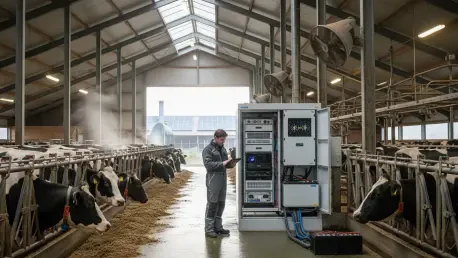
On progressive dairies, the smart barn no longer sounded futuristic; it sounded like cow-side data streaming from rumination collars, ear tags, milk meters, and thermal cameras. Wearables such as Allflex and CowManager tags tracked eating time, rumination, rest, and activity, flagging heat and early illness days before visible symptoms. Computer vision systems watched for lameness and mastitis cues, while inline sensors measured conductivity, somatic cell trends, and even ketosis risk from milk samples. When models fused these signals with weather, feed, and parlor throughput, managers could tighten reproduction windows, tune rations, and reduce antibiotic use. The payoff was practical: fewer lost cows, steadier milk flow, and labor that shifted from chasing problems to preventing them.
Those farm-level gains rippled beyond the gate. Predictable milk output helped processors plan loads, kept shelves stocked, and tamped down price swings for families who felt grocery bills first. Sensors that cut feed waste and lower cull rates also reduced the resource footprint per hundredweight produced, aligning animal welfare with environmental goals instead of pitting them against each other. In Livingston County and similar hubs, steadier revenue meant engine shops, feed mills, and trucking firms could keep people on payroll, reinforcing the rural economy that supported the food system. This approach naturally led to a broader insight: the path to affordability and resilience ran through data. Yet none of it held if the barn’s analytics stack blinked out when the power flickered or if rules made innovation risky to deploy.
Policy Levers: Power, Regulation, and Competitiveness
Reliable, affordable electricity was the quiet backbone of AI-heavy dairying, from Wi‑Fi backhauls and edge gateways to heat abatement and robotic milking. New York’s grid transition under the Climate Leadership and Community Protection Act aimed to decarbonize fast, but farms needed practical continuity: interconnection timelines that did not stall solar arrays or anaerobic digesters, demand-response programs that paid for flexible loads, and time-of-use rates that matched milking cycles rather than penalized them. On-farm digesters paired with microgrids could stabilize barns and chillers during peak heat, while battery storage buffered sensor networks and routers through outages. Coordination with NYISO and the Public Service Commission mattered, because a delayed upgrade or a misaligned tariff could sideline a multimillion-dollar expansion that the data already justified.
The rulebook for AI required the same precision. A patchwork of restrictive state mandates risked deterring investment and pushing pilots offshore, even as competitors in Europe and China advanced ag-tech at scale. A better route would have adopted the NIST AI Risk Management Framework as a statewide baseline, created safe harbors for validated animal‑health models, and required clear, portable data rights for farmers through standardized APIs and contracts aligned with AgGateway principles. Procurement preferences could have rewarded tools with auditable models and on-device processing to protect connectivity gaps. Public funds should have targeted last‑mile broadband, edge compute grants for barns, and interconnection fast lanes for farm microgrids, with metrics tied to herd health and output, not press releases. Taken together, these steps turned AI from a buzzword into a competitive edge, safeguarded food security as national security, and gave New York dairies the stable footing to expand responsibly.