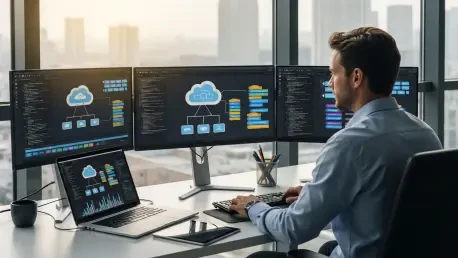

Modern software engineering is currently witnessing a transition where the act of writing code is becoming secondary to the precision of architectural intent. The AWS Kiro Agentic IDE emerges as a sophisticated response to this shift, positioning itself not merely as another autocomplete tool, but as a structured AI-native environment designed for Spec-Driven Development. Unlike traditional editors that focus on line-by-line generation, Kiro operates on the principle of agentic engineering, where autonomous agents interpret high-level requirements to plan and execute complex technical tasks. This transition represents a fundamental move away from the “chat-and-patch” philosophy of earlier AI assistants toward a more disciplined, cloud-native lifecycle management system that prioritizes long-term maintainability over immediate, often messy, output.
Introduction to AWS Kiro and the Agentic Shift
The emergence of Kiro signals a departure from purely conversational AI coding assistants that often struggle with the “lost in context” problem. By utilizing an agentic framework, the IDE allows developers to delegate entire workflows to specialized AI agents that understand the underlying infrastructure and business logic. This methodology forces a shift toward Spec-Driven Development, where the engineer acts as a high-level architect who defines the “what” and “why” while the agents manage the “how.”
Moreover, this approach addresses the critical gap in enterprise-grade software development: the lack of a structured audit trail. While tools like GitHub Copilot focus on speed, Kiro emphasizes the creation of a formal specification that serves as the single source of truth. This is particularly relevant in the current cloud-native landscape, where the complexity of microservices and serverless architectures requires a higher degree of coordination and planning than a standard text editor can provide.
Key Technical Workflows and Architectural Components
The Design-First Workflow: From Ideation to Specification
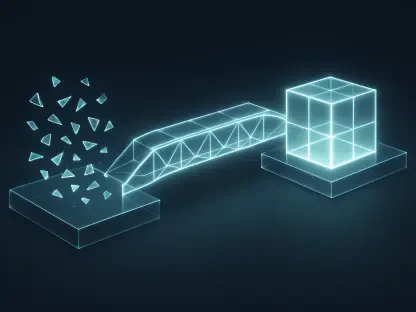
The Design-first workflow represents a pragmatic evolution of Kiro’s original, more rigid requirements. Instead of forcing developers to write exhaustive documentation before touching a keyboard, this system allows for high-level architectural sketching. An engineer can input a conceptual technical idea, and the AI agents automatically synthesize these thoughts into actionable requirements and task plans. This automation significantly reduces the friction traditionally associated with project initialization, allowing “greenfield” projects to move from a blank slate to a structured roadmap in a fraction of the time.
This architectural component functions by mapping natural language concepts to known design patterns within the AWS ecosystem. Because the agents are deeply integrated with cloud-native primitives, they can suggest infrastructure configurations that align with the developer’s functional goals. Consequently, the initialization phase becomes less about manual configuration and more about refining the machine-generated blueprint to ensure it meets specific performance or security standards.
The Bugfix Workflow: Structured Troubleshooting for Brownfield Projects
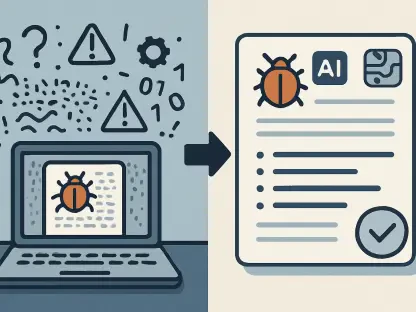
Handling existing codebases, or “brownfield” development, remains one of the most significant challenges for AI agents, yet Kiro’s Bugfix workflow tackles this through rigorous behavioral analysis. Rather than simply guessing a solution, the tool requires a clear documentation of the current behavior versus the expected outcome. This process effectively turns a chaotic debugging session into a miniature version of the Spec-Driven Development exercise, ensuring that the fix is not just a temporary patch but a logically sound adjustment to the system’s intended state.
By enforcing this structure, Kiro mitigates the risk of “hallucinated” fixes that might break peripheral dependencies. The agents analyze the existing codebase to understand how a specific change propagates through the system. This technical breakdown provides a level of safety that is often missing in unstructured AI interactions, making it a viable solution for maintaining legacy systems where the original authors might no longer be available to provide context.
Market Dynamics and the Competitive Landscape
In the current market, Kiro stands as a structured counterpoint to “conversational” favorites like Cursor or Claude Code. While those tools excel at rapid, iterative prototyping through a chat interface, they often lack the formalization required for large-scale enterprise projects. The industry is currently observing a split between tools designed for individual developer speed and platforms like Kiro that prioritize documentation and hybrid models. This distinction is crucial for organizations that value the “developer experience” but cannot compromise on the rigor of their software supply chain.
The competitive edge for AWS lies in the integration of governance directly into the development environment. While competitors focus on the fluidity of the AI interaction, Kiro focuses on the durability of the output. This shift suggests that the future of the sector may not be about who can generate code the fastest, but who can generate the most “compliant” and “explainable” code. As a result, Kiro is carving out a niche for teams that have outgrown the limitations of basic AI chat interfaces.
Enterprise Applications and Real-World Deployments
For industries such as finance and healthcare, where every line of code must be auditable, Kiro’s emphasis on governance makes it an attractive deployment choice. In these high-stakes environments, the ability to trace a code change back to a specific architectural intent is not a luxury—it is a regulatory requirement. Real-world applications have shown that using Kiro can significantly reduce change-failure rates by ensuring that every modification is vetted against a formal plan before it reaches production.
Beyond regulation, large-scale production environments benefit from the way Kiro handles institutional knowledge. In many legacy maintenance scenarios, the biggest bottleneck is not writing the fix, but understanding the original intent behind the code. By using the Bugfix workflow, organizations can rebuild their documentation library incrementally, ensuring that the rationale behind every major bug fix is preserved for future engineering cohorts.
Challenges and Barriers to Adoption
Despite its technical merits, Kiro faces a significant hurdle in what many call “cultural heaviness.” Developers who are accustomed to the immediate gratification of unstructured, chat-based AI tools often find the discipline of Spec-Driven Development to be a friction point. There is a psychological barrier to entry when a tool asks for a specification before it offers a solution, and AWS is actively working to mitigate this by making the “ideation-to-spec” transition as seamless as possible.
Furthermore, the tension between speed and discipline remains a primary concern for fast-paced agile teams. While a manager might appreciate the auditability of Kiro, a developer under a tight deadline might see it as an unnecessary overhead. AWS must continue to refine the balance between automation and manual input to ensure that the IDE does not become a bottleneck in the very development cycles it aims to accelerate.
The Future of Spec-Driven Agentic IDEs
Looking ahead, the evolution of agentic IDEs will likely move toward even greater autonomy, with agents capable of proactive self-healing. We are approaching a point where the codebase could potentially monitor its own health and suggest architectural refactors based on changing traffic patterns or security threats. Within the AWS ecosystem, this could mean a deeper integration between development tools and live monitoring services, creating a feedback loop where the code evolves in real-time.
The long-term impact on the profession will likely involve a transition toward “managerial” coding. Engineers will spend less time on syntax and more time managing a fleet of AI agents that handle the implementation details. This shift will redefine what it means to be a “senior” engineer, moving the required skill set toward high-level system design and the ability to effectively prompt and audit autonomous agents.
Final Assessment and Industry Impact
The AWS Kiro Agentic IDE successfully bridged the gap between the flexibility of modern AI and the necessity of enterprise-level rigor. By relaxing its initial insistence on strict Spec-Driven Development in favor of more pragmatic, design-first and bugfix workflows, the platform became a versatile tool for both greenfield innovation and legacy maintenance. The transition from a rigid methodology to a hybrid approach allowed engineering teams to maintain high standards of documentation without sacrificing the momentum required in modern software cycles.
Future implementations should focus on lowering the cognitive load of specification even further, perhaps through more advanced visual mapping or multi-modal inputs. Organizations seeking to scale their engineering output while maintaining a high bar for quality should consider integrating Kiro into their standard development kits. Ultimately, the success of such tools will depend on their ability to act as a silent partner that enforces best practices without stifling the creative flow of the human developer.