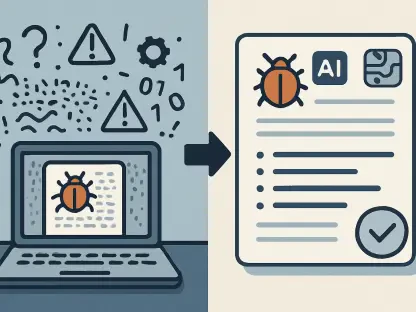

The rapid transition from simple command-line tools to self-governing digital architects has fundamentally altered how humans interact with the computational power at their disposal. This shift moves beyond the era of manual prompt engineering, where humans remained the primary operators of software, and enters a phase where AI agents independently manage entire lifecycles of production. By integrating reasoning, memory, and tool-access capabilities, these systems are no longer just answering questions; they are building, maintaining, and scaling digital infrastructure without constant human intervention.
The Shift from Assistive Tools to Autonomous Digital Architects
The evolution of generative AI has reached a critical tipping point where the “assistant” model is being replaced by the “orchestrator” model. In the previous phase of technology, users spent considerable time refining prompts to get a single usable output from a large language model. Modern orchestration, however, focuses on high-level goal setting where a human provides a broad objective, and the agentic system determines the necessary sub-tasks, selects the appropriate tools, and executes the plan.
This transition marks the beginning of the “Agent Era,” characterized by systems that possess a degree of agency and longitudinal memory. Unlike traditional software that requires a human to click through menus to achieve a result, these autonomous architects navigate the back-end complexity themselves. The relevance of this shift lies in the liberation of human cognition from repetitive operational tasks, allowing for a focus on strategic oversight rather than granular execution.
Foundational Components of the Agentic Ecosystem
The Refactoring of Software Engineering and Code Production
Software engineering is currently undergoing a radical transformation as the developer’s role migrates from writing syntax to managing complex architectural layers. The modern programmer is becoming a supervisor of “alien tools”—systems that can produce and refactor code at speeds that make manual typing appear archaic. This change is not merely about speed; it is about the ability of AI to synthesize vast amounts of architectural patterns to create robust systems that follow best practices by default.
Furthermore, the performance of these agents in replicating human engineering design is increasingly sophisticated. By utilizing advanced memory layers, agents can maintain context across massive codebases, identifying bugs and security vulnerabilities that a human might miss. This reduces the technical barriers to entry, enabling those without deep coding knowledge to architect complex systems, while seasoned engineers focus on the philosophical and ethical constraints of the logic being built.
The Emergence of the AI Tier and Multi-Repository Orchestration
A significant shift is occurring in how business logic is structured, moving away from hard-coded databases toward a dynamic “AI tier.” In this model, agents function as multi-repository orchestrators that can pull data from disparate sources, transform it in real-time, and apply logic on the fly. This bypasses the traditional limitations of static software, where every possible action had to be pre-programmed by a human developer.
Technically, these agents interact directly with data through APIs, essentially rendering the traditional graphical user interface (GUI) unnecessary for many backend processes. This direct interaction allows for a more fluid exchange of information and enables the AI to make decisions based on live data streams rather than cached or outdated information. Consequently, the architecture becomes more resilient and adaptable to changing business requirements.
Emerging Trends in Digital Infrastructure and Logic Migration
The industry is currently witnessing what many experts describe as the “collapse” of the traditional Software-as-a-Service (SaaS) model. In the past, companies subscribed to dozens of specialized applications to handle specific business functions. However, as autonomous orchestration matures, the need for these fragmented suites diminishes. Businesses are now prioritizing unified agentic workflows that can perform the tasks of multiple SaaS products through a single integrated layer of intelligence.
This migration suggests a future where the “app” as we know it disappears. Instead of a collection of icons on a dashboard, the infrastructure becomes a silent engine that responds to intent. This behavior shift indicates that the value is no longer in the software itself, but in the orchestrator’s ability to navigate and utilize data across various platforms to deliver a specific outcome.
Real-World Applications: From Visual Interfaces to Conversational Portals
One of the most visible impacts of AI orchestration is the simplification of the user experience. Industries are rapidly replacing nested menus and complex, multi-step forms with streamlined conversational portals. For example, in complex logistics or financial management, a user no longer needs to navigate through five different screens to generate a report; they simply request the insight, and the agent handles the data retrieval and visualization.
These agents are increasingly managing end-to-end workflows, such as processing an entire insurance claim or managing a supply chain disruption. In these scenarios, the AI identifies the problem, contacts the necessary stakeholders, and updates the internal records. This reduces the need for human staff to perform granular data entry, allowing them to step in only when high-level judgment or empathy is required.
Technical Hurdles and the Complexity of Agent Integration
Despite the impressive progress, the path to full autonomy is fraught with technical challenges, particularly regarding permissions and reliability. Granting an agent the authority to move money, delete files, or modify production code carries significant risks. Managing these intricate permission sets requires a level of precision that traditional security frameworks are still struggling to accommodate, leading to a “trust gap” in high-stakes environments.
Ongoing development efforts are focusing on creating “human-in-the-loop” dashboards that provide high-level monitoring without requiring constant manual input. These dashboards allow human supervisors to see the “reasoning” behind an agent’s decision and intervene if the logic begins to drift. Ensuring the reliability of autonomous decision-making remains a primary hurdle that must be cleared before the technology can be fully trusted with critical infrastructure.
The Future of Orchestration: Democratizing Complex System Architecture
Looking ahead, the democratization of system design stands as the most profound potential outcome of this technology. As the complexity of building digital systems is absorbed by AI agents, the ability to create sophisticated software and business ecosystems will be available to a much broader range of people. This shift will likely lead to a surge in localized, bespoke digital solutions tailored to specific community or business needs that were previously too expensive to develop.
The long-term impact on the digital world will be a move toward “ecosystem management,” where AI manages the interactions between various business entities. This could lead to a highly efficient global economy where friction in communication and data exchange is virtually eliminated. Humans will shift from being the “doers” of digital work to the “curators” of intent, shaping the world through high-level goals.
Synthesis and Final Assessment of the Agent Era
The transition from utilizing static software to orchestrating intelligent agents represents a fundamental departure from the computing paradigms of the last several decades. This review found that while the technical hurdles of security and reliability are non-trivial, the momentum toward autonomous systems is irreversible. The traditional SaaS model faced an existential threat as the AI tier began to handle logic more dynamically and efficiently than hard-coded applications ever could.
Ultimately, the technology demonstrated a remarkable capacity to lower the barriers to complex architecture, effectively shifting the bottleneck of productivity from technical skill to creative vision. The shift toward conversational interfaces and direct API interaction indicated that the era of the “app” was ending, replaced by a more fluid and responsive digital environment. The global tech economy stood at the threshold of a new epoch where the primary value resided in the ability to guide intelligence rather than operate machines.