
The rapid accumulation of global data has reached a point where traditional manual management strategies are no longer sufficient to maintain the operational integrity of modern digital ecosystems. In 2026, the sheer volume of information generated by interconnected devices and large-scale enterprise applications necessitates a move toward storage architectures that do not just hold data, but actively manage and protect it. This transition from passive hardware to autonomous, AI-native platforms represents the most significant architectural shift in the history of information technology. Organizations are now finding that the integration of machine learning directly into the storage controller is the only viable method for handling the complexity of real-time data processing while ensuring that critical assets remain resilient against increasingly sophisticated cyber threats.
Modern Infrastructure and Financial Evolution
The Shift to Autonomous Management and Machine Learning Cores
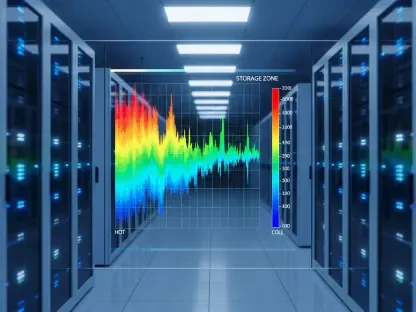
Modern storage innovation has moved far beyond the simple metrics of read/write speeds or physical density, focusing instead on the implementation of native intelligence within the software-defined layer. These AI-native platforms are engineered with embedded machine learning models that facilitate autonomous data management, allowing systems to make granular decisions about data placement without any human intervention. By analyzing access patterns in real time, these systems can automatically migrate frequently used “hot” data to high-performance NVMe tiers while shifting secondary information to high-capacity, lower-cost media. This self-optimizing behavior ensures that application performance remains consistent even during peak demand periods, effectively removing the burden of manual performance tuning from IT departments and allowing them to focus on higher-level strategic initiatives rather than routine maintenance.
Furthermore, the integration of dedicated machine learning cores within storage arrays enables predictive maintenance and capacity planning that was previously impossible. By monitoring hardware telemetry and environmental factors, these intelligent systems can identify potential disk failures or controller issues weeks before they occur, allowing for preemptive part replacement and eliminating unplanned downtime. This level of foresight also extends to resource forecasting, where the storage system analyzes historical growth trends to provide highly accurate predictions of when additional physical capacity will be required. As a result, enterprises can move away from over-provisioning their hardware—a practice that historically led to significant waste—and instead adopt a “just-in-time” procurement model that aligns more closely with actual usage, thereby maximizing the return on investment for every petabyte of purchased storage.
Economic Realignment and Global IT Investment Strategies
The financial trajectory of the technology sector is undergoing a massive realignment as global IT spending climbs toward the $6 trillion mark, with a dominant portion of that capital flowing into AI-optimized infrastructure. Enterprises are recognizing that the baseline cost of storage is now secondary to the operational value provided by intelligent features, leading to a shift in how procurement decisions are finalized. Software providers are increasingly embedding machine learning capabilities directly into their core storage offerings, which has raised the initial acquisition price but significantly lowered the long-term total cost of ownership. This economic shift is driven by the realization that intelligent storage reduces the need for large, specialized management teams and minimizes the financial impact of data breaches or system outages, making the premium for AI-native technology a sound strategic investment for the modern era.
In addition to direct performance gains, financial priorities are being heavily influenced by the rise of “GreenOps,” as organizations face mounting pressure to balance the high energy requirements of AI workloads with environmental sustainability goals. Modern storage solutions are now being evaluated based on their power efficiency and their ability to minimize carbon footprints through intelligent data reduction and consolidation techniques. By utilizing AI to identify redundant data blocks and optimize cooling requirements based on workload intensity, companies can meet strict regulatory compliance standards while lowering their utility costs. This convergence of environmental responsibility and fiscal prudence has made sustainable, AI-driven storage a cornerstone of corporate governance, ensuring that the infrastructure supporting the digital economy does not come at the expense of long-term environmental stability.
Scaling Across Enterprises and Diverse Industries
Tailoring Intelligence for Large Corporations and Growing Businesses
The implementation of AI-driven storage architectures provides distinct advantages that vary depending on the scale of the organization, yet the underlying goal of data empowerment remains universal. For large-scale corporations, the primary challenge involves managing highly fragmented and complex datasets across multiple geographic regions and cloud providers. AI-native storage addresses this by providing a unified intelligence layer that offers predictive insights into data usage and security risks across the entire enterprise. This allows large firms to maintain business continuity in volatile markets, as the storage system can automatically reroute traffic and replicate critical data in response to regional outages or localized threats. The ability to manage exabyte-scale environments with a high degree of automation is what enables these massive entities to remain agile in an increasingly competitive global landscape.
Conversely, for small and medium-sized businesses, the democratization of AI-powered storage provides a way to compete with larger rivals without needing the same level of internal IT resources. Automation acts as a force multiplier for smaller teams, as the storage system handles complex tasks such as performance balancing, anomaly detection, and automated backups without requiring specialized expertise. This shift allows growing companies to benefit from high-end data management and security features that were once the exclusive domain of Fortune 500 companies. By lowering the barrier to entry for advanced data infrastructure, AI-native storage has effectively leveled the competitive playing field, allowing smaller organizations to focus their energy on innovation and customer engagement rather than the intricacies of managing their backend server racks.
Sector-Specific Applications in High-Stakes Environments
Vertical markets are increasingly turning to specialized AI storage solutions to solve the unique challenges inherent in their specific operational fields. In the healthcare and financial sectors, the focus is squarely on the adoption of “Zero-Trust” storage architectures that can protect sensitive patient records and transactional data while still allowing for rapid, real-time analysis. AI-driven systems in these environments monitor data access at a granular level, instantly flagging and blocking any activity that deviates from established behavioral norms. This ensures that even if a network perimeter is breached, the storage layer itself remains an active line of defense, maintaining the confidentiality and integrity of the most sensitive information. This capability is vital for meeting the strict regulatory requirements of HIPAA or various financial oversight bodies while supporting the transition to data-heavy medical imaging and high-frequency trading.
In contrast, data-heavy industries such as scientific research, media production, and retail utilize AI-native storage to manage the sheer volume and flow of unstructured information. Media houses now rely on intelligent archival systems that can automatically tag and categorize zettabytes of video content, making it instantly searchable for production teams around the world. In the retail sector, the storage layer plays a critical role in supply chain optimization by analyzing real-time consumer data patterns and adjusting local inventory storage priorities accordingly. These industry-specific implementations demonstrate that AI-native storage is not a one-size-fits-all solution, but a flexible foundation that can be tuned to meet the specific throughput, latency, and security requirements of any business sector, transforming data from a storage burden into a primary driver of operational success.
The Future of Distributed and Secure Environments
Advancements in Hybrid Cloud and Edge Computing Architectures
The evolution of the cloud has transformed it from a simple off-site repository into a highly intelligent management service that requires a sophisticated underlying infrastructure. Modern cloud providers are now shifting toward ultra-dense media and AI-optimized arrays to manage the massive influx of real-time analytics requests. Most organizations have settled on a hybrid cloud model, recognizing that a “single pane of glass” management strategy is essential for maintaining visibility across diverse environments. This approach allows companies to keep sensitive data on-premises for security and compliance reasons while bursting less critical workloads to the public cloud for scalability. AI-native storage facilitates this by providing a consistent policy framework that follows the data wherever it resides, ensuring that performance and security standards are maintained regardless of the physical location of the hardware.
Parallel to the growth of the hybrid cloud is the rise of edge computing, where processing occurs at the source of data generation to eliminate the latency associated with long-distance transfers. In manufacturing and telecommunications, immediate decision-making is a prerequisite for success, and AI-native storage at the edge provides the high-speed processing necessary for real-time automation. These edge devices use localized machine learning models to filter and analyze data before sending only the most relevant insights back to the central data center. This reduces the strain on network bandwidth and lowers cloud egress costs while ensuring that critical industrial processes can respond to changing conditions in milliseconds. The combination of a robust hybrid cloud core and a responsive edge layer creates a distributed data environment that is both highly efficient and capable of supporting the next generation of autonomous industrial applications.
Strengthening Cybersecurity through Behavioral AI and Zero Trust
The modern threat landscape has forced a radical change in how storage security is implemented, moving away from static, signature-based defenses toward dynamic, behavioral-based detection. As cybercriminals deploy self-learning malware and AI-generated phishing attacks, traditional security measures are often bypassed before a human administrator can even identify the intrusion. AI-driven storage responds to this by monitoring the metadata and access patterns of every file in real time, looking for the telltale signs of a ransomware encryption event or an unauthorized data exfiltration attempt. When the system detects suspicious activity, it can instantly trigger automated countermeasures, such as creating immutable snapshots of the affected data or isolating the compromised user account, often within milliseconds of the initial attack.
Embedding Zero Trust principles directly into the storage hardware and software layers ensures that every request for data access is verified, regardless of where it originates. This “never trust, always verify” approach is supported by the hardware-level encryption and data immutability features that have become standard in AI-native platforms. These systems provide a tamper-proof audit trail of all data interactions, making it virtually impossible for an attacker to alter or delete critical information without detection. By shifting the focus of security from the network perimeter to the data itself, organizations have created a more resilient defense architecture that can withstand even the most sophisticated digital assaults. This proactive stance on security has turned the storage layer into the ultimate safety net for the modern enterprise, ensuring that even in the event of a successful breach, the impact on business operations is minimized.
Intelligent Tiering and the Maturity of Object Storage
Object storage has matured from a simple repository for cold archives into a high-performance foundation for the most demanding AI workloads. Modern object storage platforms now feature intelligent tiering systems specifically designed to support the training of large language models and other resource-intensive machine learning tasks. These systems ensure that the massive amounts of unstructured data required for model training are available at high speeds when needed, but can be moved to more cost-effective tiers once the training phase is complete. This dynamic allocation of resources allows data scientists to iterate more quickly on their models without being hindered by the physical limitations of the storage infrastructure. The result is a more streamlined development pipeline that accelerates the delivery of new AI-driven products and services to the market.
Furthermore, the maturity of object storage has allowed organizations to unlock the value hidden within their unstructured data, such as images, videos, and log files. By utilizing the native metadata capabilities of object-based systems, AI models can automatically index and analyze these vast repositories, turning “dark data” into actionable business intelligence. This ability to extract meaning from trillions of individual objects is what fuels the current wave of innovation in fields like autonomous driving and personalized medicine. As object storage continues to evolve, it will likely become the primary storage format for the global digital economy, providing the scalability and intelligence required to manage the ever-expanding zettabyte-scale datasphere. This shift ensures that the information we generate today will remain accessible, secure, and useful for the breakthroughs of tomorrow.
The shift toward AI-native architectures and the widespread adoption of intelligent, autonomous storage systems demonstrated a fundamental change in the priorities of the global technology sector. Organizations successfully moved beyond the limitations of manual data management, instead leveraging machine learning to create self-healing and self-optimizing infrastructures. This transition proved essential for maintaining the security and efficiency of digital operations in an era of unprecedented data growth and increasingly complex cyber threats. By embedding intelligence directly into the storage layer, businesses were able to transform their information repositories into strategic assets that drove innovation and ensured long-term resilience. The integration of Zero Trust principles and behavioral detection further fortified these systems, providing a robust defense against the sophisticated attacks that characterized the digital landscape. Ultimately, the industry established a new standard for data infrastructure, where intelligence and security were no longer optional features but the very foundation upon which the digital economy was built. Moving forward, the focus remained on refining these autonomous systems to handle even greater scales of information while continuing to prioritize sustainability and ethical data governance across all sectors.