
Chloe Maraina has spent her career at the intersection of data science and visual storytelling, helping organizations transform cold numbers into vibrant business strategies. As the enterprise world pivots toward agentic AI—where systems don’t just suggest actions but execute them independently—she advocates for a massive overhaul of how we manage our underlying information. We sat down with her to discuss the transition from rigid automation to fluid autonomy, the critical need for a system of context to fill the existing data gap, and why robust governance has evolved from a regulatory burden into a competitive superpower for the modern enterprise.
Traditional automation is rapidly evolving into autonomous systems that make independent decisions. How must our underlying data foundations transform to support this leap toward agentic AI?
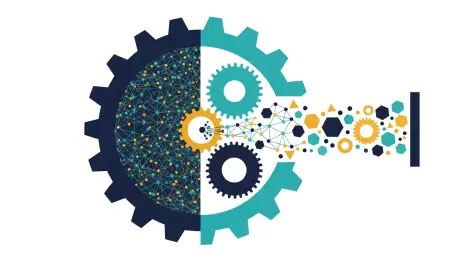
The leap from simple automation to true autonomy is like moving from a train on fixed tracks to a self-driving vehicle; the latter requires a level of sensory awareness and environmental context that traditional data architectures simply don’t possess. We are seeing a fundamental shift where data platforms must now deliver speed, intelligence, and control at a scale where decisions are made in milliseconds rather than based on what happened last quarter. To make this work, companies must build a context-rich knowledge graph that weaves together entities, metadata, and complex relationships into a coherent, searchable web. Without a unified and resolved data foundation, an AI agent is essentially flying blind, unable to understand the interconnected concepts required to act accurately on behalf of the business. It is a high-stakes environment where raw data fields are no longer enough—we need an open, interoperable, and API-first architecture that provides genuine meaning to every bit of information.
In a world where AI agents can compound errors at an alarming rate, how do we balance the need for real-time speed with the absolute necessity for data trust?
Achieving this balance requires treating data quality not as a back-office chore, but as a critical pillar of operational risk management. When you have autonomous agents operating at high velocity, a single data error can be magnified thousands of times in seconds, potentially leading to catastrophic business outcomes or ruined customer relationships. This is why the industry is moving toward real-time, low-latency streaming pipelines that push validated data directly to the point of decision-making as it happens. By implementing a semantic layer, we can enrich raw fields with glossaries and metadata, effectively turning flat data into the deep knowledge that agents need to stay on track. This transformation ensures that while the system moves with incredible speed, it does so with a layer of trust that acts as a continuous, automated safety net for every autonomous action.
Many see data governance as a restrictive hurdle, but you’ve described it as a superpower for the agentic era. How does traceability change the game for businesses adopting AI?
Calling governance a superpower isn’t hyperbole; it is the only way to grant an AI agent true autonomy while maintaining corporate accountability and safety. In the agentic era, every single decision made by a machine must be entirely explainable through a robust governance framework that provides a clear audit trail and meticulous data lineage. This level of traceability allows us to use role-based access and anomaly monitoring to spot deviations or “hallucinations” before they become systemic failures. When you have this infrastructure in place, it actually drives confidence across the organization, allowing teams to innovate faster because they know the guardrails are unbreakable. It is about transforming governance from a restrictive “no” department into the very engine that enables scalable, governed AI innovation across every level of the company.
Looking at the enterprise AI maturity model, what are the biggest physical and structural barriers currently trapping business information in silos?
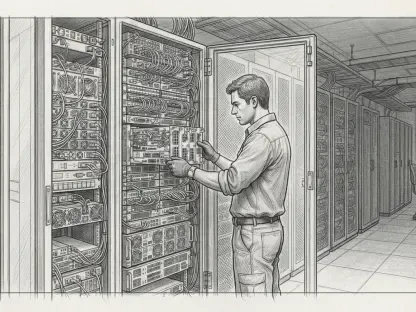
The biggest hurdle on the journey toward becoming a five-star AI enterprise is the sheer volume of critical information trapped in disconnected, legacy silos that were never meant to communicate. These silos create a visibility gap that slows down decision-making and makes it nearly impossible for cross-functional teams to see the full picture of the business. When systems are disconnected, AI initiatives often face astronomical costs and a frustratingly slow ROI because they are forced to process raw, fragmented data rather than refined, interconnected insights. To break these walls down, we must adopt a journey where enterprise-wide AI operates on trusted context, maximizing business value by resolving data products into a single source of truth. Only then can we move away from the adaptive automation of the past and toward a future where AI operations are truly democratized and efficient.
What is your forecast for the future of agentic data management?
My forecast is that we are entering an era of hyper-personalized autonomy where the context gap is finally bridged across every sector of the enterprise. Within the next few years, I expect to see a total democratization of AI innovation, where even non-technical users can leverage governed, agentic workflows to solve complex problems in real-time without manual intervention. We will move away from static reports toward a state of constant, millisecond-level business adjustment, where an intelligent data graph serves as the living heartbeat of the organization. Ultimately, the companies that thrive will be those that stopped treating data as a static commodity and started treating it as a dynamic, interconnected map of their entire business universe.