
The landscape of advanced computation is undergoing a transformative shift as Nvidia, the global leader in graphics processing units and artificial intelligence infrastructure, pivots its focus toward the nascent but high-potential field of quantum computing. This strategic redirection is built on the premise that quantum systems cannot thrive as isolated laboratory experiments but must instead be woven into the fabric of existing high-performance computing ecosystems. To achieve this, a specialized triad of innovation has been established, combining high-speed GPU-powered simulation with open-source AI models and sophisticated modeling platforms. The objective is to bridge the gap between classical and quantum worlds by treating artificial intelligence as the primary control plane for hardware management. This transition marks a departure from purely theoretical research toward the creation of quantum GPU supercomputing architectures where quantum accelerators serve as specialized components within high-performance environments. By leveraging its dominance in silicon and software, the organization is positioning itself as the indispensable architect of the hybrid era.
Overcoming the Quantum Noise Bottleneck
The primary obstacle preventing quantum computers from solving real-world scientific problems remains the inherent instability of qubits, which are far more delicate than their classical counterparts. Unlike binary bits that remain stable under most conditions, qubits are extremely susceptible to environmental interference such as heat fluctuations, stray light, and electromagnetic noise from surrounding electronics. These external factors cause a phenomenon known as decoherence, where the quantum state collapses and the information being processed is lost or corrupted before a calculation completes. Currently, even the most sophisticated quantum processors struggle with error rates that are several orders of magnitude higher than what is required for practical enterprise applications. While researchers have made significant strides in hardware isolation, the fundamental physics of these systems suggests that hardware improvements alone will not be sufficient to achieve the necessary stability for complex mathematical modeling or chemical simulations.
To address these persistent stability issues, the focus has shifted toward using artificial intelligence as a mitigation layer that can manage and predict noise patterns in real time. Traditional algorithmic approaches often lack the flexibility and speed required to compensate for the chaotic nature of quantum interference at scale. By deploying sophisticated neural networks, it becomes possible to identify specific signatures of noise and apply corrective measures before they propagate through a calculation. This strategy assumes that the path to fault tolerance is not just a hardware challenge but a data processing challenge that requires the massive throughput of modern GPU clusters. As quantum systems scale toward thousands and eventually millions of qubits, the volume of noise data will grow exponentially, making AI-driven management the only viable method for maintaining system integrity. This integration ensures that the fragile quantum state is supported by a robust classical backbone that can handle the heavy lifting of error management.
Automating Hardware Tuning: The Ising Calibration Model
A significant hurdle in quantum operations is the process of calibration, which involves fine-tuning the hardware to account for the unique noise characteristics of every individual qubit. Traditionally, this has been a labor-intensive task performed by specialized physicists who must manually adjust parameters to ensure the system remains operational. However, as quantum processors evolve from small-scale prototypes to systems with hundreds or thousands of qubits, manual intervention becomes an impossible bottleneck that prevents continuous operation. To solve this, the Ising Calibration model was introduced as a 35-billion parameter Vision Language Model designed to automate the entire tuning workflow. By interpreting complex measurement data and recognizing patterns that human operators might miss, the model can autonomously recalibrate hardware in a fraction of the time. This shift from manual tuning to AI-driven automation is essential for making quantum systems sustainable for long-term industrial use.
The implementation of autonomous calibration agents represents a fundamental change in how quantum facilities operate on a daily basis. These models can compress a workflow that typically takes several days of expert labor into just a few hours of automated processing, significantly increasing the uptime of expensive quantum hardware. Because quantum processors require constant recalibration—often before every single complex computation—this efficiency is not just a convenience but a requirement for the system to be performant as it grows in complexity. By using vision-based AI to analyze the graphical representations of qubit performance, the system can identify drift and decoherence trends with high precision. This ensures that the hardware remains at peak performance without needing a team of scientists on standby. As a result, the barrier to entry for organizations looking to utilize quantum resources is lowered, as the most technical aspects of hardware maintenance are handled by a sophisticated and scalable AI control plane.
Real-Time Error Correction: The Ising Decoding Suite
While calibration efforts focus on preventing noise before it occurs, the Ising Decoding suite is designed to address the errors that inevitably arise during active computation. For a quantum computer to reach a state of true fault tolerance, it must possess the ability to identify and fix errors faster than the system can generate them. The Ising Decoding solution utilizes 3D convolutional neural networks that are specifically optimized to work alongside existing error-correction libraries. These models are capable of processing the massive streams of parity-check data generated during a quantum run to pinpoint the exact location and type of an error. By offering different versions of these models—some optimized for maximum processing speed and others for extreme accuracy—the architecture allows researchers to choose the best tool for their specific computational needs. This flexibility is vital for balancing the rigorous demands of scientific accuracy with the practical need for fast results.
The effectiveness of these decoding models is measured by their ability to reduce the logical error rate, which is the ultimate metric for determining the utility of a quantum processor. If the error rate remains too high, the results of a calculation cannot be trusted, rendering the entire process useless for critical tasks like drug discovery or financial modeling. By requiring ten times less data than previous methodologies to achieve comparable results, the Ising models demonstrate a high level of efficiency that is necessary for real-time applications. This data efficiency also means that the overhead required for error correction is minimized, allowing more of the system’s resources to be dedicated to the actual computation. By accelerating the decoding process by up to three times compared to traditional methods, the technology provides a clear path toward executing long, complex quantum circuits that were previously impossible. This brings the industry closer to a future where quantum results are as reliable as those produced by classical supercomputers.
Creating a Unified Hybrid Ecosystem
The long-term vision for these technologies does not involve building a standalone physical quantum computer but rather establishing the software and networking infrastructure that links different types of processors. Through the development of platforms like CUDA-Q, developers are now able to write hybrid code that executes seamlessly across both traditional GPUs and emerging quantum processors. This creates a powerful feedback loop where the GPU provides the necessary computational power for AI models to monitor and correct the quantum system, while the quantum chip handles the specialized logic that classical systems cannot process efficiently. This hybrid architecture treats the quantum processor as a specialized accelerator, much like the way GPUs were originally integrated into classical CPU-based systems. This approach ensures that the industry can continue to use familiar programming models while gaining the massive advantages offered by quantum mechanics for specific high-value problems.
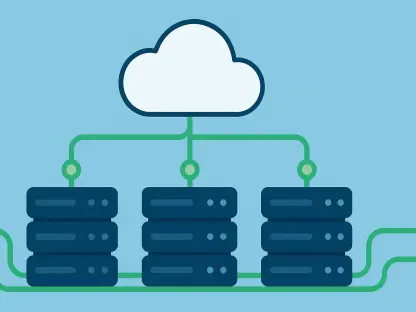
Strategic emphasis is also placed on the importance of open-source collaboration and the development of low-latency interconnects like NVQLink to facilitate this hybrid future. By releasing the Ising models to the global research community, the initiative invites hardware manufacturers to customize AI tools for a wide variety of qubit architectures, including superconducting, trapped ion, and photonic systems. This open approach prevents the fragmentation of the industry and encourages the standardization of how quantum and classical resources communicate with one another. As these systems move toward cloud integration, the ability to manage data transfer with minimal delay will become the deciding factor in overall system performance. The goal is to create a standardized environment where quantum resources are accessible as a scalable cloud service, supported by a robust layer of AI-driven management. This unified ecosystem ensures that as quantum hardware matures, the software and networking layers will already be in place to handle the transition.
Advancing the Architectural Paradigm of Computation
The integration of artificial intelligence into the quantum hardware stack represented a fundamental shift in how complex computational challenges were approached. By deploying the Ising family of models, the organization successfully addressed the critical bottleneck of quantum noise, which had previously stalled the transition from research to commercial application. These efforts demonstrated that the path to reliable quantum computing did not rely solely on building better hardware, but on creating an intelligent software layer capable of managing the inherent chaos of the subatomic world. The move toward open-source AI models fostered a collaborative environment where hardware developers could fine-tune their systems using high-performance control planes. This shift solidified the role of the GPU as the primary engine for quantum simulation and error management, ensuring that classical and quantum resources worked in tandem rather than in isolation. Through these advancements, the industry moved beyond the era of experimental uncertainty into a period of structured, hybrid development.
Future efforts should focus on the continued miniaturization of the control plane and the refinement of real-time decoding algorithms to support even larger qubit arrays. Organizations looking to leverage these technologies must prioritize the adoption of hybrid programming environments that can bridge the gap between existing classical workflows and emerging quantum capabilities. It is recommended that developers invest in learning unified platforms like CUDA-Q to ensure their applications remain compatible with the next generation of accelerated supercomputing. Furthermore, hardware manufacturers should look toward integrating low-latency interconnects to minimize the data transfer overhead between AI-driven decoders and quantum processors. As the ecosystem matures, the focus will likely transition from basic error correction to the optimization of complex algorithms that can solve previously intractable problems in chemistry and material science. By maintaining a focus on AI-driven hardware management, the industry can ensure that quantum computers become robust, scalable, and indispensable tools for global scientific advancement.