
That familiar, sinking feeling of a glowing dashboard light interrupts an otherwise routine drive, signaling a problem that has already taken root deep within the vehicle’s complex machinery. For decades, drivers have relied on these reactive warnings—digital cries for help that arrive only after a component has begun to fail. This system, while functional, represents a lagging indicator of vehicle health. The automotive industry is now on the cusp of a paradigm shift, moving away from diagnosing existing problems and toward a future where artificial intelligence can forecast a breakdown weeks before it happens, transforming vehicle maintenance from a reactive chore into a proactive strategy. This evolution is not merely about convenience; it is a fundamental rethinking of vehicle reliability, safety, and the very relationship between a driver and their car, all powered by the intelligent interpretation of data.
That Dashboard Light Is Trying to Tell You Something, but It’s a Day Late
The ubiquitous check engine light is a testament to the limitations of traditional vehicle diagnostics. When it illuminates, it confirms that a sensor has detected a reading outside of its normal operating parameters. This could mean anything from a loose gas cap to a severe engine misfire. While essential, this alert system inherently operates in the past tense. It reports on a failure or a significant anomaly that has already occurred, leaving the driver to react to a problem that may have been developing for some time. The warning is a symptom, not a prognosis.
This reactive model creates a cycle of inconvenience and potential danger. A driver is forced to schedule an unexpected visit to a mechanic, often without knowing the severity or cost of the impending repair. In more critical scenarios, a sudden failure on a highway can lead to dangerous situations and expensive emergency services. The core issue is that the vehicle’s internal communication system is designed to report on present-tense failures, not to analyze trends or predict future vulnerabilities. It lacks the foresight to warn a driver that, based on subtle performance deviations, a specific component has a high probability of failing in the next 500 miles.
The Data Overload Problem: Why Modern Cars Are Drowning in Information
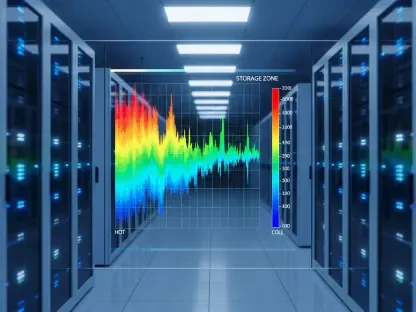
Today’s vehicles are far more than mechanical assemblies; they are sophisticated, rolling data centers on wheels. Each car is equipped with hundreds of sensors that continuously monitor thousands of data points, from engine temperature and fuel injection rates to wheel speed and emissions output. This constant stream of information creates a torrent of data, generating gigabytes of diagnostic information every single day. This data holds the key to predictive maintenance, but its sheer volume presents a formidable challenge.
The problem lies in managing this data deluge. Transmitting this raw, unfiltered information from millions of vehicles to a central server for analysis is neither practical nor sustainable. The bandwidth requirements would be astronomical, and the storage costs prohibitive for manufacturers. Furthermore, sifting through this mountain of data to find meaningful patterns would be like searching for a needle in a digital haystack. Traditional data compression methods can reduce the file size, but they often do so at the cost of diagnostic fidelity, potentially discarding the subtle clues that might signal an impending failure. This data overload paradox has, until now, been a major barrier to realizing the full potential of remote vehicle diagnostics.
The AI Mechanic: How Smart Technology Sifts Through the Noise
The solution to the data overload problem is not simply better compression but smarter processing, a task for which artificial intelligence is uniquely suited. Advanced AI systems can perform intelligent preprocessing directly within the vehicle. Instead of applying brute-force compression that shrinks all data equally, these systems analyze the information in real-time. They are programmed to understand what constitutes normal vehicle behavior and can strategically prioritize which data points are critical. This dual-advantage methodology dramatically reduces the volume of data transmitted while simultaneously enhancing its diagnostic value by ensuring the most crucial information is preserved.
At the heart of this technology is machine learning. AI models are trained on vast historical datasets from countless vehicles, allowing them to learn the intricate patterns of a healthy engine, transmission, and electronic system. Once deployed, the AI establishes a baseline for an individual vehicle’s normal operation. It then monitors the live sensor data for any deviations from this established norm. An anomaly—a slight change in vibration, a minor fluctuation in temperature, or a subtle shift in fuel consumption that a human would never notice—is instantly flagged as a potential precursor to a fault. This allows the system to recognize the faint digital whispers of a future problem long before it becomes a roar.
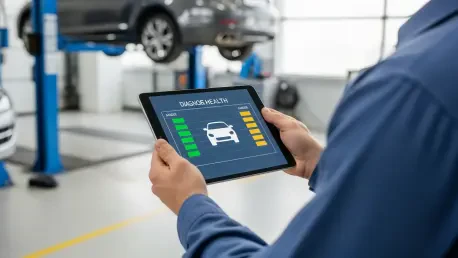
This capability fundamentally transforms vehicle maintenance. The industry is shifting from a model of fixing what is broken to one of anticipating and preventing failures before they occur. For vehicle owners, this means receiving a timely alert on their dashboard or smartphone that says, “Your water pump is showing early signs of wear and has an 85% probability of failure within the next 30 days. Please schedule a service appointment.” This proactive approach enhances safety by addressing issues before they can cause a critical failure, minimizes costly downtime, and reduces the financial sting of emergency repairs.
Beyond Theory: Insights From Groundbreaking Automotive Research
The theoretical promise of predictive maintenance is now being validated by concrete research. A pivotal study in the field provides a clear blueprint for how smart data preprocessing can revolutionize remote diagnostics. The findings from this research confirm that the rapid analysis of high-value, intelligently compressed data empowers manufacturers to move from a reactive to a proactive stance. By receiving curated diagnostic insights instead of raw data streams, they can identify and address potential fleet-wide issues before they escalate into widespread recalls or critical failures on the road.
One of the most compelling, and often overlooked, findings of this research is the significant environmental benefit. In a world increasingly focused on sustainability, the efficiency of data handling becomes a critical factor. By reducing the amount of data that needs to be transmitted wirelessly from vehicles to the cloud, this intelligent methodology lowers the energy consumption of the entire connected vehicle ecosystem. This reduction in the system’s energy footprint contributes directly to lowering the overall carbon footprint of transportation, aligning technological advancement in the automotive industry with broader global sustainability objectives.
The Road Ahead: Paving the Way for the Predictive Car
While the AI technology to enable predictive maintenance exists, its widespread adoption across the global vehicle fleet requires a clear and strategic implementation plan. A primary hurdle is the integration of these new, intelligent systems with the legacy hardware and software present in millions of vehicles currently on the road. To overcome this, the development of industry-wide standards and protocols is imperative. Standardization will ensure interoperability, prevent market fragmentation, and allow for a seamless and scalable rollout of predictive diagnostic capabilities across different makes and models.
Forging strong alliances between academic researchers and automotive industry leaders is equally crucial. The gap between theoretical innovation and a commercially viable, reliable product can only be bridged through robust collaboration. Automakers, technology companies, and research institutions must work in concert to test, refine, and deploy these AI solutions in real-world conditions. These partnerships will accelerate the development cycle and ensure that the final products are both technologically advanced and practical for mass-market implementation.
Ultimately, the integration of predictive AI is set to redefine the driving experience entirely. This technology will unlock a new generation of personalized consumer services that create a more interactive and intelligent relationship between the driver and the vehicle. Imagine receiving tailored recommendations on how to adjust your driving style to improve fuel efficiency or timely, specific alerts about upcoming maintenance needs. The car will transform from a passive mode of transport into an active partner in its own upkeep, ensuring a safer, more reliable, and more efficient journey for everyone.
The era of the reactive dashboard light had served its purpose, but its limitations were clear. Through the sophisticated application of AI and intelligent data processing, the automotive industry has developed the tools to listen not just for what is wrong with a vehicle today, but for what could go wrong tomorrow. The journey toward a truly predictive car was one of overcoming immense data challenges and fostering collaboration between innovators and manufacturers. This technological leap has not only enhanced vehicle safety and reliability but has also introduced unexpected environmental benefits, proving that a smarter approach to data can lead to a more sustainable future on the road. The predictive car was no longer a concept; it was a reality, reshaping the very definition of automotive care.