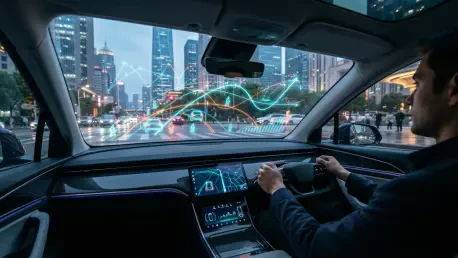

Data augmentation techniques such as back-translation and semantic substitution ensure that language-driven controllers remain robust across diverse bilingual driving scenarios. This technical foundation is critical as the industry shifts away from the rigid, rule-based architectures that have historically limited the potential of autonomous vehicles. Conventional systems typically rely on fixed decision trees and pre-determined thresholds that struggle to interpret the nuances of human intent or adapt to the fluid nature of modern traffic. ChatMPC provides a transformative alternative by establishing a real-time, closed-loop pipeline that connects high-level natural language instructions directly to the underlying physical control of the vehicle. By allowing passengers to communicate through spoken or typed commands, the framework translates abstract desires into continuous mathematical parameters. This move toward a personalized driving experience ensures that the vehicle behaves as an adaptive partner rather than a static machine, bridging the gap between sophisticated linguistic understanding and the rigorous demands of model-based predictive control in complex urban environments.
Hierarchical Architecture for Linguistic and Physical Integration
The internal structure of ChatMPC is built upon a sophisticated hierarchical design that effectively mediates between the ambiguity of human language and the precise requirements of vehicle dynamics. This architecture is divided into two primary, interconnected components: the Intent Recognition Module and the MPC Controller Module. When a user provides a command, such as requesting to follow a lead car more closely or to safely navigate around a slow-moving obstacle, the Intent Recognition Module acts as the initial semantic filter. It does not merely look for isolated keywords; instead, it processes the entire context of the instruction to identify the underlying goal. This high-level interpretation is then converted into a structured, machine-readable format that the vehicle can use to plan its next move. This layered approach ensures that the vehicle’s “brain” is always perfectly synchronized with the passenger’s expectations before any mechanical adjustments are made to the steering or acceleration.
Once the intent is successfully categorized, the structured data flows seamlessly into the MPC Controller Module, which serves as the tactical execution engine. Unlike standard control systems where operational parameters are locked in during the manufacturing process, the ChatMPC controller is fundamentally fluid. It reconfigures its internal optimization problem in real-time by modifying target trajectories, adjusting cost function weights, and shifting operational boundaries to align with the specific intent discovered in the previous stage. This allows for a smooth transition between different driving profiles, such as shifting from a conservative energy-saving mode to a more assertive overtaking strategy. By maintaining this continuous loop of communication between the language processor and the physical controller, the framework ensures that every maneuver is both safe and deeply personalized. This integration represents a major step forward in creating autonomous systems that feel intuitive and responsive to the unique needs of their occupants.
Semantic Encoding and Contextual Intent Recognition
The technical sophistication of the Intent Recognition Module relies on advanced semantic encoding powered by Sentence-BERT, specifically utilizing models with 110 million parameters. This process involves transforming user commands into dense, 768-dimensional embedding vectors that represent the mathematical “meaning” of the sentence. By moving beyond simple pattern matching, the system can recognize that different phrases, such as “pass the truck” and “get ahead of the vehicle in front,” belong to the same functional category. This contextual awareness is achieved through a mean pooling strategy that distills the token vectors of the final layer of the BERT architecture into a single, high-fidelity representation of the user’s desire. This capability is essential for building a truly natural interface where passengers do not have to memorize specific, rigid voice commands, allowing them to interact with the vehicle as they would with a human driver.
To ensure these semantic vectors are accurately classified into actionable intents, the system employs a K-Nearest Neighbors classifier that calculates the distance between the live command and a pre-defined library of reference actions. This method allows the vehicle to categorize diverse phrasings with remarkable reliability, ensuring that the control system receives the correct instructions even when the passenger uses slang or irregular sentence structures. The library of reference intents acts as a map of the driving world, allowing the system to quickly pinpoint the most likely goal of the user among a vast array of possibilities. This high level of classification precision is what enables the vehicle to remain stable and predictable during transitions, as it prevents the controller from oscillating between different interpretations of a single command. The result is a robust and linguistically flexible gateway that translates the unpredictability of human speech into the structured logic required for autonomous navigation.
Translating Intent into Dynamic Control Parameters
The innovation of the ChatMPC framework is most visible in the translation phase, where linguistic intents are mapped directly onto the mathematical constraints of the Model Predictive Control solver. For instance, when a “car-following” intent is identified, the system automatically adjusts the longitudinal reference state to maintain a specific, safe distance from the vehicle ahead. It also locks the lateral reference to the center of the lane, ensuring the vehicle remains perfectly aligned with the road. To handle the dynamic changes of lead vehicles, the controller can tighten its time steps, increasing the frequency of calculations to ensure a rapid response to any sudden braking or acceleration. This direct link between language and parameter adjustment allows the vehicle to change its fundamental behavior without manual intervention, creating a driving experience that is as safe as it is intuitive for the passenger.
Conversely, a command to “overtake” initiates a complete reconfiguration of the optimization problem, broadening the vehicle’s operational envelope to allow for more complex lateral movements. In this scenario, the prediction horizon is extended to give the planner more time to evaluate the surrounding traffic, and the lateral constraints are widened to permit a safe transition into an adjacent lane. The system shifts the longitudinal target to a position ahead of the lead vehicle, creating a path that facilitates a smooth passing maneuver. This ability to rewrite the mathematical “rules” of the drive based on a simple voice command provides a level of flexibility that was previously unattainable in static autonomous architectures. By dynamically shifting these boundaries in real-time, the vehicle can navigate a wide variety of scenarios with the grace and precision of an experienced human driver, all while remaining strictly within the bounds of physical safety.
Physical Modeling and Advanced Collision Avoidance
To guarantee that the trajectories generated by the language interface are physically achievable, the system incorporates a two-degree-of-freedom bicycle kinematics model. This model simplifies the complex mechanical interactions of the vehicle by assuming that the tires on each axle behave as a single point of contact, which is sufficient for most road maneuvers. By tracking variables such as yaw angle, longitudinal velocity, and lateral position, the system ensures that every planned path respects the mechanical limits of the chassis and the current road conditions. This foundational layer of physics acts as a secondary safety check, preventing the natural language module from requesting a maneuver that would cause the vehicle to lose traction or exceed its acceleration limits. The integration of this kinematic model ensures that the vehicle remains stable and predictable, regardless of how complex the user’s linguistic instructions might be.
Safety is further enhanced through the use of a multi-circle collision avoidance strategy that provides a high-fidelity protective shield around the vehicle. Rather than treating cars as simple points or bounding boxes, ChatMPC represents both the ego-vehicle and nearby traffic as a series of circles centered at the front and rear axles. The controller enforces a strict minimum distance between these circles, ensuring that there is no physical overlap during intricate maneuvers like lane changes or merging. This geometric approach is computationally efficient and allows the vehicle to maintain a high level of awareness regarding its proximity to other objects. By combining this rigorous safety modeling with the flexibility of the language-driven interface, the framework provides a secure environment for the occupants. This ensures that even when the vehicle is deviating from its lane to follow a command, it is doing so with a mathematically verified safety margin that protects against errors in judgment or sudden movements by other drivers.
Computational Efficiency and Real-Time Performance
The mathematical engine driving ChatMPC is designed to find an optimal balance between tracking accuracy, occupant comfort, and energy expenditure. By using weighting matrices within the MPC formulation, the system can prioritize smooth steering and acceleration, which prevents the jerky movements often associated with earlier automated systems. During performance testing on modern high-performance hardware, the framework demonstrated its ability to converge on targets for car-following and overtaking within seconds, maintaining a steady-state error of less than one percent. This high level of precision ensures that the vehicle stays exactly where the passenger expects it to be, whether that means keeping a tight gap in stop-and-go traffic or maintaining a steady pace on a wide-open highway. This focus on smooth optimization is what makes the technology feel like a premium experience rather than a robotic sequence of events.
Computational speed is a non-negotiable requirement for any system operating in a live traffic environment, and ChatMPC excels in this area by staying well within the necessary timing limits. Against a strict 50-millisecond execution budget, the system achieved average solve times of just 13.5 milliseconds per control cycle, leaving a significant safety margin for other onboard processes. Even when adding the overhead of the Intent Recognition Module, which processes commands in a fraction of a second, the total latency remains virtually imperceptible to the human operator. This efficiency is achieved through the use of “warm-start” strategies that initialize each calculation with the previous optimal solution, drastically reducing the time required for the solver to find a path. These results prove that the integration of deep linguistic processing with predictive control is not only theoretically possible but is also practically feasible for deployment in the current generation of autonomous vehicles.
Future Implications for Interactive Autonomous Systems
The successful implementation of ChatMPC represented a major shift in how humans interacted with autonomous technology, moving beyond the era of simple, non-driving voice commands. Earlier systems were often limited to auxiliary tasks like climate control or navigation, but this framework proved that language could safely influence the core driving functions of a vehicle. The researchers demonstrated that by embedding human intent directly into a mathematically rigorous optimization problem, they could create a system that was both linguistically flexible and physically aware. This development bypassed the latency and safety issues that plagued previous large language model attempts, providing a more reliable foundation for the next generation of interactive cars. The focus on real-time execution and kinematic stability ensured that the vehicle remained a dependable tool for the passenger while offering a more intuitive way to manage complex maneuvers.
Looking toward the next steps in development, the evolution of this technology pointed toward even greater levels of personalization and global accessibility. Future versions of the framework focused on incorporating reinforcement learning from human feedback to allow the vehicle to learn a specific driver’s preferences for aggressiveness or comfort. This allowed the car to act as a truly adaptive partner, adjusting its internal cost functions based on how a passenger reacted to various maneuvers over time. Additionally, expanding the system to support a wider range of global languages and regional driving styles ensured that the technology remained accessible to a diverse user base. By resolving the tension between the precision of predictive control and the fluidity of human communication, ChatMPC established a new benchmark for autonomous systems. The developers successfully laid the groundwork for a future where vehicles are not just automated transporters but are intelligent partners capable of understanding and executing the specific intentions of their passengers.