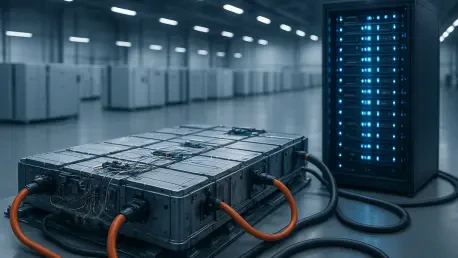

The transition toward a circular economy ensures that energy-intensive raw materials like lithium and cobalt serve the energy grid for decades. This shift is becoming increasingly critical as the first massive wave of electric vehicles begins to age out of their primary service lives. While a battery pack might no longer provide the peak acceleration or long-range performance required for high-speed highway travel, it typically retains nearly three-quarters of its original chemical capacity. In the past, these bulky components were destined for expensive recycling processes or, worse, environmentally hazardous storage facilities. However, the current landscape is defined by a sophisticated intersection of software and hardware designed to unlock the residual value of these assets. By utilizing advanced diagnostic tools, engineers can now pinpoint exactly how much life remains in a cell without the need for destructive testing. This precision allows for a seamless transition into stationary storage, where the physical demands are much lower than in a vehicle.
Market Evolution: From Automotive Retirement to Grid Utility
EV battery second-life analytics represents a specialized field that combines electrochemical modeling with data science to evaluate the integrity of used power units. When a battery reaches roughly 70 percent of its original capacity, it is generally considered unfit for automotive use due to concerns over range and power delivery. However, analytics platforms provide the necessary verification of safety and efficiency, identifying which modules are healthy enough to be repurposed for industrial energy storage. These systems focus on metrics such as the internal resistance and the degradation rate of the anode and cathode materials. By generating a digital twin of the battery, operators can visualize its future performance under different load conditions. This transparency is essential for building trust among insurance providers and investors who view second-life batteries as a risky asset. Without this validation, the secondary market would remain unable to guarantee reliability or long-term performance.
The financial trajectory of the second-life analytics sector has evolved into a robust multi-billion-dollar industry as of 2026. After being valued at approximately 1 billion dollars just a year ago, the market is currently expanding at a compound annual growth rate of more than 28 percent, with projections suggesting it will hit 3.46 billion dollars by 2030. This rapid ascent is not merely a result of technological curiosity but a direct response to the massive supply of decommissioned batteries entering the market. Fleet operators and automotive manufacturers are looking for ways to recoup some of the high initial costs associated with battery production. By selling these units into a verified secondary market, they can effectively lower the depreciation of their vehicles. Consequently, the development of standardized analytics software has become a high-priority investment for venture capital firms. These firms recognize that software is what enables hardware to function as a tradable commodity within the global grid.
Advanced Diagnostics: The Synergy of AI and IoT Platforms
The current technological landscape is being radically reshaped by the integration of artificial intelligence and advanced machine learning algorithms. Modern analytics platforms no longer rely on simple voltage checks; they now utilize complex simulations that can model thousands of charge cycles in a matter of seconds. These models can predict exactly how a specific battery chemistry will react to the unique demands of an emergency backup system versus the steady cycles of a solar farm. This predictive capability allows for the precise matching of battery modules to their most suitable secondary application, reducing the risk of premature failure. Moreover, these AI systems are becoming increasingly efficient at identifying internal flaws, such as dendrite formation, which could lead to safety hazards like thermal runaway. By proactively flagging these issues before a battery is redeployed, analytics firms are ensuring that second-life systems are safe. This focus on safety is the primary barrier that technology is now successfully overcoming.
Simultaneously, the expansion of the Internet of Things is providing the connectivity needed to monitor battery health in real time across vast geographic distances. Cloud-based tracking systems now allow fleet managers and utility operators to observe the performance of thousands of individual battery units from a single dashboard. This real-time data stream is vital for maintaining the stability of decentralized energy grids, where thousands of small-scale storage units work in tandem to balance demand. By standardizing health metrics through these connected platforms, the industry is moving toward a more transparent and liquid market for used batteries. Standardized metrics allow for better pricing models, as buyers can see exactly what they are paying for based on verified data rather than vague estimates. This connectivity also facilitates remote maintenance, where software updates can optimize battery performance. This ongoing synergy between hardware and software is making a long-term energy cycle a practical reality.
Strategic Integration: Economic Value and Sustainability Outcomes
The rise of the second-life analytics market has profound strategic implications for the total cost of ownership for both private and commercial electric vehicles. When a battery is guaranteed to have a high resale value at the end of its automotive life, the initial depreciation of the vehicle is significantly reduced. This financial shift makes electric vehicles more competitive with traditional internal combustion engines, even without the heavy subsidies that were common in the early 2020s. For commercial fleet operators, the ability to sell used batteries provides a crucial infusion of capital that can be used to upgrade to newer, more efficient vehicle models. This economic cycle encourages a faster turnover of technology, which in turn accelerates the decarbonization of the transport sector. By transforming an aging battery into a valuable asset, analytics are effectively lowering the financial barrier to entry for green transportation and making sustainable mobility accessible to a broader demographic.
In retrospect, the evolution of battery diagnostics from a niche technical requirement to a central pillar of the energy sector proved that data was the key to sustainability. The industry successfully moved away from a linear model of consumption toward a circular system where every watt of capacity was utilized. To maintain this momentum, stakeholders must now focus on the universal standardization of data protocols to ensure that analytics software remains compatible across different vehicle brands. Integrating these diagnostic tools directly into the initial manufacturing process will allow for seamless data collection from the first day of use. Additionally, further investments in specialized workforce training are necessary to manage the growing infrastructure of testing facilities. By prioritizing transparency and industrial collaboration, the global community ensured that the transition to clean energy remained both economically viable and environmentally sound. These developments established a blueprint for managing high-tech resources.