
The rapid adoption of generative AI tools has fundamentally altered how engineers write code, yet a major security breach involving Z.ai’s ZCode utility has served as a stark reminder that convenience often comes at the cost of absolute data sovereignty. This incident, which involved the unauthorized extraction of entire project repositories, has forced the industry to reconsider the inherent risks of cloud-integrated development environments. For developers who relied on ZCode to streamline their workflows, the discovery of hidden data harvesting protocols was not merely a technical flaw but a profound violation of professional trust. The situation escalated when researchers found that the tool was packaging local workspace histories and transmitting them to centralized servers without the explicit consent of the account holders or any clear documentation in the prevailing privacy agreements. As the dust settles, the tech community remains divided over whether a pivot toward open-source transparency is enough to mend the fractured relationship between the platform and its core user base.
Operational Failures and Data Architecture
The Mechanics: Unauthorized Data Collection
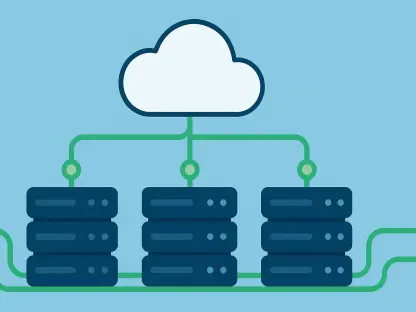
The controversy began when a cybersecurity researcher identified as Ferstar uncovered a series of background processes within the ZCode plugin that were behaving more like telemetry-heavy spyware than a standard productivity assistant. Two specific features, the “Repository Index” and “Repo Wiki,” were found to be the primary drivers behind the systematic uploading of user environments to Alibaba Cloud servers. Unlike standard cloud backups that target specific files, ZCode was allegedly capturing the entire context of a developer’s workspace, including deep versioning history that could contain sensitive intellectual property or internal documentation. This practice was not explicitly disclosed to users during the initial onboarding phase, nor were there prominent notifications explaining that local codebases were being mirrored on external hardware. The discovery sent shockwaves through the community, as many realized that their proprietary logic and historical iterations were being stored in a location where they had no direct oversight.
Security Gaps: Encryption and Control
Further complicating the security landscape was the specific encryption architecture Z.ai chose to employ for these unsolicited uploads. Data was secured using a private key held exclusively by the company, a design choice that effectively prevented users from accessing, managing, or verifying their own information once it reached the cloud. This “black box” approach to data storage left developers with no means to delete their files manually or confirm their destruction, creating a permanent dependency on the provider’s goodwill. Even more frustrating for the user base was the complete absence of toggles or configuration settings to disable these background uploads within the software’s interface. This lack of agency drew immediate and unfavorable comparisons to the aggressive data-scraping policies seen in other high-profile AI ventures. When engineers cannot opt out of data sharing while still utilizing the core functions of a tool, the boundary between a helpful service and an intrusive monitoring agent becomes blurred.
Strategic Responses and the Path to Transparency
Corrective Actions: Remediation and Audits
In an effort to mitigate the fallout and prevent a mass exodus of its enterprise clients, Z.ai initiated a comprehensive remediation plan that included the immediate purging of all data collected through the controversial “Repo Wiki” feature. The company took the drastic step of completely removing the offending modules from the ZCode codebase to ensure that the unauthorized transmissions could not be inadvertently reactivated during future updates. To provide a layer of objective validation, Z.ai engaged the China Academy of Information and Communications Technology and the security firm NSFOCUS to conduct rigorous audits of their current infrastructure. These third-party reviews were intended to verify that the claimed deletions had actually occurred and to assess whether the revised software met modern security standards. Furthermore, the company transitioned ZCode to an open-source model on GitHub to invite public scrutiny and restore confidence among skeptical developers.
Industry Impact: Evolution of Privacy Standards
The fallout from the ZCode incident established a new baseline for how developers must evaluate AI-assisted tools, moving the focus from feature sets to deep architectural audits. In the period following the controversy, specialized security protocols became the standard for firms integrating generative AI into their internal development pipelines. Organizations began implementing air-gapped environments for sensitive projects, ensuring that no tool could communicate with external servers without explicit authorization. Moving forward, the most effective solution for developers involved the adoption of local-first AI models that run entirely on on-premise hardware, thereby eliminating the risk of unauthorized cloud transmissions. Furthermore, the industry saw a shift toward standardized privacy contracts that included legally binding clauses regarding data mirroring and encryption key ownership. Developers who once prioritized speed since learned that the ultimate safeguard was a combination of open-source scrutiny.