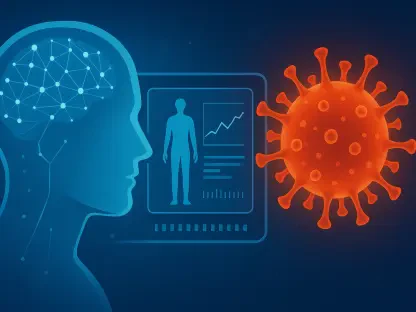

The transition of specialized mainframe knowledge from retiring veteran engineers to automated intelligent systems represents one of the most significant shifts in the history of global enterprise computing infrastructure. For decades, the mainframe has served as the silent engine of the global economy, processing trillions of dollars in transactions and managing the world’s most sensitive data. However, a quiet crisis known as “brain drain” is threatening this stability as the veteran engineers who built these systems enter retirement. The industry is now at a crossroads: how can enterprises maintain these mission-critical environments when the specialized knowledge required to run them is disappearing?
The emergence of AI-first solutions suggests that the answer lies not in finding more human experts, but in embedding their collective wisdom into the software itself. This article explores how modern AI innovations are moving beyond simple data observation to provide a framework for governed execution, ensuring that the next generation of IT professionals can manage complex mainframe ecosystems with confidence. By shifting the focus from manual intervention to intelligence-led operations, businesses are finding ways to bridge the widening gap between legacy stability and modern agility.
From Iron to Intelligence: The Evolution of Mainframe Management
The history of the mainframe is a story of resilience and constant adaptation. Originally managed through manual intervention and physical consoles, these systems transitioned into the era of automation and remote monitoring during the late 20th century. Despite these advancements, a fundamental gap remained: the “context” of the system—the nuances of why a specific code change was made or how a certain incident was resolved—often resided only in the minds of senior technicians. As the industry shifted toward cloud-native and distributed environments, the mainframe was sometimes perceived as a siloed relic.
Today, the pressure to modernize has reached a tipping point. Businesses can no longer afford to treat the mainframe as an isolated island; it must be integrated into a unified, hybrid cloud strategy that demands a level of agility and speed that manual processes simply cannot support. This evolution necessitates a departure from traditional monitoring toward proactive, intelligent systems that can interpret the vast amounts of data generated by z/OS environments.
Leveraging AI to Transform Institutional Knowledge into Actionable Intelligence
Synthesizing Complex Data for Strategic Succession Planning
One of the most critical challenges in mainframe management is the lack of transparency regarding application health and complexity. New AI-driven capabilities, such as the BMC AMI zAdviser Enterprise Application Analysis, are designed to solve this by synthesizing mainframe-native data—including source code, telemetry, and productivity metrics—into unified, AI-generated narrative reports. This is a significant shift from traditional distributed tools that often lack deep access to the mainframe’s inner workings.
By providing a clear view of application risks and code complexity, these solutions allow IT leaders to prioritize modernization investments based on data rather than guesswork. This transparency is essential for succession planning, as it provides a roadmap for new hires to understand which mission-critical applications require the most attention and which present the greatest risk to the business. This approach effectively translates raw telemetry into a strategic asset for the executive suite.
Empowering the Next Generation via Knowledge Democratization
To effectively close the skills gap, organizations must find ways to make information more accessible to staff at all experience levels. The integration of tools like the BMC AMI Assistant represents a major step toward the democratization of expertise. By utilizing a “Knowledge Hub” and “Expert Chat” that pull from historical tickets, runbooks, and log files, AI can provide immediate answers that previously required hours of manual research or a call to a retiring expert.
This shift from siloed data to an interactive knowledge base reduces the learning curve for junior developers and system programmers. It allows them to resolve incidents faster and more accurately, effectively turning the “collective wisdom” of the organization into a real-time support system that is available around the clock. Consequently, the reliance on a single point of failure—the human expert—is significantly mitigated.
Navigating Technical Complexities and Compliance Shifts
The technical landscape of the mainframe is also facing disruptive shifts that manual labor can no longer handle. For instance, the industry is preparing for a drastic change in security protocols where SSL/TLS certificate lifespans are expected to drop from over a year to just 47 days by 2029. Managing this frequency of updates across thousands of endpoints manually is practically impossible.
AI-first solutions, such as automated digital certificate management, provide a multi-vendor integration layer that ensures continuous uptime and compliance without requiring a massive increase in headcount. These innovations address common misconceptions that the mainframe is too rigid to adapt, proving instead that with the right AI-first automation, these systems can meet the most stringent modern security and regulatory requirements.
The Road Ahead: Agentic AI and the Autonomous Mainframe
As the industry looks toward the future, the role of AI in the mainframe ecosystem is evolving from a passive assistant to an active participant. The rise of “agentic AI” involves models that can not only identify problems but also orchestrate complex business processes across hybrid environments. There is a move toward a reality where tools like Control-M can autonomously manage workflows, shifting the human role from manual execution to high-level governance.
Experts predict that the next few years will see a significant increase in self-healing systems that can predict failures before they occur and suggest or implement remediations automatically. This technological shift will be driven by the economic necessity of doing more with less, as well as the regulatory pressure to maintain “always-on” availability in an increasingly volatile digital world. The transition toward autonomous operations marks the final step in decoupling mainframe reliability from the shrinking pool of specialized labor.
Building a Sustainable Path for Mainframe Longevity
The transition to an AI-first mainframe environment is not just a technological upgrade; it is a strategic necessity. To successfully navigate this shift, businesses should focus on several actionable strategies. First, they must prioritize the integration of AI tools that offer deep visibility into mainframe data to guide their modernization efforts. Second, they should invest in platforms that centralize institutional knowledge, making it accessible to the entire workforce.
Finally, organizations must embrace automation for high-frequency tasks, such as certificate management, to mitigate operational risks. By applying these best practices, professionals can ensure that their mainframe infrastructure remains a competitive asset rather than a liability, allowing them to leverage the platform’s legendary reliability while benefiting from modern efficiency. Success depends on the willingness to let AI take the lead in routine operations.
Ensuring the Future of Mission-Critical Infrastructure
In summary, while the mainframe skills gap presented a formidable challenge, AI-first solutions provided a viable path forward. By converting decades of institutional knowledge into actionable data and automating complex manual tasks, these technologies bridged the divide between the veterans of the past and the innovators of the future. The mainframe remained significant because of its unmatched processing power and security, and its long-term viability depended on its ability to evolve.
Looking forward, enterprises should establish an “AI Center of Excellence” specifically for the mainframe to ensure that automation aligns with broader corporate governance. This structure would allow for the continuous refinement of agentic models, ensuring they adapt to shifting regulatory environments and evolving cyber threats. As AI became a foundational element of execution, security, and operations, the “brain drain” was no longer an existential threat, but rather a catalyst for a smarter, more resilient era of enterprise computing.