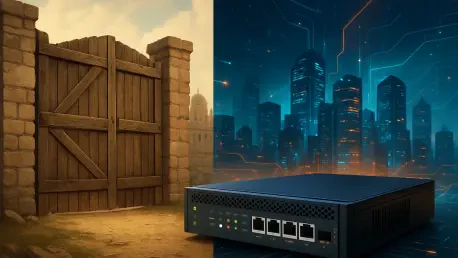

The traditional security architect who relies solely on IP addresses and ports to protect an enterprise is essentially trying to secure a modern city with a single, unstaffed wooden gate. As organizations navigate the complexities of 2026, the definition of a network has transformed from a physical space into a fluid sequence of connections spanning the globe. For the Chief Information Security Officer (CISO), this shift demands a move away from passive observation toward active, intelligent enforcement. The Next-Generation Firewall (NGFW) represents the cornerstone of this transition, serving as a sophisticated platform that combines deep visibility with automated response capabilities.
Successfully deploying these systems requires a departure from the “set it and forget it” mentality that defined the legacy firewall era. Security leaders now view the NGFW as a strategic pivot point that enables a zero-trust journey while maintaining the speed and agility necessary for modern business operations. This guide explores the architectural, financial, and operational frameworks required to turn a technical implementation into a robust defensive strategy.
The Perimeter Is No Longer a Line on a Map
In the current landscape, the corporate network has dissolved into a nebulous mix of home offices, coffee shops, and multi-cloud environments. The days when a security team could draw a definitive circle around its assets are gone, replaced by a reality where the user and the application are the new edge. This transition makes the concept of a medieval moat obsolete, as threats can now originate from within the network just as easily as they do from the outside. The modern CISO understands that the firewall is no longer just a gatekeeper; it is the central nervous system of a proactive defense strategy.
Transitioning to an NGFW is not merely a hardware refresh but a fundamental change in how an organization perceives its boundaries. By moving away from geographic-based security, companies can enforce policies based on identity and behavior rather than location. This approach allows for a granular level of control that ensures users have access to the specific resources they need, regardless of where they are connecting from or what device they are using. This is the foundational step in building a resilient architecture that survives the disappearance of the traditional network perimeter.
From Static Filters to Intelligent Gateways: Why NGFW Matters Now
The shift from traditional stateful inspection to Next-Generation capabilities is driven by the sheer sophistication of modern threats and the complexity of hybrid work. CISOs are currently navigating a landscape where encrypted traffic hides malware and applications bypass traditional port-based rules with ease. Legacy systems often struggle to identify the difference between a legitimate business application and a malicious data exfiltration tool when both use the same port. An NGFW addresses these real-world pressures by integrating deep packet inspection and application-level awareness to distinguish between safe and risky traffic patterns.
Beyond simple blocking, these intelligent gateways offer integrated intrusion prevention and sandboxing capabilities that analyze suspicious files in real-time. This level of scrutiny is vital in a world where zero-day vulnerabilities are exploited within hours of discovery. The focus has shifted from merely denying entry to understanding the context of every connection. This enables the business to operate securely by providing the visibility needed to detect lateral movement and stop internal threats before they can escalate into full-scale breaches.
Mapping the Architecture: Flexibility, Scalability, and Performance
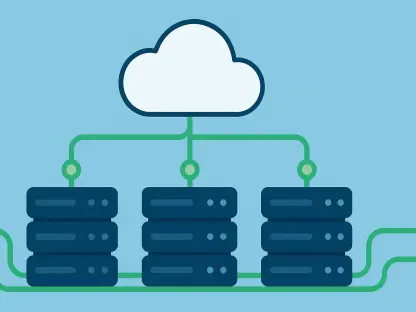
The efficacy of an NGFW depends entirely on how it is woven into the organizational fabric. CISOs must choose between delivery models that balance control with operational agility, often settling on hybrid deployment models. Modern enterprises utilize a mix of physical hardware for on-premises data centers, virtual appliances for private clouds, and Firewall-as-a-Service (FWaaS) for distributed branch offices and remote users. This multi-layered approach ensures that security policies remain consistent, whether a workload is running in a local server room or a public cloud environment.
Centralized management is a non-negotiable requirement in this complex ecosystem. The “single pane of glass” mandate ensures that disparate firewall instances are unified through a single interface, preventing the policy drift that often leads to security gaps. Furthermore, high-throughput architectures are essential to prevent the firewall from becoming a bottleneck. As organizations adopt AI-driven threat detection and intensive decryption processes, the hardware and software must be capable of handling traffic spikes without degrading the end-user experience. Strategic decisions regarding traffic steering—whether to backhaul data to a central hub or process it at the edge—directly impact the performance of cloud applications and overall user productivity.
Beyond the Price Tag: Calculating Total Cost of Ownership
Budgeting for an NGFW is an exercise in comprehensive financial planning, where the initial purchase price often represents only a fraction of the long-term investment. Unlike legacy systems that required a one-time payment, modern security platforms rely on recurring subscription economics for continuous updates to threat intelligence, URL filtering, and technical support. This shifts the financial model toward operational expenditure, requiring CISOs to justify ongoing costs to the board.
Significant costs are also associated with the integration tax and human capital. Linking an NGFW to existing Identity and Access Management (IAM) and Security Information and Event Management (SIEM) platforms is necessary for a cohesive response but requires substantial engineering hours. Moreover, the sophistication of these tools demands a highly skilled security team. A powerful tool poorly managed is a liability, making specialized education and talent retention mandatory budget line items. Finally, the labor involved in migrating thousands of legacy rules to a modern, identity-based policy set represents a significant hidden cost that must be addressed to retire technical debt effectively.
A Framework for Measuring Defensive Value and ROI
Quantifying the value of a system designed to ensure that “nothing happens” requires a shift from traditional profit-based metrics to risk-reduction frameworks. CISOs communicate value by mapping NGFW capabilities to the reduction in the statistical probability of a high-impact data breach. This involves calculating the potential cost of downtime, legal fees, and regulatory fines that are avoided through the deployment of advanced threat prevention.
Operational efficiency through automation also provides a clear return on investment. By reducing false positives and automating the blocking of known malicious actors, the security operations center (SOC) can focus on higher-value tasks, effectively increasing the productivity of existing staff. Furthermore, protecting brand equity and business continuity is a primary goal; the prevention of a single major DDoS attack can pay for the entire firewall project through maintained uptime and customer trust. In a layered defense-in-depth strategy, the NGFW served as a vital redundant control, providing a safety net that protected the organization when other security layers were bypassed.
The move toward an integrated firewall strategy represented a fundamental realization that security must be as dynamic as the threats it seeks to stop. Leadership teams embraced the shift toward identity-centric policies and automated threat intelligence, which streamlined the incident response process. Moving forward, the focus remained on the continuous refinement of these policies to keep pace with the evolving tactics of cyber adversaries. By prioritizing visibility and architectural flexibility, organizations established a resilient foundation that supported sustainable growth and innovation. The investment in sophisticated defense mechanisms ultimately proved to be a catalyst for digital transformation rather than a barrier to it.