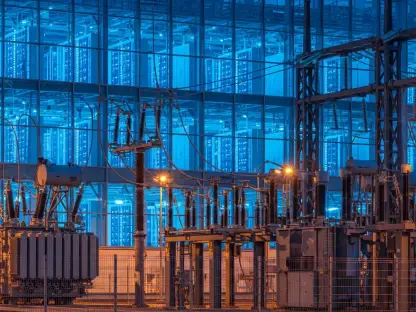

A surge in AI demand met a hard limit this week: power, not silicon, became the gating factor just as Microsoft lost two leaders who had been central to bridging that gap between compute ambition and physical reality. The exits landed while Copilot and Azure AI usage climbed, turning routine capacity planning into a race to align GPUs with grid interconnects, substation lead times, and cooling envelopes that can hold dense clusters at full throttle.
This event mattered because it revealed where the true center of gravity has moved in hyperscale AI: procurement of megawatts, not just accelerators; thermal engineering, not just model tuning; and the choreography of utilities, facilities, and platform teams, not just capital spend. The leadership shifts sharpened those stakes, adding execution risk where expertise is scarcest and timelines are tightest.
What happened and why it matters
Two departures set the tone. Nidhi Chappell, a key architect behind Microsoft’s large-scale GPU fleets serving Microsoft, OpenAI, and Anthropic, exited amid an expansion wave that depends on tightly coupled systems and careful tenant isolation. Sean James, who led energy and data center research, chose Nvidia—signaling that breakthroughs in power and thermal strategy may increasingly originate inside chip and system providers rather than solely within hyperscalers.
The timing amplified the impact. The bottleneck has shifted decisively from chip counts to energy constraints, with grid queues, site energization, and advanced cooling now pacing deployments. Public scrutiny intensified after Microsoft AI CEO Mustafa Suleyman cited “15 million labor hours” for a new data center and Elon Musk questioned hyperscale efficiency, spotlighting a broader debate about speed versus sustainability as facilities press up against thermal and power limits.
Inside the turbulence: key moments and signals
Leadership moves and technical gaps
The departures exposed gaps exactly where AI growth now hinges: heterogeneous accelerator scheduling, rack-level power delivery, and liquid or immersion cooling at scale. Analysts argued that Chappell’s experience coordinating mixed accelerators across varied tenants is not easily replaced. James’s move to Nvidia hinted that system-level innovation—compute-to-rack co-design, power-aware orchestration, and thermal telemetry—may gain momentum from vendors with end-to-end visibility into chips, boards, and racks.
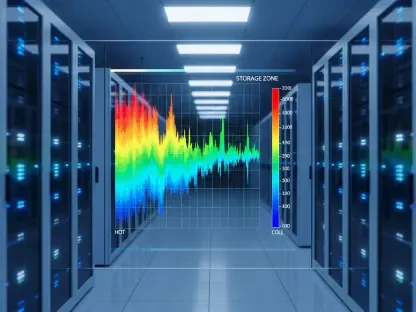
Moreover, research consensus aligned on a blunt reality: the limiting reagent for AI capacity is megawatt-class power and the thermal headroom to use it, not merely access to the latest GPUs. That puts a premium on power procurement strategies, interconnection timing, and operational levers that flatten peak loads without throttling utilization.
Public debate and strategic friction
Suleyman’s labor-hours remark triggered a fresh round of questions about productivity in hyperscale buildouts, while Musk’s skepticism underscored how quickly public narratives can frame capital projects as either bold bets or bloated undertakings. Inside boardrooms, the friction sharpened around foundational choices: liquid versus immersion cooling, custom silicon versus off-the-shelf systems, and whether to prioritize build speed or long-run efficiency.
Investor discussions mirrored those trade-offs, with risk increasingly priced around utility contracts, substation delivery, and cooling modality. The most competitive timelines, according to practitioners, now belong to teams that can synchronize GPU arrivals with energization dates, avoiding stranded compute or idle power.
Field learnings and operational drills
Commissioning drills and pilot programs delivered practical playbooks. Early co-design with utilities, modular power blocks, and pre-fabricated cooling skids compressed time-to-energize, while cross-functional “war rooms” improved yield by aligning procurement, facilities, and platform orchestration. Heat-reuse trials added a potential offset, though their viability depended on local offtake partners and regulatory incentives.
In contrast to the perception that more capital solves everything, operations teams emphasized discipline: right-sizing feeders and busways, validating thermal envelopes at rack and aisle, and instrumenting telemetry granularly enough to tune workload placement in near real time. These routines translated to better stability under full-load conditions, boosting both utilization and reliability.
Vendor roadmaps and system-level innovation
Nvidia’s cadence—and James’s hyperscale experience—cast a bright light on compute-to-rack design. The roadmap leaned into higher-power racks with advanced liquid cooling, improved containment, tighter fabric integration, and energy-aware scheduling that can cap power without gutting performance. Performance-per-watt, not peak FLOPs alone, emerged as the defining metric for scaling inside grid constraints.
As vendors push rack architectures that integrate power, cooling, and networking at the design phase, enterprises could benefit from standardized modules that deploy faster and waste less energy. That rebalances influence across the stack, giving system providers a bigger role in how quickly AI capacity can be brought online within real-world utility limits.
What it means and what’s next
The net effect was a meaningful—though not existential—setback for Microsoft at the precise moment power surpassed chips as the primary constraint. Execution risk rose across power procurement, interconnections, and thermal management, yet Microsoft’s capital base, supplier ties, and depth positioned it to keep momentum if coordination tightened. The competitive edge shifted toward power-savvy engineering: compute-to-rack design, thermal efficiency, and grid alignment as prerequisites for sustained scale.
Looking ahead, the path forward centered on compressing energization timelines and embedding efficiency from silicon to site. The teams that synchronized GPU cadence with utility realities, adopted modular power and cooling, and used telemetry to shape workloads had the upper hand. Vendors, led by Nvidia, were poised to fold hyperscale field lessons into next-gen systems, improving performance-per-watt and easing the energy wall for the broader market.
Conclusion
The event underscored that AI infrastructure’s pace was set by megawatts and thermal envelopes, not just accelerator shipments, and that leadership changes mattered most where the grid pushed back. Microsoft’s immediate challenge had been to convert scale into synchronized execution across utilities, facilities, and platform engineering. Practical next steps included locking firm interconnection milestones, standardizing liquid-cooled rack designs, deploying energy-aware schedulers, and expanding prefab cooling programs to trim weeks from commissioning. Vendors’ rack-level advances had pointed the way, and the competitive line moved toward those who integrated efficiency into every layer—ensuring GPUs arrived not only on time, but to sites ready to run them hot and sustainably.